

A beautiful wedding is often remembered through its flowers, lighting, music, and emotionally meaningful moments. Yet behind all that careful presentation are hundreds of decisions involving budgets, venues, vendors, timelines, and contingency plans. That is why the question how much does a full-service wedding cost should not be answered with just one number. What matters more is understanding exactly what work you are paying for, which expenses are included in the package, and who takes responsibility when plans change. This article will help you read a wedding quotation correctly, create a realistic Budget Plan, and choose the right Wedding Planner model in Ho Chi Minh City or Da Lat.
How Much Does a Full-Service Wedding Planning Package Cost? Understanding an A-to-Z Wedding Planner Package
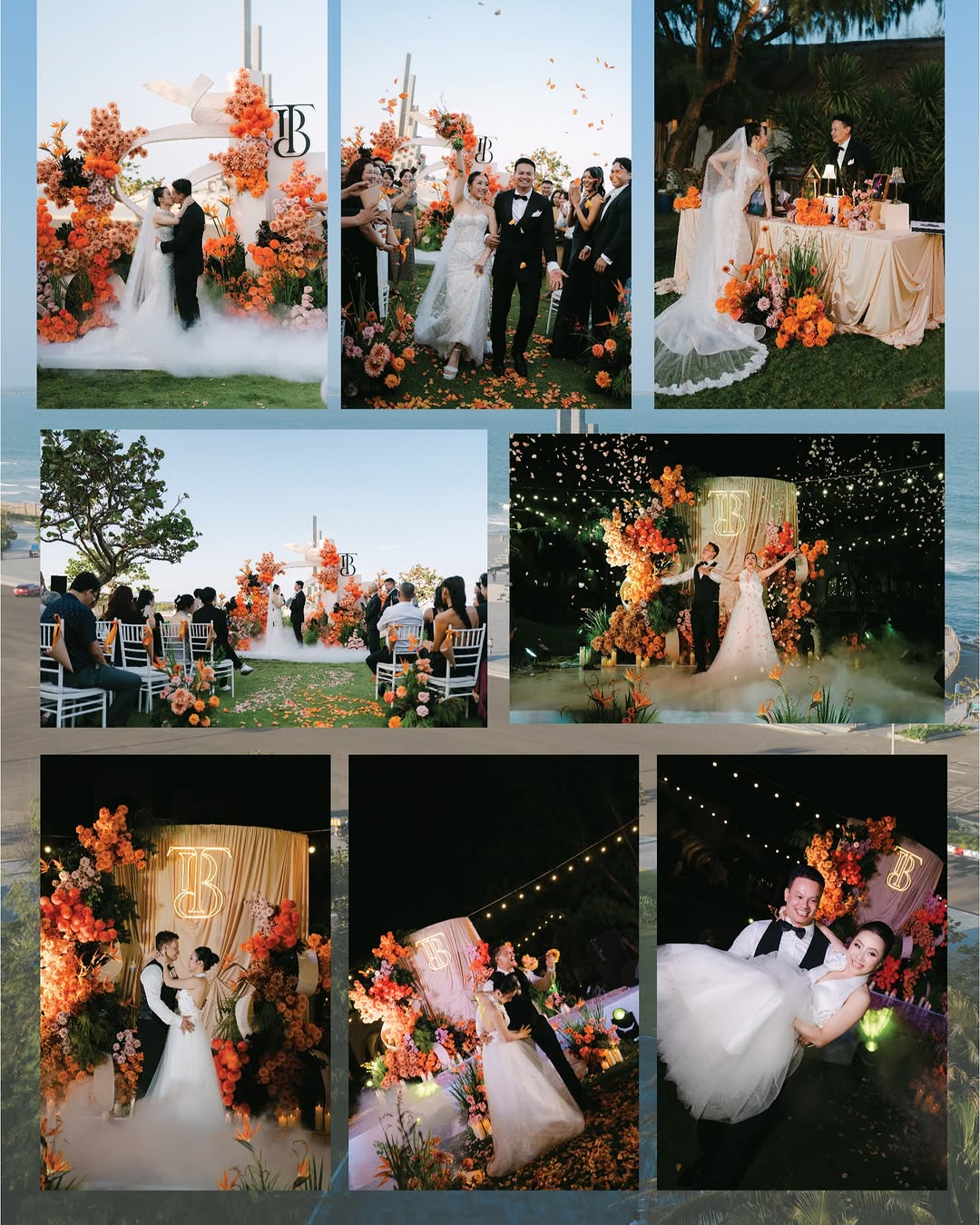
What Does a Full-Service Wedding Planning Package Actually Include?
When planning how much a full-service wedding costs, a Full Planning A-Z package does not mean that the organizer personally provides every service. The essence of a Wedding Planner is to serve as the strategic and operational point of contact for the entire wedding: from defining the style and developing the concept to creating the budget, selecting vendors, and coordinating the wedding day. When using full-service Wedding Planner service, couples are not simply paying for a planner's time; they are investing in the ability to manage dozens of closely interconnected tasks.
For a full-service wedding package, a comprehensive project typically begins with a consultation to understand the couple's needs: guest count, venue, preferred style, budget, important ceremonies, and anything the couple absolutely wants to avoid. Based on this information, the planner develops a moodboard, defines the spatial direction, establishes a budget framework, prepares a vendor shortlist, creates a preparation timeline, and builds a checklist system. As the wedding day approaches, the work shifts toward contract management, final guest counts, rehearsals, rundown preparation, and assigning on-site coordination staff.
- Strategic phase: Defining experience objectives, style, concept, and budget priorities.
- Preparation phase: Inspecting venues, sourcing vendors, comparing quotations, signing contracts, and monitoring progress.
- Production phase: Designing decorations, sound and lighting systems, guest seating arrangements, ceremonies, and program content.
- Operations phase: Conducting rehearsals, coordinating vendors, welcoming guests, managing the timeline, handling incidents, and completing post-event handovers.
How Is Hiring a Wedding Planner Different from Purchasing a Wedding Service Package?
When planning a full-service wedding, a wedding combo package is usually a collection of predefined services, such as decoration, photography, makeup, or an MC. Its advantages are that it is easy to visualize and compare prices. However, a combo does not necessarily address the couple's overall planning needs. You may still have to coordinate different vendors yourself, review contracts, manage timelines, and handle the coordination between individual service providers.
To optimize the value of a full-service wedding, by contrast, when hiring a wedding planner, the primary value lies in having an individual or team oversee the entire project as one integrated system. For example, changing the ceremony time may affect the makeup schedule, first-look photography session, sound system setup, guest arrival time, and kitchen service schedule. A good planner must identify these cascading effects before they turn into problems.
Based on practical experience with full-service wedding planning, therefore, if two quotations have similar total prices but one provider offers only a combo package while the other takes responsibility for planning and coordinating the entire event, these are not equivalent services. When comparing them, focus on the scope of responsibility rather than simply counting the included items.
Core Value: One Point of Contact Managing the Concept, Vendors, Budget, and Entire Wedding Day
A wedding may involve 10 to more than 20 groups of vendors: the venue, catering, decoration, flowers, sound and lighting, photography, attire, makeup, MC, band, gifts, transportation, and many other services. Even when each provider performs their individual responsibilities correctly, the overall experience can still feel disconnected if nobody manages the coordination between them.
The Pine takes on the role of a single point of contact throughout the entire process: aligning the story, style, and experience standards; managing the budget according to priorities; connecting the couple with vendors who have the right capabilities; and protecting the emotional flow of the bride, groom, and their families on the wedding day. This is also why full-service Wedding Planner service should be evaluated based on project management quality, not merely the number of working hours or items listed in the quotation.
How Much Does a Full-Service Wedding Planning Package Cost? Pricing Guide and Breakdown of Each Expense

Wedding Planner Fees: Concept Consultation, Mood Board, Budgeting, and A-to-Z Planning
There is no single price that applies to every wedding. Wedding Planner fees may be calculated as a fixed fee, a percentage of the project budget, or a combination of both. In the mid-range and premium wedding markets, a Full Planning project may start at several tens of millions of VND and exceed VND 100 million when the scope of work is extensive, the project spans multiple days, involves several venues, or requires complex production. This is a reference range for initial budget planning, not a fixed quotation from The Pine.
The important thing is to clarify what the planner fee includes. A reasonable quotation should specify the number of consultation sessions, concept development scope, number of moodboard proposals, level of involvement in vendor negotiations, number of site inspections, coordination staff, on-site event hours, and post-event responsibilities. If you only see one line stating “full-service wedding planning fee”, you should request a more detailed breakdown.
Vendor and Wedding Costs: Decoration, Flowers, Sound and Lighting, Photography, Makeup, and Reception
To answer the question realistically how much does a full-service wedding cost, you need to separate the planner fee from the vendor budget. For a medium-sized wedding in Ho Chi Minh City or Da Lat, couples can use the following investment ranges to understand the overall cost structure. Actual figures vary significantly depending on guest count, venue, wedding season, flower availability, technical requirements, and vendor quality.
- Decoration and Flowers: approximately VND 50–150 million for a relatively streamlined setup; VND 150–300 million for a multi-layered spatial design; Fine Art projects, imported fresh flowers, or special structural installations may cost considerably more.
- Photography and videography: approximately VND 20–80 million, depending on the team, number of cameras, working hours, pre-wedding services, and film requirements.
- Makeup and styling: approximately VND 5–20 million for the wedding day; costs may increase with multiple looks, additional people, or long-distance travel.
- Sound, Lighting, and Technical Production: approximately VND 15–80 million; outdoor receptions, large stages, or live bands require higher technical budgets.
- MC, band, DJ, and entertainment: from several million to several tens of millions of VND, depending on the performers, duration, and program format.
- Parties and Venues: usually the largest expense category, directly depending on guest count, menu standards, venue rental fees, and operational surcharges.
These ranges should be viewed as budget guidelines to help couples develop different scenarios, not as an official price list. A 100-guest outdoor resort wedding and a 300-guest ballroom wedding may have similar total costs but completely different expense structures.
What Causes Price Differences Between Full-Service Wedding Planning Providers?
Price differences do not come solely from how well-known the organizer is. There are at least six factors worth examining carefully: scope of responsibility, staffing levels, preparation time, vendor quality, degree of design customization, and risk management standards. A lower quotation may be reasonable if the scope is narrower. Conversely, a higher quotation is not necessarily better unless it demonstrates superior operational quality.
Ask each full-service wedding planning company to clearly distinguish service fees from vendor expenses, identify which items include taxes or transportation, specify which costs depend on guest numbers, and explain the conditions that may cause the budget to change. This approach allows you to compare equivalent scopes of work rather than two figures based on completely different structures.
Detailed Wedding Budget Estimate: How to Control Spending and Avoid Unexpected Costs
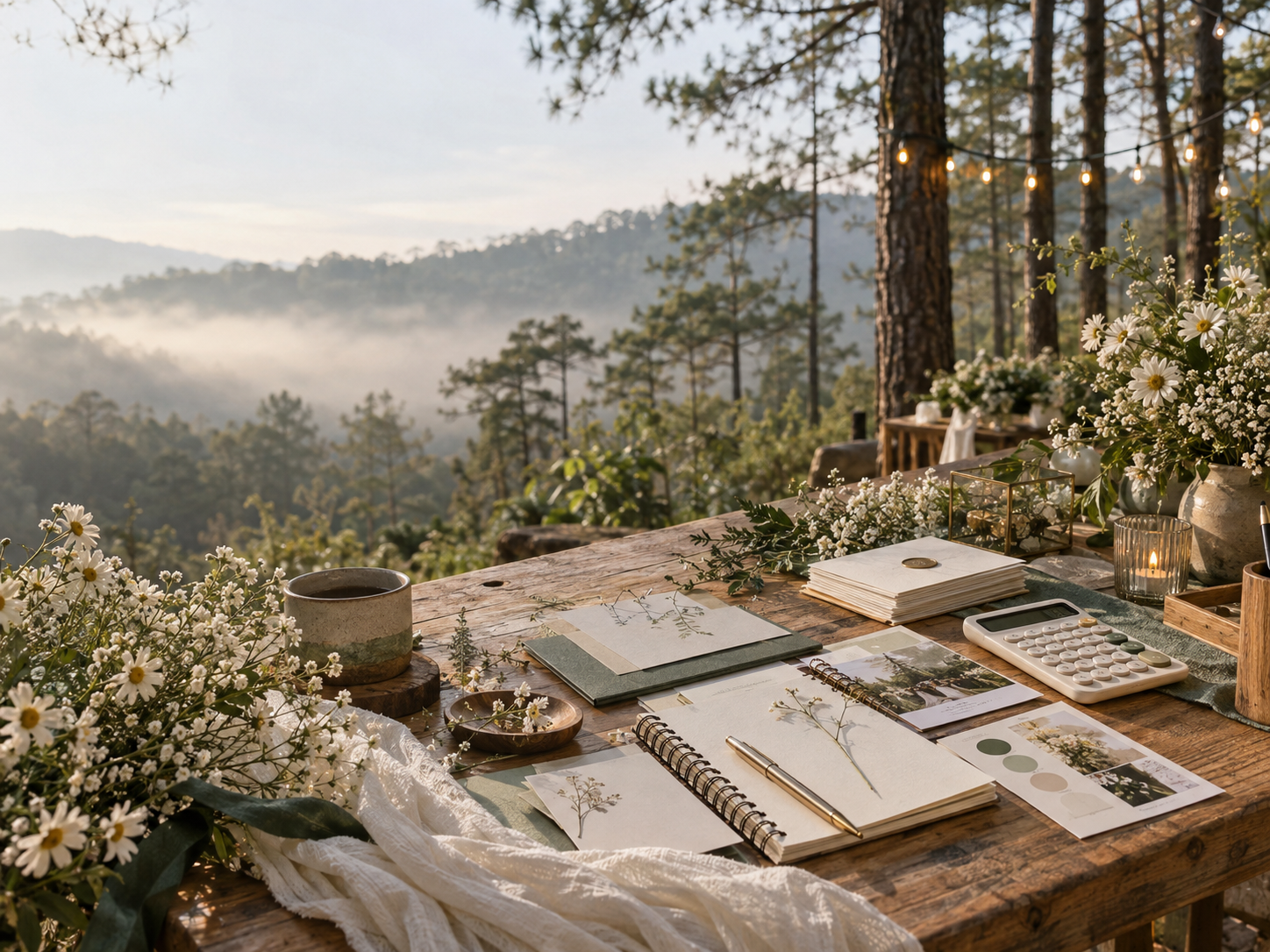
How to Allocate Your Wedding Budget by Priority: Venue, Reception, Decoration, Guest Experience, and Ceremony
A good Budget Plan does not begin by asking how much each item costs. It begins by asking what matters most to the two of you. Some couples prioritize the dining experience; others want guests to enter the venue and immediately feel the story of their love. Some families place greater importance on traditional ceremonies and convenience for elderly guests.
A reference allocation to start with could be: 35-50% for the venue and reception, 15-30% for decoration, 5-10% for photography and videography, 5-10% for attire and makeup, 5-10% for entertainment and guest experiences, 5-12% for planning or coordination, while reserving 5-10% as a contingency fund. This is not a mandatory formula. The planner should adjust these proportions according to each couple's actual priorities.
For example, with a budget of VND 500 million, a couple hosting a small outdoor reception may allocate a larger proportion to the venue, decoration, and guest experience. In contrast, for a large reception, catering expenses will account for a greater share, requiring tighter control over the other expense categories.
Budget Plan Before Signing Vendor Contracts: A Checklist of Commonly Overlooked Expenses
Many unexpected expenses do not arise because vendors arbitrarily increase their prices. They often result from conditions that were not included in the Budget Plan from the beginning. Before signing any contracts, you should review at least the following categories:
- Transportation, accommodation, and meals for the team when organizing a destination wedding.
- Overtime charges when setup or the event runs longer than scheduled.
- Electricity, generator, rigging, technical labor, or venue access fees.
- Increased flower costs due to seasonal availability, imported flowers, or last-minute color palette changes.
- Additional expenses when the guest count increases, table arrangements change, or extra meals are added.
- Rental costs for canopies, tents, flooring, heaters, umbrellas, or rain protection for outdoor receptions.
- Additional printing, transportation of event materials, gifts, ceremonial items, and other traditional ceremony expenses.
- Taxes, service charges, and non-refundable deposits required by individual vendors.
An experienced planner cannot guarantee that every external factor will remain unchanged. However, they can significantly reduce unexpected expenses by establishing assumptions, change thresholds, and approval procedures from the beginning.
How Can You Save 15–20% on Wedding Costs Without Losing Your Wedding's Unique Character?
Optimizing a budget does not mean cutting 20% across every category. A more effective approach is to identify which elements create the experience and which can be reconfigured without guests noticing a significant reduction in quality. For projects with sufficient preparation time and flexibility in vendor selection, The Pine aims to optimize costs by approximately 15-20% through budget structuring, appropriate vendor selection, and the elimination of overlapping expenses.
For example, instead of covering the entire venue with dense floral arrangements, the budget can be concentrated on the ceremony backdrop, entrance, gallery table, and photo area. Less interactive areas can use materials, lighting, or foliage to create depth. Rather than choosing the most expensive vendor for every category, the planner balances signature items with supporting elements. This approach creates memorable highlights without spreading the budget too thin.
The Pine's principle is to optimize the elements guests do not need to see in order to protect the elements they will remember for years.
The Full-Service Wedding Planning Process: From Initial Ideas to the Wedding Day

Step 1: Discovering Your Love Story and Creating a One-of-a-Kind Wedding Concept
A concept should not begin by selecting a decoration template from Pinterest and simply changing its colors. The Pine starts with the story: how the couple met, what brought them together, which family traditions or ceremonies matter, and what guests should feel when entering the venue. Only then does the team develop the moodboard, color palette, materials, flowers, lighting, and visual language.
With the Fine Art style, luxury does not necessarily come from having more. A Warm Amber and Ivory palette can create depth through candlelight, fabric textures, gradient floral tones, and natural materials. White and Sage Green, on the other hand, require careful control of shades to avoid a cold atmosphere or the appearance of a generic decoration template.
Step 2: Setting the Budget, Selecting Vendors, and Managing the Timeline with a Checklist
Once the concept is sufficiently clear, the Budget Plan is developed according to priorities. The planner determines which items need to be confirmed early, which can be negotiated, the criteria for selecting vendors, and the budget limits for each category. Each vendor should be evaluated across three dimensions: professional expertise, stylistic compatibility, and ability to collaborate within the overall system.
This is the important difference between having a list of suppliers and having a genuine vendor ecosystem. A highly skilled photographer may not necessarily be suitable for a packed timeline; a florist with excellent aesthetics may lack the installation team needed for challenging terrain; a sound company experienced in concerts may not be suitable for a ceremony that requires subtlety. The planner must select the right professionals for the right circumstances.
Step 3: Building the Rundown, Conducting Rehearsals, and Coordinating the Entire Wedding Day
The rundown is the control plan for the wedding day. A good rundown must specify what happens, when it happens, who is responsible, what conditions must be met before each activity begins, and what alternative arrangements are available if something changes. In addition to the main timeline, the coordination team needs a contact list, venue map, vendor directory, VIP guest information, special ceremony details, and an incident response checklist.
On the wedding day, the bride and groom should not have to answer phone calls from individual vendors. The planner's role is to absorb operational issues behind the scenes and involve the couple in decisions only when absolutely necessary. When this system works well, the couple can fully enjoy the emotional experience instead of checking the stage, asking about makeup schedules, or dealing with missing chairs.
Tips for Choosing a Wedding Planner Company in Ho Chi Minh City and Wedding Services in Da Lat
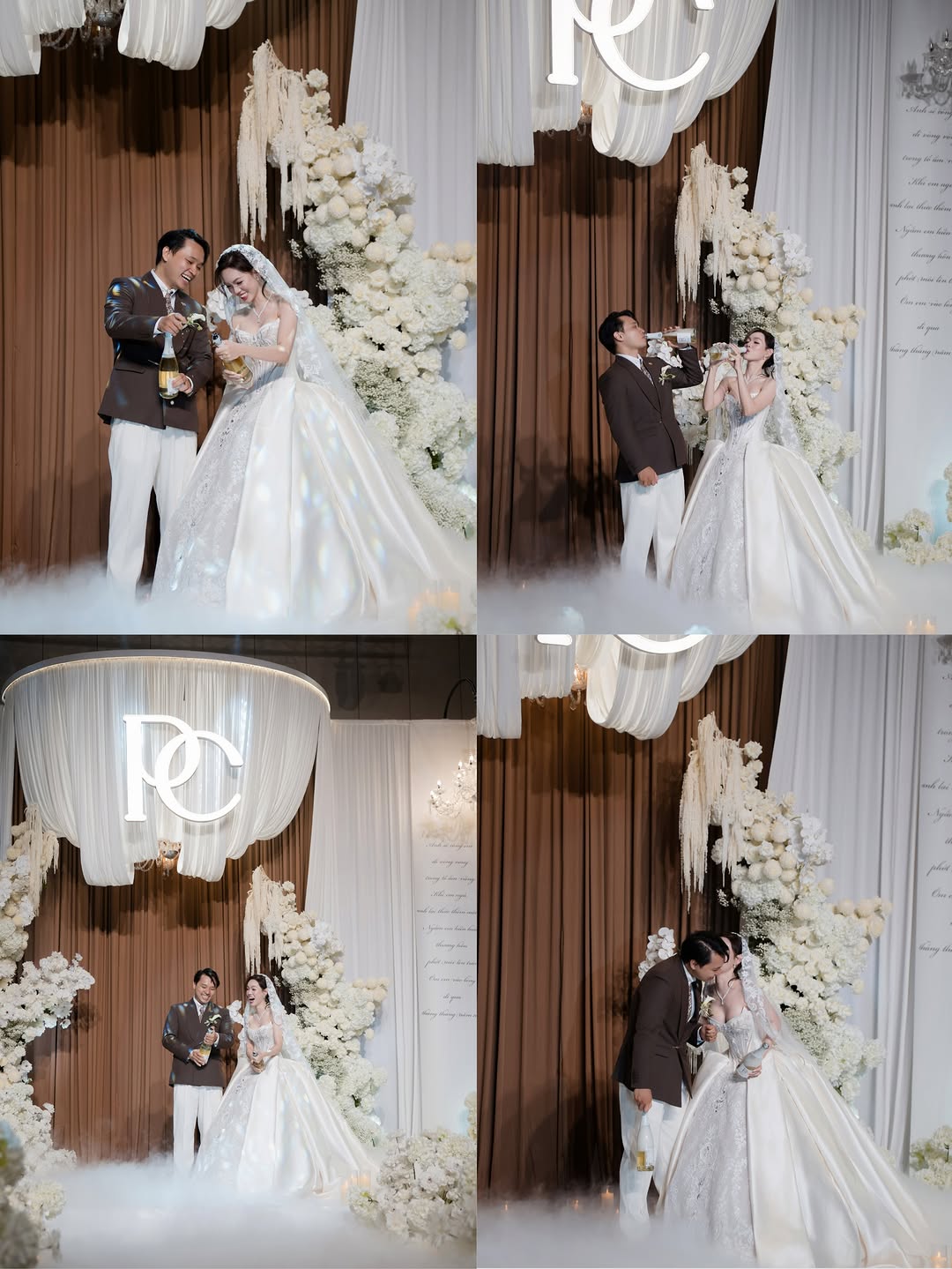
Reviewing Quotations: Do Not Just Look at the Total Price; Clarify the Scope of Work and Additional Costs
When searching for wedding planner company in Ho Chi Minh City or a specialized team for wedding services in Da Lat, ask for a quotation that clearly defines the scope of work. A low total price that excludes coordination staff, site inspections, rehearsals, or a Plan B may force the couple to purchase many additional services later.
Read the quotation as a project management agreement: what is included, how many revisions are allowed, working hours, guest count limits, number of venues, transportation expenses, overtime conditions, procedures for changing requirements, and approval mechanisms for additional costs. If anything is unclear, clarify it before paying a deposit.
Choosing Vendors Based on Style, Venue, and Guest Experience Rather Than Simply Using an Existing List
A good vendor is not simply one with an attractive portfolio. They must be compatible with the concept, venue, and experience the couple wants to create. For an outdoor reception, the florist must understand how flowers respond to wind, sunlight, and humidity; the technical team must calculate electrical loads and protect equipment; and the photographer must know how to work with rapidly changing natural light.
Especially in Da Lat, Da Lat climate creates a uniquely romantic atmosphere, but also requires more detailed operational planning. Fog, localized rain, falling temperatures in the evening, and differences between areas can affect setup, attire, flowers, equipment, and the overall guest experience.
Checklist: 7 Questions to Ask Before Signing with a Full-Service Wedding Organizer
- What exactly is included in the Full Planning or Coordination package?
- Who is the main person in charge and how many team members will be present on the wedding day?
- Which budget tracking sheet is used, and how frequently is it updated?
- What criteria does the planner use to recommend vendors, and can the couple choose or replace them?
- How will costs be handled if the guest count, venue, schedule, or concept changes?
- How thoroughly are contingency plans prepared for rain, power outages, timeline delays, or vendor emergencies?
- Which expenses are definitely excluded from the quotation and may arise later?
If the service provider can answer these seven questions clearly through procedures, templates, or project examples, couples will have a better basis for evaluating actual capabilities rather than relying solely on marketing images.
Outdoor Weddings in Da Lat: Plan B Scenarios and Practical Risk Management Capabilities
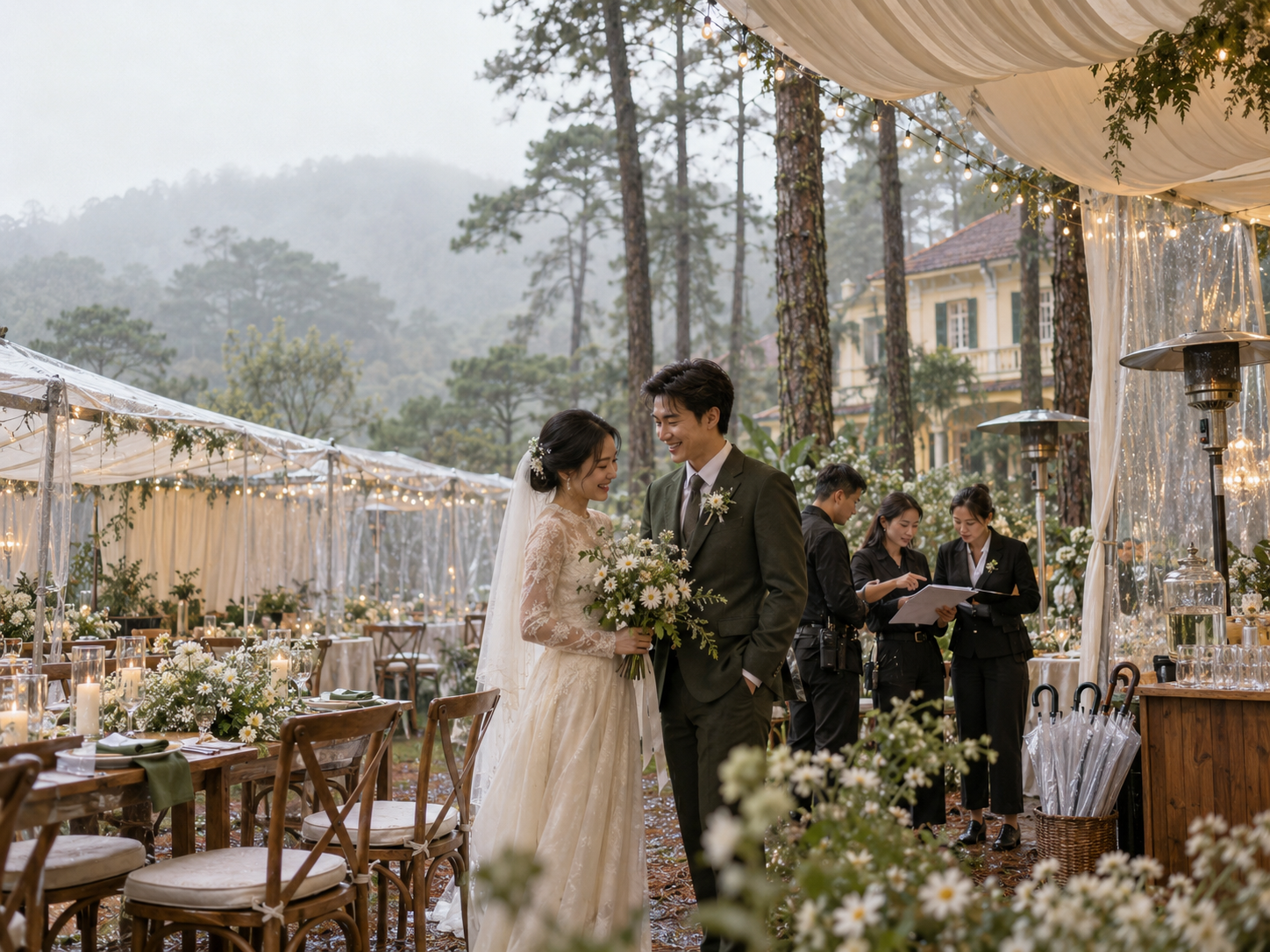
Weather, Wind, Temperature, and Terrain Risks When Organizing Events in Da Lat
Weddings in pine forests, gardens, or resorts in Da Lat offer significant advantages in terms of scenery, lighting, and atmosphere. However, open spaces also create greater operational risks than ballrooms. Rain can arrive suddenly, wind can affect backdrops and floral structures, falling temperatures can make guests uncomfortable, and sloping terrain or soft ground can complicate transportation and installation.
A thorough site inspection should assess transportation routes, staging areas, power sources, drainage points, ground conditions, kitchen locations, restrooms, access routes for elderly guests, shuttle arrangements, and sheltered areas in case of rain. These details rarely appear in beautiful photographs, but they determine the stability of the event.
Plan B for Pine Forests, Gardens, and Resorts: From Alternative Venue Arrangements to Timeline Adjustments
Plan B should not simply mean “move everything indoors if it rains”. A complete contingency plan must identify the capacity of the alternative space, seating arrangements, decoration relocation routes, technical equipment requirements, the time needed for conversion, and who has the authority to make the decision.
For outdoor weddings, The Pine typically approaches Plan B through three layers: pre-event prevention, contingency activation thresholds, and conversion procedures. For example, if there are signs of rain, the team can protect electrical systems, prepare umbrellas, cover water-sensitive materials, and adjust the setup sequence before a complete venue change becomes necessary.
The key is to establish a decision deadline. If the venue change is not decided until guests have already arrived, the risk of disrupting their experience increases rapidly. The planner must use on-site conditions, weather data, setup speed, and vendor conversion capabilities to recommend a decision early enough.
Managing Wedding-Day Incidents So the Bride, Groom, and Both Families Can Enjoy the Celebration Without Emotional Disruptions
The goal of incident management is not to make the wedding day completely problem-free. Real events always have the potential for unexpected changes. The objective is to detect issues early, resolve them behind the scenes, and prevent them from affecting the guest experience or the families“ emotions.
If the MC arrives late, the team can rearrange the program sequence; if flowers are affected by the weather, the florist can prioritize restoring the main visual focal points; if guests arrive early, the reception team needs a welcome drink and waiting area. These capabilities may not appear in a portfolio photograph, but they are essential when evaluating a professional planner.
The Pine Wedding Planner – A Wedding Tailored to Your Unique Story
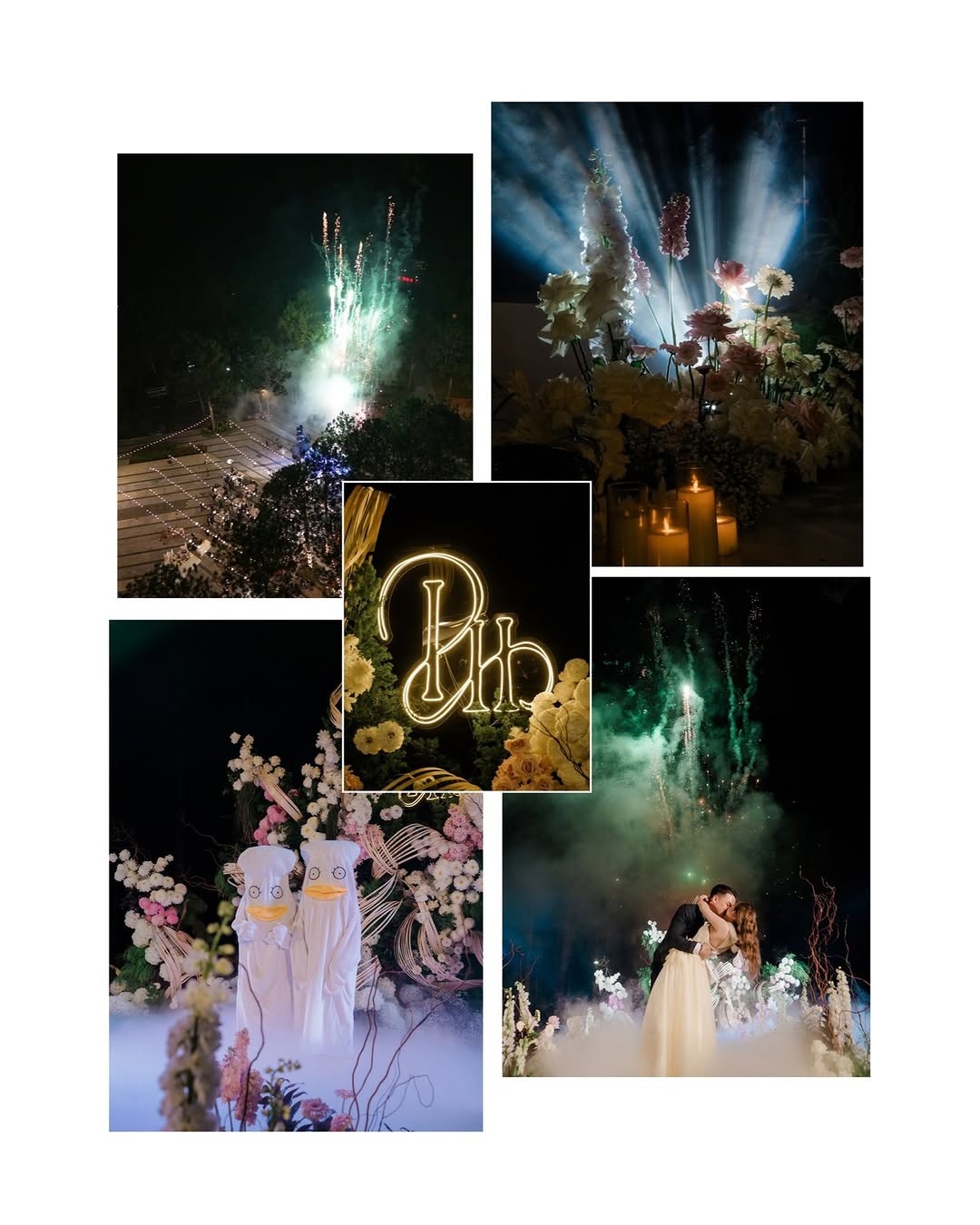
From a Love Story to a Fine Art Masterpiece: Personalized Concepts, Colors, and Every Detail
The Pine believes that a memorable wedding does not need to resemble any wedding that came before it. Every story should be transformed into its own aesthetic system: color palette, materials, flowers, typography, music, lighting, and the way guests move through each space. Fine Art is therefore not a style preset, but a method of creating intentional sophistication.
Personalization should also go hand in hand with restraint. A shared memory can become a detail on the invitation, a favorite destination can inspire the color palette, and a meaningful song can become an emotional highlight during the ceremony. When a story is told through just the right number of layers, guests can sense the couple's personality without needing every detail to be explained.
An Integrated Wedding Service Ecosystem in Da Lat and Ho Chi Minh City: Full Planning, Day-of Coordination, Decoration, and Traditional Engagement Ceremonies
The Pine has developed an integrated service ecosystem that includes Full Planning A-Z, Day-of Coordination, Wedding Decoration, and decoration for traditional engagement ceremonies, Buddhist wedding blessings, and Christian wedding ceremonies. This allows couples to choose a scope that matches how much they have already prepared. Those who need a single point of contact from the beginning can choose Full Planning; couples who have already confirmed most vendors can choose Day-of Coordination; and those who want to focus on aesthetics can book Decoration separately.
With traditional wedding ceremonies, the requirements go beyond beautiful decoration. They also involve respecting the ceremonial sequence, family spaces, and the roles of both families. The Pine aims to create an elegant and intimate presentation that preserves cultural identity while remaining consistent with the overall aesthetic of the wedding.
Making Your Wedding Day Not Only Perfectly Organized but Also a Day You Can Truly Relax and Enjoy
Ultimately, the question how much does a full-service wedding cost only becomes truly meaningful when considered alongside three other questions: what do you want to preserve in your memories, how do you want to spend your time, and who will take responsibility for everything else? The right wedding package is not necessarily the one with the most services, but the one that addresses the pressures the couple is actually facing.
If you are preparing for a wedding in Da Lat or Ho Chi Minh City, The Pine Wedding Planner can help you get started with a consultation: identifying priorities, estimating the budget, recognizing potential risks, and selecting the appropriate service scope. From there, every decision is placed within one unified plan so that your wedding is not only beautiful in photographs but also truly fulfilling for the two of you as you experience those moments.
