

A wedding day prepared over many months can still encounter situations that are not part of the plan: rain arriving earlier than forecast, unexpected guests, loss of audio signal, a wedding dress issue, or a timeline running a few minutes late and causing a chain reaction across the following items. Therefore, wedding day troubleshooting is not simply about solving a problem after it occurs, but about the ability to identify risks, prepare alternative solutions, and coordinate all parties so that the bride and groom barely have to worry. This is also an important value that a professional coordination team brings to the big day.
Wedding Day Troubleshooting: Why Is the Coordinator the Person Who Keeps the Celebration on Track?

When planning wedding day troubleshooting, the coordinator does not replace the bride and groom in making personal decisions. Their role is to turn the agreed plan into a wedding day that runs smoothly, while creating a layer of protection behind the scenes so that technical, staffing, and timing issues are handled before they become pressure for the family.
How Is Wedding Day Coordination Different from a Bridal Assistant and Support from Family Members?
For wedding day troubleshooting services, wedding day bridal assistant usually focuses directly on the bride's personal needs such as helping with dress changes, holding belongings, reminding her of the makeup schedule, preparing accessories, or coordinating with the makeup artist. Family members are better suited to tasks involving family, guests, and ceremonies that they understand well.
A coordinator has a broader scope. They manage the timeline, vendors, MC, technical team, decorations, banquet, ceremonies, guests, and the intersections between multiple groups. A wedding day coordination services professional must know who has the authority to make each decision, when to inform the bride and groom, and when the team can proactively handle an issue without interrupting the couple's emotions.
Wedding Day Supervision: Things the Bride and Groom Should Not Handle Themselves
On the wedding day, the bride and groom should not directly call a supplier because the backdrop is unfinished, check for missing chairs, rush the MC, confirm dishes, look for a technician when the microphone fails, or argue over an unexpected fee. These tasks consume time and pull the couple's attention away from important moments.
wedding day supervision in the true sense means placing a capable point of contact between the couple and the entire operational system. Every issue is classified by severity: matters the team can resolve themselves, matters that require notification, and matters that must receive a decision from the couple or a family representative.
From Troubleshooting to Preserving Every Emotion: The True Value of Day-Of Coordination
The greatest value of Day-of Coordination lies not in the number of incidents handled, but in the number of issues anticipated and prevented before guests or the bride and groom notice them. When everything runs smoothly, coordinators are often the people who appear least in the frame while continuously controlling things behind the scenes.
For The Pine, wedding day coordination services must also preserve the emotional rhythm. A ceremony may be delayed by a few minutes to allow parents to settle emotionally; a performance may be moved in the rundown to address a technical issue. The timeline is a management tool, not a reason to turn the wedding into a rigid program.
Common Wedding Day Incidents and Practical Response Scenarios

It is impossible to predict every situation precisely, but most risks fall into familiar groups: weather, guests, technical issues, vendors, health, attire, and ceremonies. Experience wedding day troubleshooting lies in establishing activation thresholds and responsible parties for each contingency in advance.
Rain, Wind, or Changing Weather: Activating Plan B for an Outdoor Wedding in Da Lat
Outdoor weddings in Da Lat need to be managed according to actual conditions at the Da Lat climate, rather than simply looking at a weather icon on a phone. Rain, mist, wind, humidity, and temperature can all affect fresh flowers, audio, electrical equipment, walkways, and the guest experience.
Plan B should be agreed upon before the wedding day: ceremony relocation point, covered area, equipment protection plan, time required to move the setup, personnel responsible, and the person authorized to make the decision. More importantly, a decision deadline must be established. If the team waits until the rain actually starts before switching plans, it has essentially lost the advantage of being proactive.
A good Plan B is not a solution invented when the rain begins. It is a scenario with personnel, an activation time, and a clearly defined implementation sequence established in advance.
Late Arrivals, Additional Guests, or Incorrect Seating Arrangements: Handle Discreetly Without Affecting the Experience
The guest list can always change at the last minute. The coordinator needs to work with the restaurant or resort to know the number of spare seats, the ability to add meals, flexible table locations, and the family representative who can confirm additional guests.
If the seating chart is incorrect, the first priority is not to leave guests standing in the reception area. A suitable temporary place can be arranged first, and then the team can revise the seating chart. For elderly guests, young children, or guests with special needs, movement flow and seating location should take priority over the symmetry of the chart.
Audio, Lighting, Power, and Equipment Failures: A Response Process to Keep the Program Running Smoothly
A microphone losing signal during a speech, music failing to play on the correct cue, or unstable power can all interrupt the program. Therefore, the rehearsal must check the power supply, backup equipment, backup microphones, offline playlists, and the on-site technical contact.
When an incident occurs, the coordinator does two things simultaneously: asks the technical team to resolve the cause and adjusts the rundown so that waiting time does not become dead air. The MC can switch to a suitable interactive segment, or the coordinator can reorder two items if this does not affect the ceremony. This is the difference between fixing equipment and truly wedding day troubleshooting.
Attire, Makeup, Bride and Groom Health, and Ceremony Issues: Put People Before the Program
The emergency kit should contain basic items such as a sewing kit, safety pins, fashion tape, tissues, stain-removal tools, and some suitable personal items. However, when an issue concerns health, the most important principle is to prioritize people rather than trying to keep the timeline on schedule.
If the bride or groom needs to rest, the coordinator must remain calm enough to extend the program, discreetly inform the MC and relevant vendors. A timeline delayed by 10 minutes can be adjusted; the couple's health and experience should not be sacrificed simply to keep the program absolutely on time.
Wedding Day Supervision Process from Rehearsal to the End of the Reception

Process wedding day supervision effectively begins before guests arrive. The team needs to understand the entire plan, identify the intersections between vendors, and turn the timeline into an action system with specific people responsible for each task.
Before the Wedding Day: Receive the Timeline, Review Vendors, and Create a Risk List
The coordinator needs to receive each vendor's contract or scope of work, timeline, contact list, space layout, list of important guests, special ceremonies, and specific family requirements. From there, the team creates a risk list: which items may be delayed, which depend on weather, who makes the decision, and what the alternative plan is.
This is also when commonly overlooked gaps are discovered, such as no one being assigned to receive flowers, no one designated to hold the rings, no one identified to take gifts home, or two vendors having different understandings of the setup time.
On-Site Rehearsal: Checking the Space, Audio, Lighting, Banquet Tables, and Movement Flow
A rehearsal should not only check the stage. The team needs to follow the actual journey of the bride, groom, and guests: drop-off point, reception area, ceremony entrance, stage, banquet tables, restrooms, and exits. For outdoor receptions, also check the ground surface, slipperiness, wind, power supply, and travel distance when activating Plan B.
Safety-related factors need to comply with fire prevention regulations and the operating requirements of the event venue. Beautiful decorations cannot take priority over the safety of guests and the team.
On the Wedding Day: Coordinating Vendors, MC, Ceremony, and Guests According to a Minute-by-Minute Rundown
A detailed rundown should specify the time, action, person responsible, audio cue, lighting cue, and completion confirmation point. The lead coordinator maintains the overall picture; team members assigned to each area provide real-time status updates.
When an item is delayed, the team should not simply push the entire program back. It needs to assess what can be shortened, what can run in parallel, and what must absolutely not be cut because it involves the ceremony or the family's emotions.
End-of-Reception Handover Checklist: Wedding Gifts, Personal Belongings, Payments, and Venue
The end of the program is not the end of coordination work. Gifts, decorations owned by the couple, personal belongings, attire, envelopes, or assets entrusted for management need to be inventoried; vendor completion items and outstanding payments also need to be confirmed.
The end-of-reception checklist should clearly record who receives each item, the quantity, handover time, and any outstanding issues. This is especially necessary when the family is exhausted after a long day and multiple vendors are dismantling the venue at the same time.
Wedding Day Assistant and Traditional Family Ceremony Coordination Services: When Does a Couple Truly Need Professional Support?
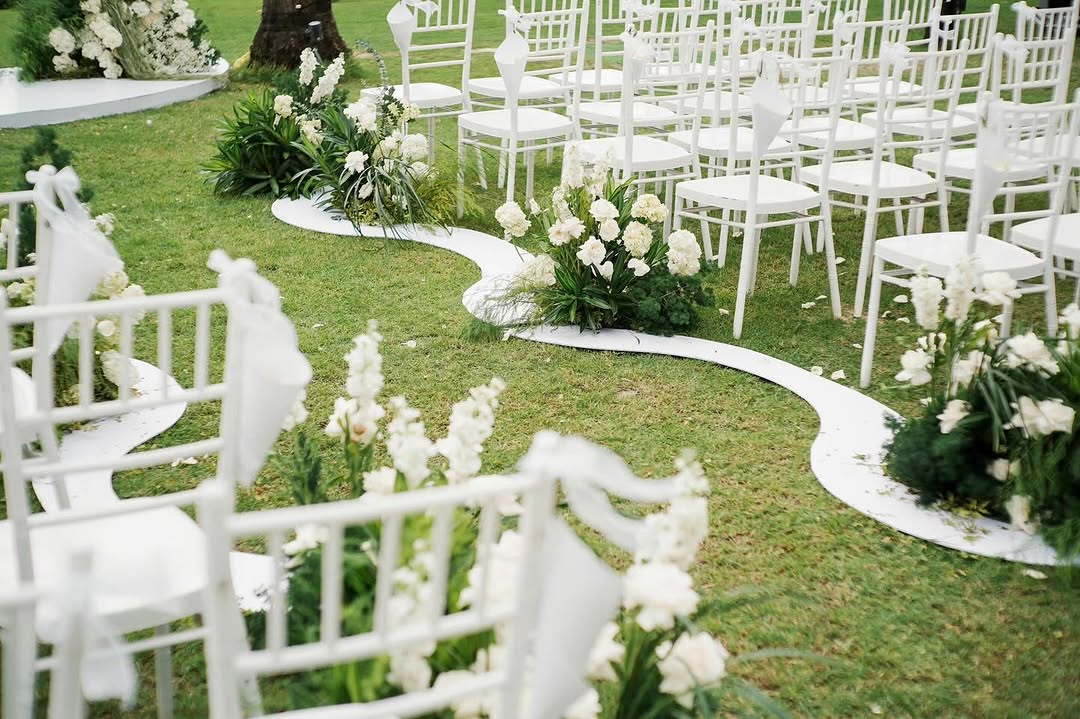
Not every couple needs Full Planning A-Z. If the concept, vendors, and most preparations are already complete, wedding day assistant service or Day-of Coordination may be a more reasonable level of support in terms of scope and budget.
Couples Who Have Prepared Most of the Wedding Themselves but Need Someone to Take Over on the Day
The clearest sign is that the couple already has vendors but does not have a neutral point of contact responsible for connecting all suppliers. If each vendor only knows their own responsibilities, the gaps between tasks can easily become the bride and groom's responsibility.
In this case, the coordination team takes over the plan, reviews remaining gaps, reconfirms vendors, and operates the wedding day on behalf of the couple. This model suits people who want to prepare proactively but do not want to become the project manager of their own wedding.
Traditional Family Ceremony Coordination: Preserving the Ritual While Keeping It Gentle, Punctual, and Uncomplicated
traditional family ceremony coordination requires a different kind of sensitivity from reception coordination. The team needs to understand the ceremony sequence, travel time between the two families, the gift-bearing procession, speakers, required ceremonial items, and important time markers.
Each family has different customs and practices. The coordinator does not impose a single script but discusses it in advance with representatives of both sides, agrees on the sequence, and proactively reminds each group at the right time. The goal is to preserve solemnity without turning the ceremony into a stressful series of commands.
Both Families Have Many Tasks: Delegate Authority So Family Members Can Enjoy the Celebration
Parents and siblings are often willing to help, but they are also the people who need to be present for many important moments. If family members are tasked with checking vendors, calling guests, pushing the timeline, and handling technical issues, they may miss the very family moments worth remembering.
An effective model is to delegate authority clearly: the family decides matters related to ceremonies, relationships, and finances; the coordination team is responsible for operations. This boundary helps prevent multiple people from directing the same vendor and creating conflicting information.
Budget Projection and Cost Control to Prevent Incidents from Becoming Budget Overruns

An important part of wedding day troubleshooting is controlling financial impact. Without clear approval principles, a small change in timing, equipment, or guest count can lead to multiple unplanned charges.
Common Wedding Day Extra Costs: Staffing, Time, Equipment, and Guest Count
The groups that need careful review include venue and vendor overtime fees, additional staff, extra equipment, after-hours transportation, additional meals or tables, setup changes, and costs related to the weather Plan B.
Do not only ask whether an item will incur an additional cost. Determine how it is calculated: by hour, by person, by equipment, or by change. When the fee structure is clear before the wedding day, the team can quickly assess which option is reasonable if an incident occurs.
How to Build a Budget Plan and Emergency Fund Before the Wedding Day
The Budget Plan should separate costs into three layers: committed budget, potentially variable expenses, and contingency fund. The contingency fund should not be viewed as an amount that must be spent; it is a financial limit that gives the couple the ability to respond when conditions change.
The Pine focuses on budget management from the planning stage, balancing priorities and reviewing vendor scope to limit expenses that do not create practical additional value. For every unexpected decision, the questions should be: Does this issue need to be handled immediately, which option has the least impact on the experience, and what is the total resulting cost?.
Final Confirmation Checklist with Each Vendor to Minimize Cost Discrepancies
Before the wedding day, the core details should be confirmed in writing: arrival time, setup time, scope of supply, quantities, staffing, on-site contact, end time, overtime conditions, backup equipment, and remaining balance.
This checklist helps wedding day supervision based on agreed data rather than memory or verbal conversations. When discrepancies arise, the coordinator can also easily determine what falls within the committed scope and what is actually a new request.
Tips for Choosing a Day-Of Coordination Service That Fits Your Wedding

A beautiful portfolio demonstrates aesthetic ability, but it is not enough to evaluate operational capability. When choosing a support provider wedding day troubleshooting, couples should focus on process, staffing, forecasting ability, and how the team responds to real-world situations.
5 Questions to Ask Before Hiring a Wedding Day Coordinator
- When does the team begin taking over the plan, and what documents are required?
- Who is the lead coordinator, and how many staff members will be directly present on the wedding day?
- If the timeline is delayed or a vendor encounters an issue, what is the decision-making process?
- Does the company create a risk list and a Plan B specifically for our venue?
- At what point does the scope of work end, and who handles the final asset handover after the reception?
A good answer needs to be specific about the process rather than simply promising that the team can handle every situation. In event operations, no one can guarantee zero incidents; real capability lies in the level of preparation and the ability to control the consequences.
Evaluate Risk-Handling Ability Rather Than Only Looking at the Decoration Portfolio
Give the consulting company specific scenarios: what would they do if it rains 30 minutes before the ceremony; who handles two additional tables of guests; how is the program adjusted if the MC or a vendor is late? How they analyze the situation often reflects experience better than general introductions.
A good team must also know the limits of its authority. Decisions that significantly affect the budget, ceremony, or core experience require approval from the responsible person, while minor operational issues should be handled proactively.
Specific Criteria for Pine Forest, Garden, and Resort Weddings in Da Lat
For pine forest or garden receptions, check the provider's experience with ground surfaces, power supply, lighting, humid mist, wind, temperature, equipment transport routes, setup time, and rain shelter plans. Beautiful terrain often comes with more complex logistical requirements than a ballroom.
The team should also survey the resort or venue's specific regulations: sound limits, construction hours, transport vehicle access, permitted power sources, and backup areas. These factors directly affect the ability to implement Plan B.
The Pine Wedding Planner: Tailored Coordination So the Bride and Groom Can Truly Relax

For The Pine Wedding Planner, coordination is not about applying a ready-made rundown to every wedding. Each plan needs to be built around the people, space, concept, ceremonies, and the actual level of support the couple needs.
Every Wedding Tells a Different Story: Coordination Based on Concept, Emotional Rhythm, and the Couple's Individual Needs
An intimate wedding with a few dozen guests requires a different coordination approach from a reception with hundreds of guests. A ceremony in a pine forest requires a different operational rhythm from a wedding in a ballroom. The Pine approaches each wedding as its own story, allowing the timeline to serve the experience rather than forcing the experience to follow the timeline.
This is reflected in the preparation schedule, the bride and groom's rest periods, the timing for welcoming parents, cues for speeches, and the way private moments are protected from interruptions by the technical team.
From Plan B for Da Lat Terrain to Troubleshooting in Ho Chi Minh City: Be Proactive Before Risks Occur
In Da Lat, the focus is often on weather, terrain, and logistics for outdoor receptions. In Ho Chi Minh City, issues such as traffic, travel time, ballroom setup schedules, guest flow, and coordination among multiple vendors can become the main risk points.
Regardless of the venue, The Pine's principle remains proactive. wedding day troubleshooting effectively begins before the wedding day by asking the right questions, checking the right points, and determining alternative solutions in advance.
Day-Of Coordination, Full-Service Wedding Planning, and Wedding Design: Choosing the Right Level of Support for Each Need
If the couple has completed most of the planning, Day-of Coordination focuses on taking over and operating the wedding day. If there is no established vendor system, budget, or clear concept, a full-service Wedding Planner is more suitable because the team can accompany the couple from the Budget Plan stage through the wedding day.
For couples who need strong development of space and aesthetics, design and decoration services focus on concept, colors, flowers, materials, and visual experience. Choosing the right scope from the beginning helps place the budget where it is truly needed.
Behind-the-Scenes Coordination So the Bride, Groom, and Both Families Can Simply Enjoy the Big Day
A memorable wedding is not a day without any changes. It is a day when changes are controlled well enough that the bride, groom, and family do not have to devote their attention to them. Behind that ease are timelines, checklists, contingency plans, and a team that knows when to step in and when to step back.
If you are preparing a wedding in Da Lat or Ho Chi Minh City and want a wedding day troubleshooting clear plan well before the wedding day, The Pine Wedding Planner can work with you to review the timeline, vendors, budget, ceremonies, and practical risk points. The goal is not to turn the wedding day into a program that is perfect down to every second, but to create enough preparedness for you and your loved ones to truly be present in every moment of the big day.
