

A memorable wedding day requires more than a beautiful venue or a well-planned concept. Behind moments that seem to unfold naturally are dozens of tasks that must be activated with the right people, at the right time, and in the right order. A makeup session running 20 minutes late, a delayed wedding car, an MC who has not received the cue, or an unprepared sound system can throw the entire program off schedule. Therefore, wedding timeline management is not simply about watching the clock and reminding people of the time. It is the process of managing people, vendors, spaces, technical elements, and emotions. This article shares how The Pine Wedding Planner manages real-world wedding timelines so couples can enjoy their special day instead of becoming the people responsible for resolving problems at their own wedding.
What Is Wedding Timeline Management? Why Does Proper Coordination Make Your Special Day More Relaxed?

In wedding event operations, the timeline serves as the shared schedule, but it alone is not enough to make a program run smoothly. A professional coordination team must translate the timeline into specific tasks, identify responsible people, establish checkpoints and activation signals, and prepare solutions in case any link in the chain falls behind.
How Are a Timeline, Rundown, and Wedding Script Different in Real-World Operations?
Timeline answers the question, “What happens at what time?” For example: setup completed at 16:00, photo session at 16:30, guest arrival at 17:00, ceremony at 18:00, and reception beginning at 18:45. This is the overall schedule that allows everyone involved to work toward the same timetable.
Run of Show goes into greater detail: at each minute, who performs the task, where they stand, who gives them the cue, and which teams must be ready. A moment when the bride walks down the aisle may simultaneously involve the coordinator, MC, band, sound team, lighting team, photographer, videographer, and family members.
Wedding script focuses on content and emotional progression: what the MC says, when the video plays, where the vows take place, how the parents give their speeches, when the music changes, and when the reception begins. These three documents must work together rather than exist independently.
Which Key Milestones Must a Standard Timeline Control, from Preparation and Ceremony to the Wedding Reception?
A practical timeline usually begins several hours before guests arrive. The team must control vendor arrival times at the venue, site handover, decoration setup, electricity checks, sound, lighting, makeup, photo sessions, rehearsals, guest arrivals, the ceremony, reception, stage performances, photography, guest departures, and teardown.
For destination weddings or outdoor weddings in Da Lat, the timeline must also account for travel distances, the best natural lighting for photographs, falling temperatures in the evening, and Da Lat's climate characteristics. A beautiful spreadsheet timeline that overlooks actual site conditions can easily fail during implementation.
Why Should Couples Avoid Managing Their Own Wedding Timeline on the Wedding Day?
Couples can participate in developing the timeline, but they should not be the ones operating it directly. On their wedding day, the two main people must continuously manage makeup, take photographs, welcome guests, participate in ceremonies, and interact with their families. They rarely have enough on-site information to know which vendor is running late, which microphone is not ready, or whether the gallery table needs to be adjusted.
When a couple must both enjoy their wedding and constantly check their phones, call vendors, and ask, “How far along are we?”, their emotional experience becomes fragmented. The value of wedding day coordination lies in transferring the entire operational burden to a professional point of contact.
What Does a Wedding Coordinator Team Do? The Behind-the-Scenes Tasks That Keep a Wedding on Schedule

A wedding coordinator team does not simply appear when the program begins. The most important work often takes place behind the scenes: continuously checking progress, confirming each vendor's status, and resolving issues before the couple even notices them.
Coordinating the Couple, Family, MC, Photo and Film Teams, and All Vendors
The coordinator serves as the connection point between teams with different operational priorities. Photographers need suitable lighting and shooting time; makeup artists need enough time to finish; catering teams need precise service times; the MC needs cues; family members need guidance through the ceremonies; and the couple needs breaks. If each party follows its own schedule independently, timing conflicts are almost inevitable.
The Pine typically identifies the PIC for each vendor, contact phone numbers, call times, setup deadlines, gathering locations, and handover milestones. As a result, when wedding timeline management, the coordinator does not waste time finding the person responsible.
Coordinating Wedding Sound and Lighting and Synchronizing Stage Cues
Wedding sound and lighting coordination requires precise cues. The processional music must begin when the procession is ready; microphones for the vows must be tested before being handed over; videos must be preloaded; and lighting must change according to each segment rather than waiting for the MC to request it on stage.
The Pine prioritizes soundchecks and technical rehearsals before guests arrive. Important cues are marked directly in the rundown and agreed upon by the coordinator, MC, sound and lighting technicians, and band. This reduces reliance on split-second reactions during the event.
Controlling Setup, Rehearsals, Guest Arrivals, and On-Site Handover
Before the big moment, the coordinator checks every venue area: the ceremony space, stage, gallery table, reception area, signage, dining tables, walkways, vendor areas, and technical points. The inspection goes beyond confirming that setup is complete; it must also verify the layout, quantities, positions, and standards agreed upon.
Guest arrivals also require staff to direct traffic, guide guests to their seats, assist older guests, check whether important participants have arrived, and monitor the proportion of guests who have arrived to determine when the ceremony should begin.
A Checklist of Tasks Coordinators Handle So Couples Don't Have to Worry
- Confirm call times and the status of every vendor.
- Check setup progress against the approved layout.
- Test microphones, music, videos, screens, and lighting systems.
- Coordinate makeup, photography, filming, and travel time.
- Guide family members and ceremony participants.
- Prepare the processional order and stage cues.
- Check the number of guests present before the program begins.
- Adjust the timeline when an item falls behind schedule.
- Handle vendors, guests, and on-site changes.
- Activate Plan B when weather conditions are unsuitable.
The Pine Wedding Planner's Practical Wedding Timeline Management Process

The Pine's process does not begin by creating another schedule. The team first needs to understand the entire wedding-day structure, what the couple has already prepared, the vendors' commitments, and the venue's actual conditions.
Step 1: Review the Existing Timeline and Identify All Potential Bottlenecks
For Day-of Coordination clients, The Pine receives the timeline, vendor contracts or scopes of work, venue layout, and contact information. The team then reviews milestones that could conflict: makeup finishing too close to the photo session, insufficient setup time, a photo session overlapping with the rehearsal, or the ceremony starting after natural lighting has changed.
This is a crucial stage of wedding day coordination services, because resolving a bottleneck before the event is always easier than dealing with it on the wedding day.
Step 2: Build a Detailed Rundown, Assign Responsibilities, and Confirm Timings with Every Vendor
Once the overall timeline is confirmed, The Pine converts it into an operational rundown. Every milestone must answer at least five questions: when it happens, what needs to be done, who is responsible, who assists, and which conditions must be met beforehand.
The team also confirms PICs and the scope of each person's responsibilities to avoid situations where several people direct the same task but no one is truly accountable. This is also a core part of wedding day coordination services The Pine's approach.
Step 3: Conduct an On-Site Rehearsal and Check Sound, Lighting, and Movement Conditions
A rehearsal turns the plan on paper into a practical operational flow. The team checks the routes used by the bride, groom, and family; processional distances; standing positions; camera angles; microphone placement; music cues; and lighting zones.
For outdoor weddings, the team also checks power lines, equipment protection, walking surfaces, rain shelters, and setup conversion plans. These details are especially important because Da Lat's climate characteristics can cause outdoor conditions to change rapidly.
Step 4: Coordinate the Wedding Day by Milestone and Manage Unexpected Issues On-Site
On the wedding day, the coordinator does not wait until the scheduled time to check an item. The team always works ahead of the timeline: if the ceremony starts at 18:00, guest arrivals, family members, the processional lineup, MC, sound, photography, and filming must already be checked from 17:30.
This principle allows wedding timeline management the team to act proactively rather than reactively. When an issue arises, there is still time to make adjustments before it affects the main program.
A Wedding Timeline That Stays on Schedule: How The Pine Handles Common Disruptions
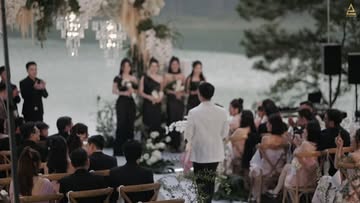
No real-world timeline runs with absolute precision every minute from beginning to end. Coordination expertise lies in identifying delays, assessing their impact, and making adjustments that guests barely notice.
Time Buffers: Where Should You Add Extra Time Without Disrupting the Program's Emotional Flow?
Buffers should not be added mechanically after every activity. The Pine typically prioritizes extra time at high-risk transition points, such as after makeup, before travel, after the photo session, before the ceremony, and between setup completion and opening the venue to guests.
For example, if makeup is scheduled to finish at 14:00 and the photo session starts at exactly 14:00, the timeline has virtually no capacity to absorb disruptions. A reasonable buffer allows the team to manage delays without cutting important moments later in the day.
When Makeup, Travel, or Ceremonies Run Late: What Should Be Cut, What Should Be Preserved, and How Should the Schedule Change?
The Pine's principle is not to cut the essential elements that give the wedding day meaning just to “catch up with the clock.” Instead, the coordinator identifies flexible items, such as transition durations, certain waiting periods, supplementary photo time, or the order of service, that can be adjusted to suit actual conditions.
If makeup runs 20 minutes late but the ceremony is still two hours away, the team can adjust the photo list, prioritize important family photos, and move some couple portraits to golden hour. The goal of wedding timeline management is to protect the overall experience, not to rush at any cost.
Outdoor Weddings in Da Lat: Prepare Plan B for Rain, Wind, Mist, and Changing Weather
Outdoor weddings in Da Lat need a Plan B prepared in advance, not a solution improvised when it starts raining. The team must agree beforehand on the threshold for activating Plan B, who has decision-making authority, how long setup conversion takes, the backup area, how to protect electrical equipment, and how guests will move around.
For venues featuring gardens, pine forests, or sloping terrain, monitoring Da Lat weather forecast is an important source of information before the event. However, on-site decisions must still be based on direct observation, venue conditions, and safety for guests and equipment.
Handling Sound, Lighting, Vendor, and Guest Issues Without Interrupting the Emotional Flow
A microphone losing its signal, a video failing to play, or a late vendor does not necessarily have to become “a problem affecting the entire wedding.” The coordinator needs backup solutions and should communicate through internal points of contact rather than allowing multiple people to rush onto the stage to resolve the issue.
For example, if a video encounters a technical problem, the MC can be cued to move to a prepared interactive segment while the technical team resolves the issue behind the scenes. Once the system is ready, the rundown can be adjusted to reintroduce the video at a suitable transition. Guests can still experience the program as seamless.
What Does a Full Wedding Day Coordination Service Include? Costs and Scope to Understand Before Hiring
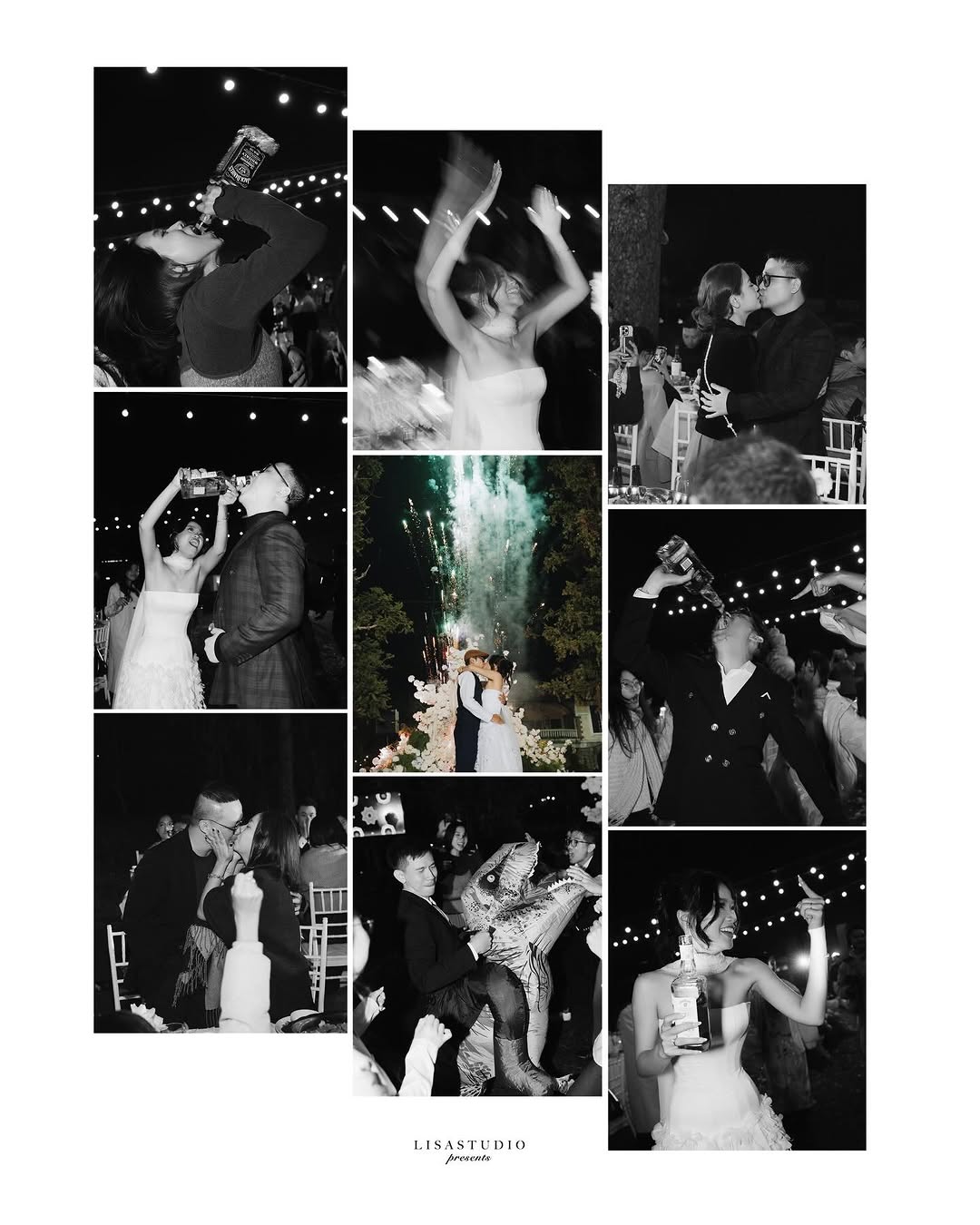
A full-service coordination should be evaluated based on its scope of work and actual resource requirements rather than by comparing a single quoted price. Two weddings with 150 guests each may require very different coordination resources because of differences in venues, vendors, and program structures.
Which Tasks Are Suitable for Day-of Coordination When Couples Have Already Made Their Own Arrangements?
Day-of Coordination is suitable when couples have completed most of the planning: choosing a venue, finalizing a concept, booking key vendors, setting a budget, and developing the program structure. The Pine takes over this system, reviews it, and reorganizes it so that everything can run reliably on the wedding day.
If a couple has only selected a venue but has not yet established a concept, booked vendors, created a budget plan, or figured out how to coordinate the various elements, Wedding Planner Full Planning A-Z is usually a better fit.
Staffing Scope: What Does the Wedding Coordinator Team Handle On-Site?
Staffing levels should not be fixed for every wedding. An event with the ceremony and reception in the same area differs from one with a morning family ceremony, an outdoor ceremony in the afternoon, and a reception in another location in the evening.
Staffing should be based on the number of simultaneous operational areas: backstage, stage, couple, family, guests, vendors, and technical teams. During consultations, The Pine determines staffing based on actual needs rather than adding unnecessary people or assigning too few staff to reduce the quote.
What Factors Affect Service Costs: Guest Count, Location, Number of Vendors, and Complexity?
Coordination costs are generally influenced by guest count, number of venues, working hours, number of vendors, number of ceremonies, rundown complexity, rehearsal requirements, travel distances, and the staffing needed on-site.
Therefore, a transparent quote should specify the scope: when the team begins taking over, the number of pre-wedding meetings, number of coordinators, on-site working hours, assigned responsibilities, and exclusions. This helps couples manage their budget and reduces unexpected costs caused by differing interpretations of responsibilities.
When Should You Choose Wedding Day Coordination, and When Do You Need a Full Planning A-Z Wedding Planner?
Choose Day-of Coordination when approximately 70–80% of the wedding structure has already been developed by the couple and the main need is to review, synchronize, rehearse, and manage operations. Conversely, Full Planning is suitable when the couple needs a partner from concept development and budget planning to vendor sourcing, decoration, and complete event operations.
A planner can create financial value by controlling scope, comparing vendors, avoiding duplicate purchases, and reducing unplanned decisions. A target of optimizing 15–20% of the budget should only be treated as a management guideline that depends on each wedding's structure, not a percentage that can be guaranteed for every couple.
How to Choose a Wedding Day Coordination Team: 8 Criteria to Avoid a Timeline That Looks Good on Paper but Fails in Practice

When choosing a wedding day coordination, a beautiful portfolio is not enough. Couples should assess operational capability through the process, staffing, venue experience, and the team's response to hypothetical situations.
- Have they handled similar types of weddings?.
- Do they understand the venue's characteristics and local conditions?.
- Do they provide a detailed operational timeline and rundown?.
- Is there a clearly assigned PIC for each work group?.
- Do they have a process for working with and confirming details with vendors?.
- Do they conduct appropriate rehearsals or technical checks?.
- Do they have a Plan B for weather and on-site disruptions?.
- Does the contract clearly define scope, staffing, and working hours?.
Do They Have Practical Experience with the Specific Venue Type and Event Terrain?
Ballroom experience cannot fully replace outdoor wedding experience. Weddings in pine forests, gardens, or resorts in Da Lat involve terrain, power supply, transportation distances, temperature, wind, mist, rain, and the ability to switch to Plan B.
A team that has worked in similar conditions will be better able to anticipate bottlenecks rather than only responding after problems arise.
Do They Have Clear Processes for Timeline Management, Delegation, and Vendor Checklists?
Couples can ask the provider to explain how they manage the timeline instead of simply asking, “Do you have a timeline?” A good operational system should clearly show deadlines, PICs, task dependencies, call times, and how changes are communicated.
In particular, ask who has the authority to make decisions on-site. If vendors receive instructions simultaneously from the planner, family, and couple, the risk of conflict is very high.
Do They Have a Plan B and the Ability to Handle On-Site Situations?
Present specific scenarios: What happens if it rains 30 minutes before the ceremony? Which parts are adjusted if makeup runs 40 minutes late? How will the program change if the band arrives late? The team's answers often reveal practical expertise more clearly than general claims such as “we can handle any situation flexibly.”.
For outdoor weddings, ask for a Plan B agreed upon in advance, covering space, staffing, equipment, and decision-making thresholds. Monitoring Da Lat weather forecast is essential, but a good contingency plan must remain workable even when forecasts change.
Questions to Ask Before Signing a Wedding Coordination Service Contract
Couples should ask more than “How much does it cost?” They should also ask, “Who will be responsible for each part of the wedding day if the plan changes?”.
- How far in advance does the team take over responsibilities before the wedding?
- Who is the lead coordinator directly in charge?
- How many staff members will be on-site, and where will they be assigned?
- Will the team work directly with every vendor?
- Are rehearsals and technical checks included?
- Who decides when to activate Plan B?
- What are the principles for adjusting the program if it falls behind schedule?
- How are overtime and additional staffing charged?
Wedding Timeline Management That Preserves Every Emotion – Tailored Coordination by The Pine Wedding Planner

The ultimate goal of wedding timeline management is not to make everyone constantly watch the clock. A good timeline should create the opposite feeling: everything unfolds so naturally that the couple and guests barely notice the operational system behind the scenes.
More Than Staying on Time: How The Pine Protects the Emotional Rhythm So Couples Can Truly Enjoy Their Wedding
The Pine does not consider punctuality the only objective. Some moments should not be shortened simply because the rundown is running a few minutes behind: a hug from a parent, an emotional exchange of vows, or a moment when the bride needs a few minutes to compose herself before walking down the aisle.
The coordinator must know when to push the schedule forward and when to preserve space for emotions. That is the difference between managing a schedule and truly coordinating a wedding day.
Thoughtful Coordination, Transparent Budgeting, and Vendor Collaboration That Reflect Each Couple's Love Story
Every wedding has a different structure, so The Pine prioritizes wedding day coordination services based on actual requirements. The team reviews what the couple has already prepared, identifies missing elements, and recommends the necessary resources instead of applying the same configuration to every event.
This approach also helps control the budget: identifying exactly which elements require investment, which vendor is responsible for each task, and which costs can be eliminated. The goal is to create a sufficiently robust system to protect the experience without adding unnecessary tasks.
From Da Lat to Ho Chi Minh City: A Team Working Behind the Scenes to Make Your Special Day Seamless, Refined, and Uniquely Yours
In Da Lat, The Pine has an advantage in organizing and coordinating outdoor weddings, garden weddings, resort celebrations, and venues near pine forests, where weather and terrain must be incorporated directly into the operational plan. In Ho Chi Minh City, the process is adapted to ballrooms, restaurants, hotels, and programs involving multiple ceremonies throughout the day.
Wherever the wedding takes place, the principle remains the same: wedding timeline management must be precise enough for all vendors to coordinate smoothly yet flexible enough to prevent the wedding from becoming a program that revolves around the clock.
If you have arranged most of your wedding yourself but need a professional team to take over the timeline, review vendors, conduct rehearsals, and coordinate the entire wedding day behind the scenes, The Pine Wedding Planner can help you develop a solution suited to your actual guest count, venue, and budget. If you would prefer a partner from concept development and budget planning through vendor selection and the wedding day itself, Wedding Planner Full Planning A-Z may be a better fit. A well-organized wedding is not one without any changes; it is one where every change is handled with enough care and subtlety for the two of you to remain fully present in your own story.
