

Wedding expenses rarely come down to a single large payment. Instead, they consist of dozens of small decisions: guest count, venue, menu, decorations, photography, attire, ceremonies, transportation, and even contingency plans. Therefore, what puts many couples under pressure is not necessarily whether their budget is high or low, but rather not knowing where to start and which expenses truly deserve priority. This article helps you understand the full picture of a wedding budget by breaking down each expense category, explaining how to allocate costs between both families, and sharing methods to control unexpected expenses so that your special day remains beautiful, well-organized, and true to your story as a couple.
What Are the Costs of a Wedding? An Overview of the Budget You Need to Prepare for a Perfect Wedding
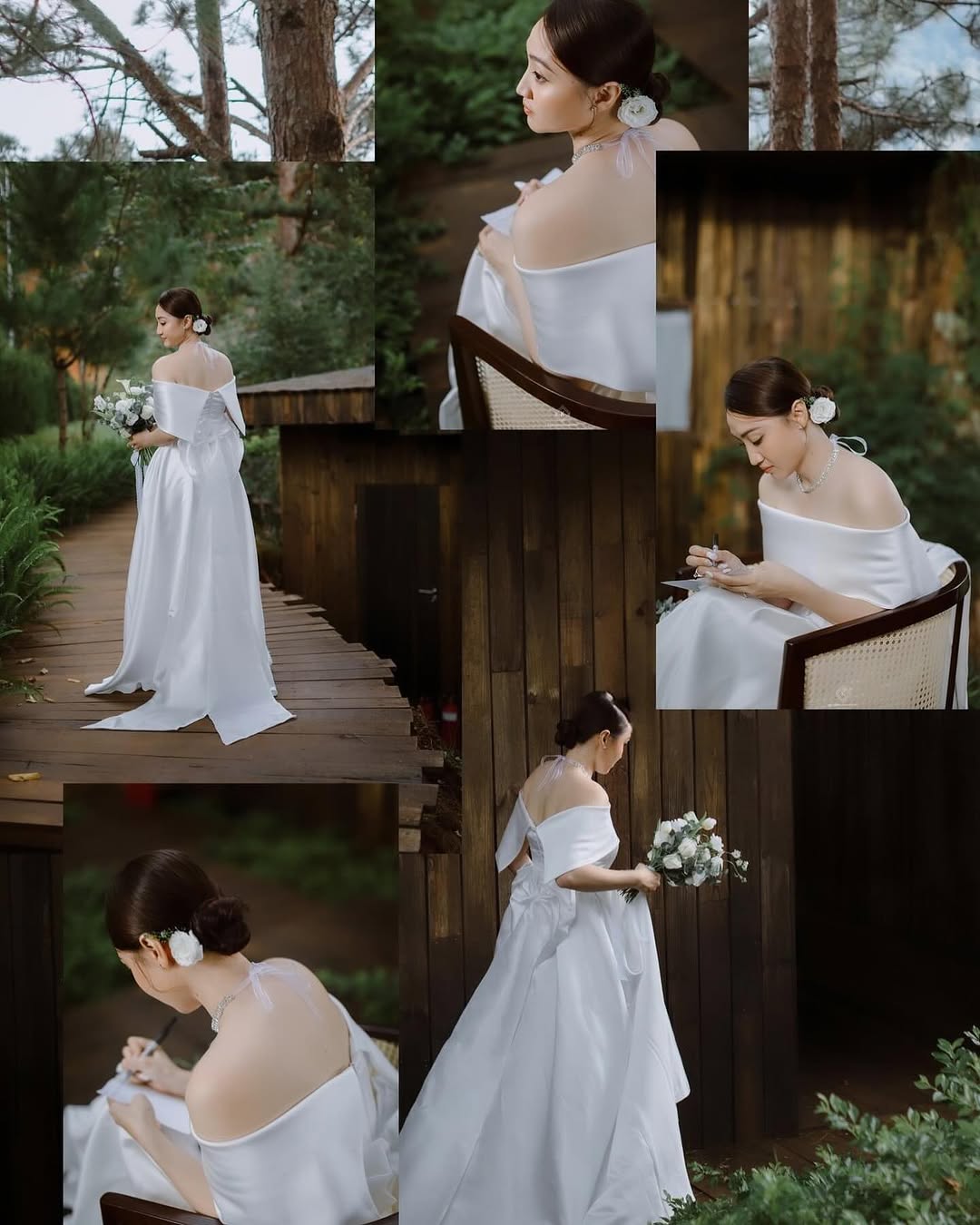
Setting Your Initial Wedding Budget: From the Couple's Wishes to Their Actual Financial Capacity
The first step is not to ask how much money a beautiful wedding requires, but to determine a budget that both of you can afford without creating prolonged financial pressure after the wedding. A good Budget Plan should start with three figures: the maximum budget, the target budget, and the contingency fund. For example, if your total available wedding budget is VND 400 million, you could set a target of around VND 350–370 million and reserve the remainder for changes in guest numbers, logistics, weather conditions, or last-minute additional requirements.
Instead of immediately allocating money to individual vendors, first identify three priority categories: essential items, experience-enhancing items, and flexible items. For couples who value the venue and atmosphere, a larger budget allocation for decorations, lighting, music, and photography may make sense. For couples who prioritize having all their loved ones present, wedding reception costs and the venue's capacity to accommodate guests should take priority. This approach ensures that wedding expenses reflect the values you want to preserve rather than simply following a standard checklist.
Key Factors That Determine Wedding Planning Costs: Guest Count, Venue, Style, and Level of Personalization
The four main factors that have the greatest impact on wedding planning costs are guest count, venue, wedding style, and level of personalization. The number of guests directly affects the number of tables, menu, beverages, chairs, stage size, service staff, gifts, and even transportation arrangements. The venue also brings additional costs, including space rental, technical equipment, setup hours, transportation, and venue-specific regulations.
Wedding style can also create significant cost differences. A minimalist wedding in a venue with beautiful existing architecture may allow you to focus your budget on statement flowers and lighting. In contrast, a Fine Art concept requires more layers of materials, structural frameworks, fresh flowers, linen, candles, a carefully curated color palette, and personalized details. The more unique the design, the greater the amount of design work, sample testing, and custom production required. As a result, two weddings with the same 200 guests can have completely different overall budgets.
Why Does Planning Wedding Expenses Early Help Minimize Unexpected Costs and Preserve the Entire Wedding Experience?
Planning your budget early helps couples understand the relationships between different expense categories before signing contracts. For example, choosing a venue far from the city center may offer an attractive rental price but could result in additional transportation, accommodation for the crew, early setup surcharges, and longer setup times. Similarly, a beautiful backdrop on a mood board does not fully reflect the actual costs if the venue requires an independent support structure, special load-bearing capacity, or a rain-protection solution.
At The Pine, an effective cost-control approach is to lock in the budget for each category and update it after every major decision. Whenever one category increases, you must clearly identify which category will be reduced or which portion of the contingency fund will be used. This is also why many couples choose Full-Service Wedding Planner to work with a wedding planner from the beginning: a planner does more than suggest beautiful ideas; they also ensure that the overall budget, design, and operations remain aligned.
Detailed Wedding Budget Breakdown by Key Expense Category

There is no single correct figure for every wedding. Rather than treating the prices below as fixed quotations, use them as an allocation framework for creating your Budget Plan. The proportions may vary depending on the scale, venue, wedding season, location, style, and personalization requirements.
- Parties and Venues: usually the largest budget category, including the menu, beverages, venue rental fees, service surcharges, and related operating expenses.
- Design and decoration: includes the concept, backdrop, stage, aisle, fresh flowers, gallery table, guest reception table, structural frames, materials, and installation labor.
- Photography and memories: wedding photography, wedding-day documentary photography, videography, pre-wedding shoots, albums, and video versions.
- Attire and beauty: wedding dresses, suits, traditional Vietnamese ao dai, accessories, makeup, hairstyling, and different looks for each ceremony.
- Ceremonies and family: ceremonial offerings, ancestral altar arrangements, wedding cars, home decorations, gift-bearing attendants, thank-you gifts, and traditional expenses.
- Operations and contingency: transportation, accommodation, technical equipment, electricity, sound, lighting, staff, overtime, canopies, umbrellas, flooring, generators, or weather contingency arrangements.
Wedding Reception Costs: Banquet, Menu, Beverages, and Venue Operating Expenses
For wedding receptions at hotels, restaurants, or resorts, couples need to carefully review the pricing structure: per table, per person, or per package. Do not compare menu prices alone. Ask specifically about VAT, service charges, beverages, beer and wine, outside beverage corkage fees, ballroom rental, weekend surcharges, extended-time fees, technical costs, and permitted decor installation hours. An initially low price with numerous surcharges may result in a higher final cost than an option that initially appears more expensive.
For outdoor weddings, additional infrastructure must be included, such as electricity, lighting, restrooms, equipment transportation routes, back-of-house areas, and truck accessibility. If the venue does not already have event facilities, these costs must be included from the beginning rather than added during the final week.
Wedding Decoration Costs: Venue Decor, Fresh Flowers, Gallery Tables, and Unique Concept Design
Decor should not be understood simply as a backdrop and flowers. A good design must consider the entire visual journey: guest arrival points, welcome signs, gallery, entrance, ceremony area, stage, banquet tables, lighting, directional signs, and storytelling details. For a Fine Art style, costs are generally concentrated more on flower quality, compositional proportions, materials, linens, candles, typography, and lighting than on the number of decorative elements.
To optimize spending, choose two to three touchpoints with the strongest emotional impact instead of spreading the budget too thinly. For example, a ceremony in a pine forest can use the natural landscape as its backdrop, focusing on the aisle, main floral arrangement, and vow table. Conversely, an enclosed ballroom requires greater investment in stage structures, lighting, and spatial depth.
Wedding Photography, Videography, Attire, and Beauty Costs: Expenses That Create Lasting Memories
Wedding photography costs should be divided into two groups: pre-wedding and wedding-day documentary coverage. Couples need to clearly determine working hours, number of photographers, videographers, locations, transportation costs, albums, edited photos, and delivery schedules. For wedding films, ask whether the package includes a teaser, highlight video, full ceremony recording, or only a short video. This is a category that is difficult to redo after the wedding, so prioritize a team whose quality matches your style rather than simply comparing the number of photos.
Attire and beauty services should also be calculated according to the entire timeline. A bride with a morning family ceremony, an afternoon ceremony, and an evening reception may need multiple makeup looks, hairstyles, dresses, and accessories. Wedding costs are easier to control when the styling timeline is agreed upon in advance with the planner, makeup artist, photographer, and attire team.
Hidden Wedding Costs That Easily Arise: Transportation, Staffing, Technical Equipment, Weather, and Contingency Plans
Expenses that push a budget beyond its limits are often not the elements visible on stage. They may include loading and unloading fees, trucks, accommodation for the team, overtime, additional staff, power supplies, supplementary sound systems, rain protection equipment, changes in guest numbers, or venue restoration fees. For outdoor receptions, additional provisions are needed for rain protection, wind resistance, equipment protection, and layout changes in unfavorable weather.
A good Budget Plan does not attempt to predict every unexpected expense precisely; it establishes a safety margin in advance so that when changes occur, couples can still make choices instead of being forced to spend more.
How to Allocate Wedding Costs Between the Groom's Family, the Bride's Family, and the Couple's Shared Budget
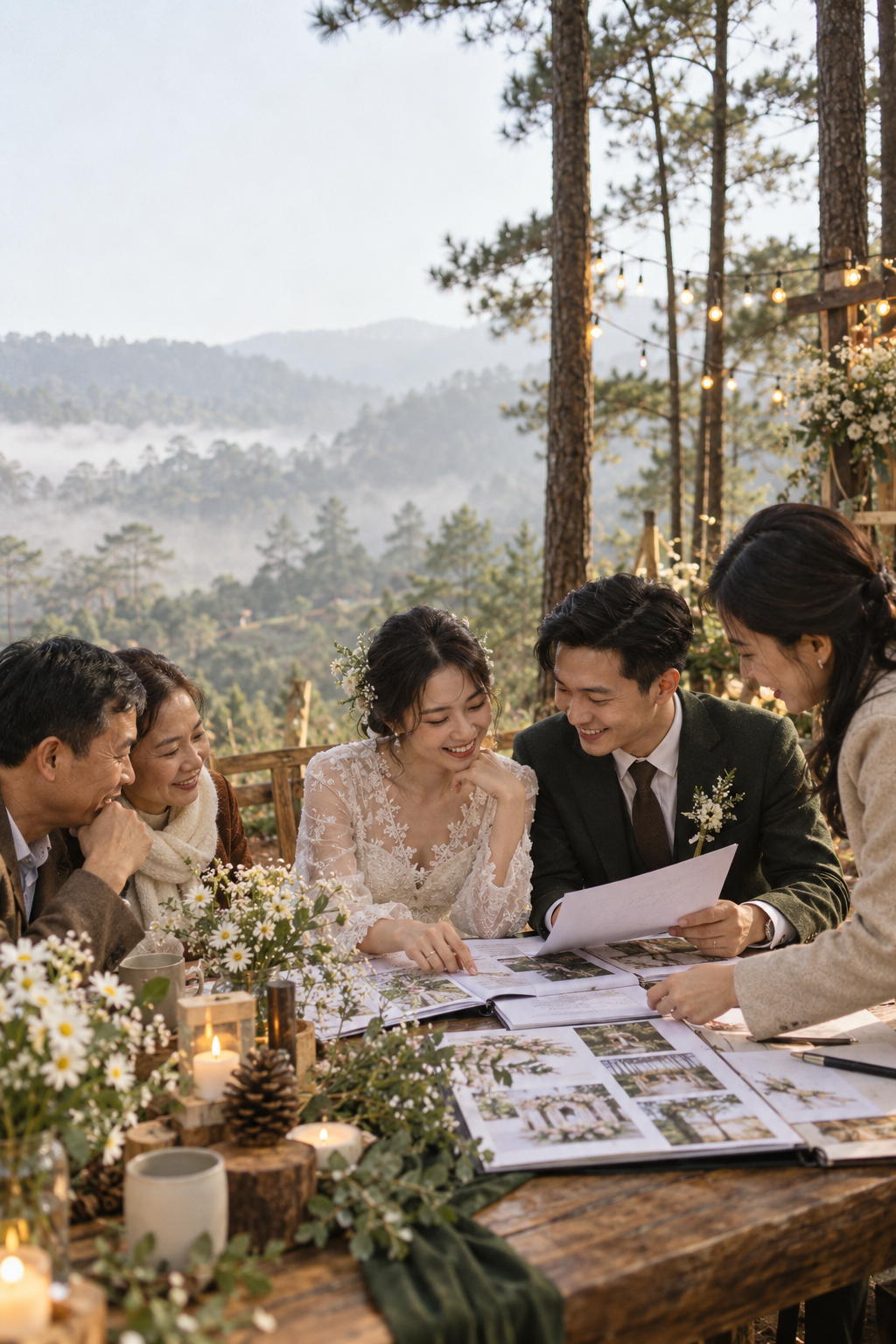
Wedding Expenses for the Groom's Family: Ceremonial Gifts, Bride Collection, Reception, and Traditional Ceremonies
Wedding costs for the groom's family typically involve ceremonial gifts, transportation for the bride collection, family attire, ceremonies at the groom's home, guest receptions, and expenses agreed upon by both families. However, modern cost-sharing arrangements are highly flexible. What matters is not which side must pay for a particular category according to a fixed formula, but that both families agree early on the scope of responsibilities and budget.
For families that value traditional wedding ceremonies, the list of ceremonial gifts, number of gift trays, ceremony sequence, and participants should be finalized before decor and timeline planning begin. Once the ceremonial requirements are clearly established, the planner can coordinate transportation times, decorations, photography, and guest reception without creating scheduling conflicts.
Wedding Expenses for the Bride's Family: Ancestral Ceremony, Guest Reception Area, and Traditional Farewell Ceremony Arrangements
Wedding costs for the bride's family generally focus on the ancestral ceremony area, altar, floral entrance, guest reception table, gift trays, attire, makeup, and the bride's farewell reception if held separately. For townhouses with limited space, expenses involve not only flowers and materials but also compact installation solutions, setup time, family walkways, and the ability to dismantle everything quickly after the ceremony.
The Pine generally prioritizes elegant ancestral altar designs that do not overwhelm the space or conceal the home's architecture. Ivory, White, Sage Green, or Warm Amber color palettes can create a formal yet welcoming atmosphere. If the family has ancestral worship objects or traditional details that must remain unchanged, they should be included in the mood board from the beginning so that the decor complements rather than overshadows the ceremony.
Establishing a Transparent Shared Budget: How Both Families Can Agree on Finances and Avoid Financial Pressure
A practical principle is to create a shared budget file with four mandatory columns: expense category, responsible party, estimated budget, and confirmed cost. Expenses paid separately by each family should still be recorded so that the couple can see the actual total wedding costs. This prevents situations where each side believes it is only covering a small portion while the overall budget has already exceeded the original plan.
If several people are involved in decision-making, it is best to appoint one final approval contact for each expense category. The more people who can directly change requirements with vendors, the greater the risk of concept inconsistencies and additional costs.
Managing Your Wedding Budget with a Wedding Planner: Cost Optimization Without Unexpected Expenses
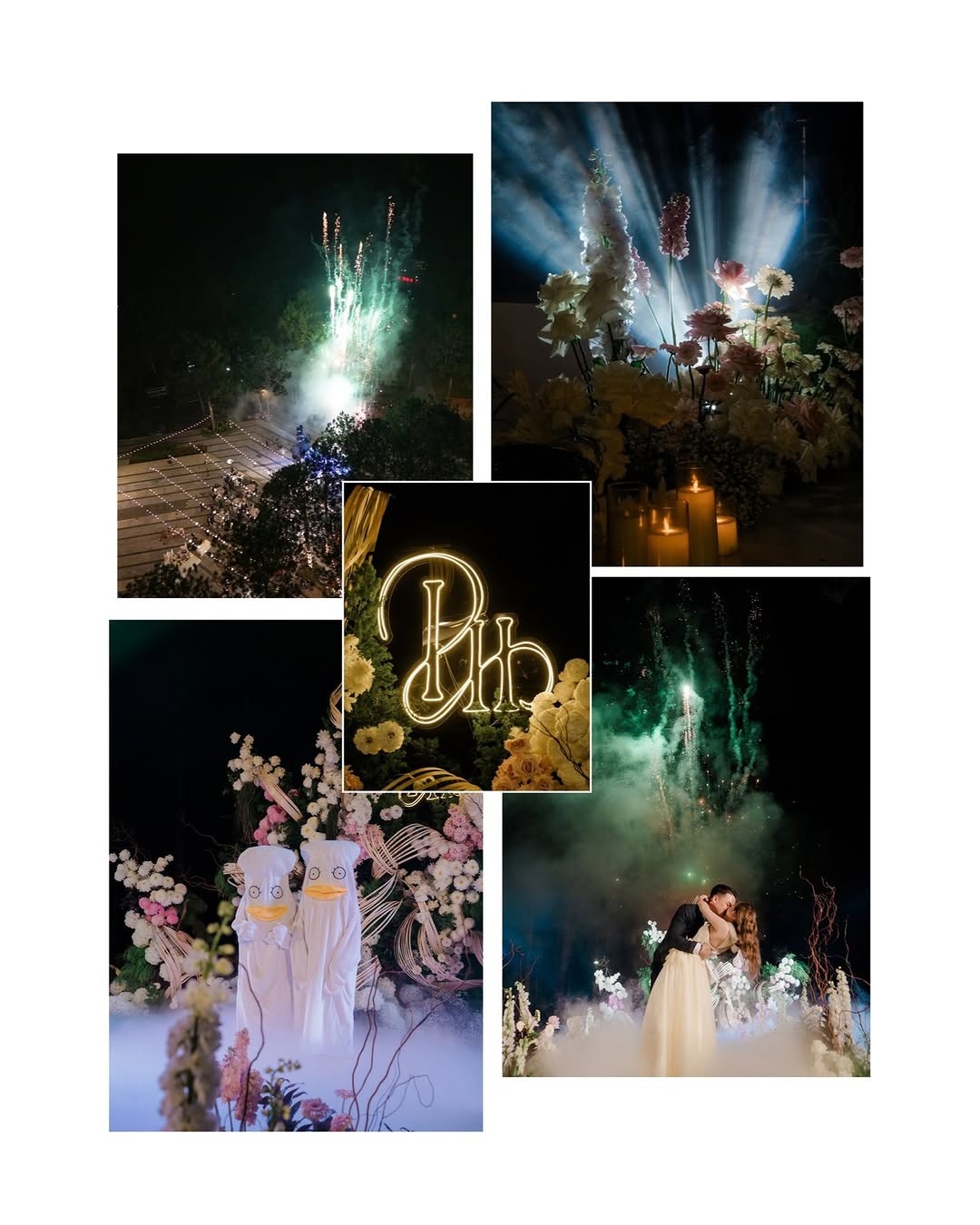
Professional Budget Plan: Creating an Estimate, Setting Priorities, and Controlling Every Expense
A Budget Plan is not an Excel spreadsheet created once and then forgotten. It is a decision-making tool that must be updated throughout the preparation process. At The Pine, every expense should include an estimated budget, actual quotation, deposit status, payment schedule, conditions for additional charges, and the person responsible. When the concept or guest count changes, all related categories are updated simultaneously to prevent a domino effect.
Couples should also divide their budget into three layers: essential expenses, optional upgrades if funds allow, and a contingency reserve. This approach is particularly useful for outdoor weddings, where weather-related decisions may only need to be activated shortly before the event.
Optimize Wedding Costs by 15-20% Through a Curated Vendor Network and Practical Negotiation Experience
The 15-20% savings target set by The Pine does not come from forcing vendors to lower their prices at all costs. The value lies in choosing the right suppliers for the right needs, avoiding unnecessary purchases, eliminating overlapping services, standardizing scopes of work, and negotiating based on actual workloads. A cheap vendor who is not the right fit can create additional costs for revisions, extra staff, or hiring another service provider.
With Full-Service Wedding Planner, The Pine can review the entire cost structure before couples place deposits with individual vendors. This allows the budget to be optimized as a whole rather than saving money in one category only to incur additional expenses elsewhere. Actual savings still depend on the scale, timing, requirements, and prevailing market rates of each wedding.
From Mood Board to Reality: How The Pine Wedding Planner Personalizes Weddings Around Your Love Story
Personalization does not mean that everything has to be elaborate. The Pine starts with the couple's story: where they met, shared memories, lifestyle, favorite music, colors associated with them, or the feelings they want guests to take home. These elements are translated into a mood board, color palette, typography, flowers, lighting, music, and thoughtfully selected touchpoints.
When a concept has a clear design logic, couples can more easily decide which elements deserve investment and which can be simplified. This is a design approach that helps control wedding organization costs while preserving individuality, rather than making random cuts that leave the overall experience disconnected.
Tips for Controlling Outdoor Wedding Organization Costs in Da Lat and Ho Chi Minh City
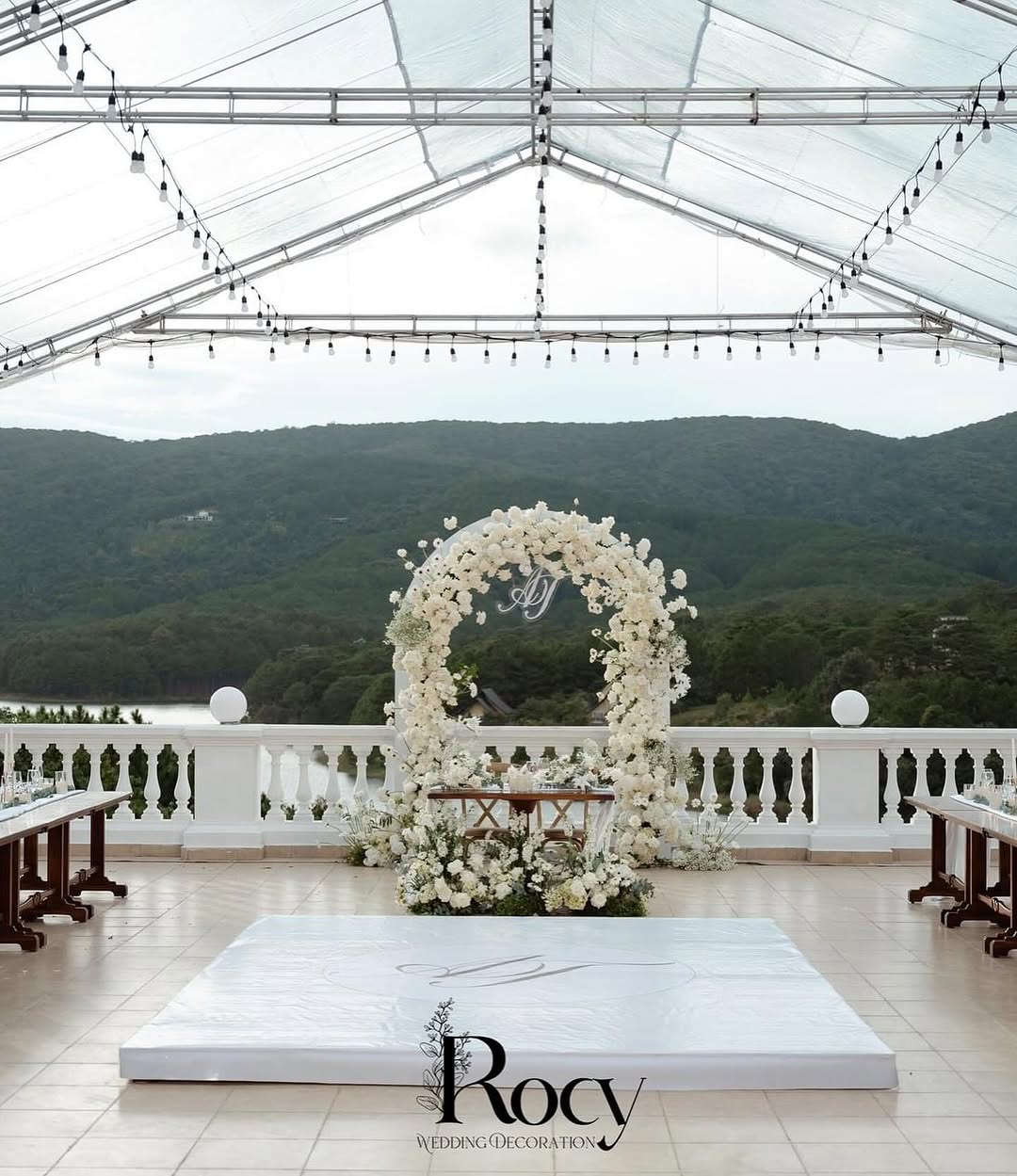
The Specifics of Wedding Costs in Da Lat: Managing Terrain, Climate, and Logistics for Pine Forest and Garden Weddings
Da Lat is attractive for its pine forests, cool climate, and naturally atmospheric venues, but these very characteristics make event operations more complicated. Da Lat climate can change rapidly throughout the day; humidity, rain, wind, and evening temperatures directly affect fresh flowers, sound, lighting, attire, and guest experience. Even a beautiful venue with difficult equipment access can increase installation hours and labor costs.
Practical experience shows that the venue should be inspected before the design is finalized. The planner needs to check wind direction, ground conditions, power supply, rain shelters, equipment access routes, installation time restrictions, vendor preparation areas, and guest transportation arrangements. When logistics are addressed from the beginning, wedding costs in Da Lat can be controlled rather than left to last-minute problem-solving.
Weather Risk Prevention Plan B: Ensuring Your Outdoor Ceremony Delivers a Complete and Memorable Experience
Plan B should not be an inferior alternative used only as a last resort. An experienced wedding planner designs Plan B from the beginning so that when a transition is necessary, the aesthetic language and guest experience remain consistent. Clear activation thresholds must be established: how much rain or wind requires structures to be lowered, when the layout change must be decided, who has decision-making authority, and how guests will be informed.
In Ho Chi Minh City, the main challenges are sudden rain, high temperatures, and air-conditioning or cooling arrangements for semi-outdoor spaces. In Da Lat, additional attention must be paid to mist, humidity, and rapidly dropping temperatures in the late afternoon and evening. Good contingency planning protects the budget, equipment, and emotional flow of the ceremony.
Pre-Wedding Cost Control Checklist: Timeline, Rehearsal, and Practical Vendor Coordination
Before the wedding day, The Pine recommends that couples review at least the following categories:
- Finalize the guest count and seating arrangement to avoid last-minute changes to the number of tables.
- Confirm all contracts, amounts already deposited, outstanding balances, and payment deadlines.
- Finalize the installation, rehearsal, guest arrival, ceremony, reception, and teardown timelines.
- Review the vendor list, contact persons, and scope of work for each supplier.
- Confirm technical equipment, power supply, sound, lighting, and contingency arrangements.
- Check transportation, accommodation, loading and unloading, and permitted venue access times.
- Finalize the weather contingency plan and the activation thresholds for Plan B.
- Review all printed materials, guest names, seating charts, menus, and directional signs.
- Keep an unallocated contingency reserve for genuinely necessary changes.
A good checklist must be linked to a responsible person and a specific deadline. This is precisely the difference between having a to-do list and having a wedding-day coordination system that can actually operate effectively.
The Pine Wedding Planner – Your Partner in Creating Beautiful Weddings with Transparent Budgets and Meaningful Emotions
Full-Service A–Z Wedding Planner: From Ideas and Budgeting to Flawless Wedding-Day Operations
The Pine supports couples from the earliest stages: listening to their story, defining objectives, creating a Budget Plan, developing a concept, selecting vendors, managing timelines, producing decor, and coordinating the entire wedding day. With this model, couples work with one strategic point of contact instead of having to coordinate dozens of separate suppliers themselves.
The Pine's goal is not to create a wedding with the greatest number of elements, but one in which every choice has a purpose. When the budget, aesthetics, and operations are managed together, wedding costs become more transparent, allowing couples to focus on the experience rather than constantly handling unexpected issues.
Day-Of Coordination: Helping the Bride and Groom Relax and Enjoy Every Moment of Their Special Day
For couples who have already prepared most of the wedding arrangements themselves, Day-of Coordination provides a solution for transferring the entire plan to a professional coordination team before the wedding. The Pine takes over the timeline, reviews contracts and tasks, coordinates rehearsals, supervises vendors, monitors schedules, welcomes guests, and handles on-site issues.
The greatest value of coordination is not simply holding a checklist, but the ability to assess situations and make the right decisions at the right time. A timeline only has meaning when someone is responsible for protecting it and making flexible adjustments without forcing the bride, groom, or their families to step in and handle problems.
Every Wedding Is a Unique Work of Art: Bespoke Design Inspired by the Love Story and Style of Each Couple
The Pine believes that a memorable wedding does not need to resemble any other template. What matters is that when couples enter the space, they recognize themselves in the colors, music, flowers, lighting, vows, and little details. That is why every design begins with the people before considering trends.
Wedding costs are truly reasonable only when every expense serves an experience that matters to the two of you. If you are at the beginning of your planning journey and do not know how much to allocate for the reception, decor, photography, or outdoor contingency arrangements, The Pine Wedding Planner can help you build a Budget Plan, establish priorities, and choose a suitable service package. A good wedding plan does not make your special day rigid; on the contrary, it creates enough room for the bride, groom, and their families to relax and enjoy every moment.
