

A outdoor wedding stage A beautiful outdoor wedding stage takes more than an abundance of flowers, an impressive backdrop, or eye-catching lighting. More importantly, the entire space must tell the couple's story while complementing the venue's terrain, weather conditions, budget, and guests' actual experience. Whether the celebration takes place in a garden, a pine forest, a resort, or on a beach, a single wrong decision about stage placement, sun exposure, structural design, flowers, or contingency arrangements can lead to significant additional costs. This article explores how The Pine Wedding Planner approaches everything from the concept and design to the Budget Plan and Plan B, creating an outdoor stage that is both aesthetically distinctive and operationally safe while preserving the emotional flow of the wedding day.
Outdoor Wedding Stage Design: How to Create a Beautiful Setting That Tells Your Love Story?
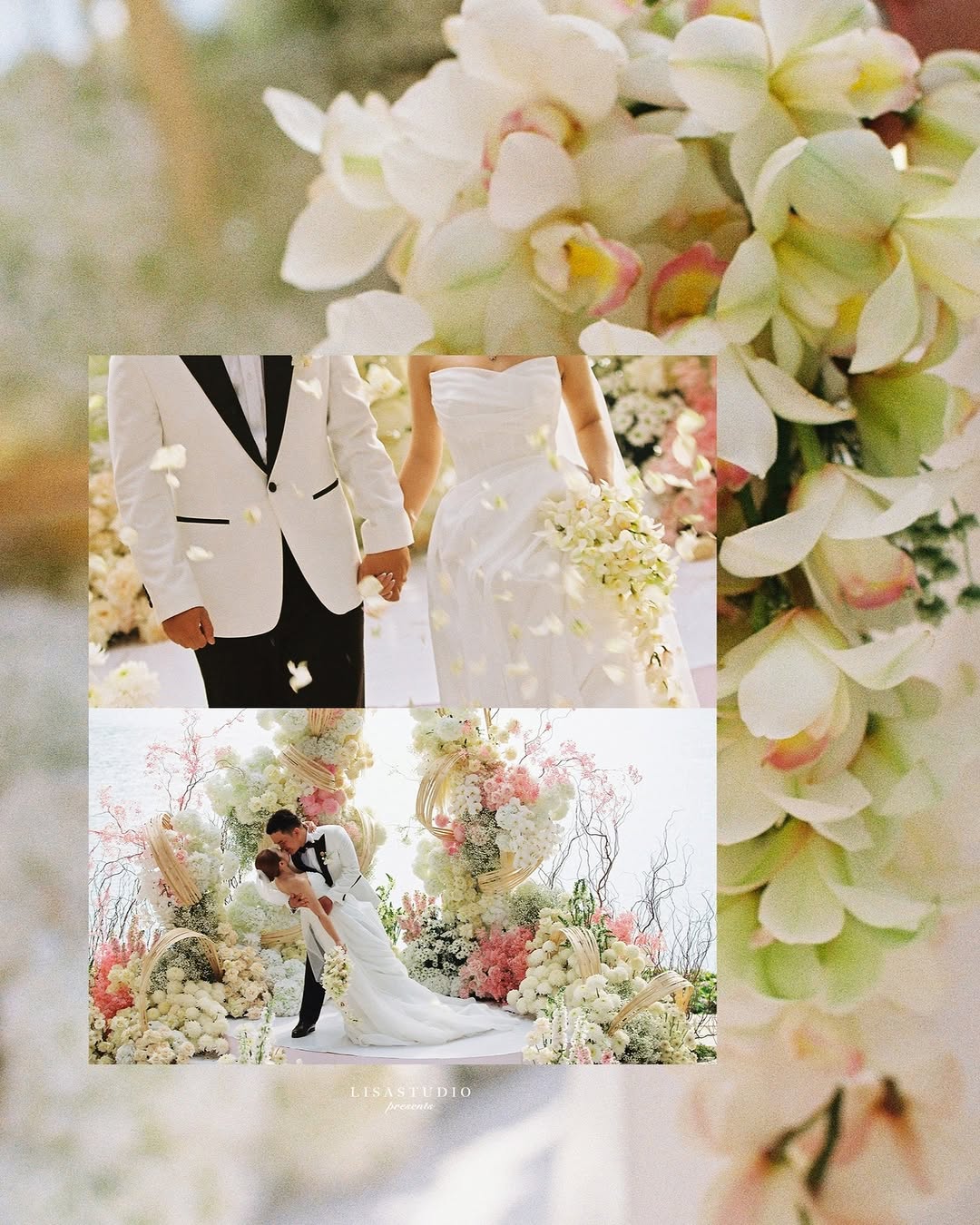
When planning an outdoor wedding stage, the starting point for a beautiful design is not choosing a backdrop template online. The Pine typically begins with three questions: What do the couple want their guests to remember about their wedding? What natural advantages does the venue offer? And where should the budget be allocated? Once these three factors have been clearly defined, wedding decoration concept there is a solid foundation for developing a cohesive design rather than simply assembling beautiful but disconnected details.
Determine Your Wedding Decoration Concept Based on the Couple’s Story, Venue Terrain, and Style
For outdoor wedding stage design services, a couple's love story can be translated into a design language through color palettes, materials, flowers, shapes, lighting, and the way guests experience the event. A couple who prefers a minimalist, intimate atmosphere will need a completely different stage from one who loves an elegant evening celebration filled with candlelight and fresh flowers. Likewise, a wedding held among the pine forests of Da Lat should not be forced into the same design formula as a hotel garden wedding in Ho Chi Minh City.
When planning an outdoor wedding reception stage, The Pine typically develops a mood board based on the couple's personal story, fashion styles, guest count, event schedule, and venue characteristics. This is also an important step in Full-Service Wedding Planner, as the concept must be evaluated against both the budget and practical construction feasibility before being developed into a visual rendering.
4 Standout Outdoor Stage Settings: Gardens, Da Lat Pine Forests, Beaches, and Resorts
For a Garden wedding, the greatest advantage lies in the ability to connect the stage with the surrounding greenery. Rather than covering everything with flowers, the design can incorporate trees, lawns, hedges, or the venue's architecture as part of the overall composition. This creates a lighter stage design while maintaining visual depth.
In the pine forests of Da Lat, the tall tree trunks, natural ground, and characteristic layers of mist already provide a visually striking setting. Suitable designs often favor open structures, clustered floral arrangements, and Warm Amber lighting to avoid competing with the landscape. During the site inspection, the team must also understand the characteristics of Da Lat climate, humidity, ground conditions, and temperature variations between daytime and evening before selecting materials.
For beach wedding decoration, the challenge is not just aesthetics but also wind, salt exposure, sand, and structural anchoring. An excessively heavy or enclosed backdrop can create significant wind resistance. Resorts, on the other hand, often have infrastructure advantages, but construction restrictions, setup schedules, and sound-related regulations must be checked.
Signature Details: Backdrops, Floral Installations, Garden Aisles, Gallery Tables, and Lighting
The backdrop is the focal point, but it should never be designed in isolation from the overall setting. A well-designed stage typically consists of three layers: a background layer that establishes the framework, a floral or material layer that adds depth, and a lighting layer that shapes the atmosphere. When all three work together harmoniously, the stage can stand out even without an excessive amount of flowers.
Floral installations should be arranged to create focal points rather than distributed evenly throughout the space. For certain venues, concentrating flowers on both sides of the stage, at the base of the backdrop, and in an asymmetrical overhead arrangement can be more effective than covering the entire surface with flowers.
Garden aisle decoration should also be considered an integral part of the stage design. The aisle guides guests' eyes toward the ceremony area, so the flowers, candles, chairs, and lighting should complement the backdrop. The gallery table, welcome sign, and check-in area should reuse the stage's design language to create a cohesive overall space.
A Checklist for Coordinating Colors, Materials, and Flowers to Create an Elegant Yet Understated Wedding Décor Space
Luxurious decoration does not mean filling the space with countless details. At The Pine, luxury is often expressed through well-balanced proportions, authentic materials, intentional color choices, and thoughtfully designed negative space.
- Color Palette: should feature one base color, one complementary color, and one accent color. Warm Amber & Ivory create a cozy atmosphere, while White & Sage Green are ideal for a gentle, nature-inspired setting.
- Materials: Wood, linen, glass, matte metal, and candles generally create a more natural atmosphere than overly glossy surfaces or imitation decorative details.
- Flowers: prioritize seasonal flowers, combining statement blooms with foliage and filler flowers to control costs while maintaining a rich, abundant appearance.
- Lighting: Lighting needs to support skin tones, flowers, and material textures, not simply provide enough brightness for photography and filming.
- Negative Space: Do not cover every surface. Negative space helps important details stand out more clearly.
5 Outdoor Wedding Stage Concepts for Different Styles and Settings
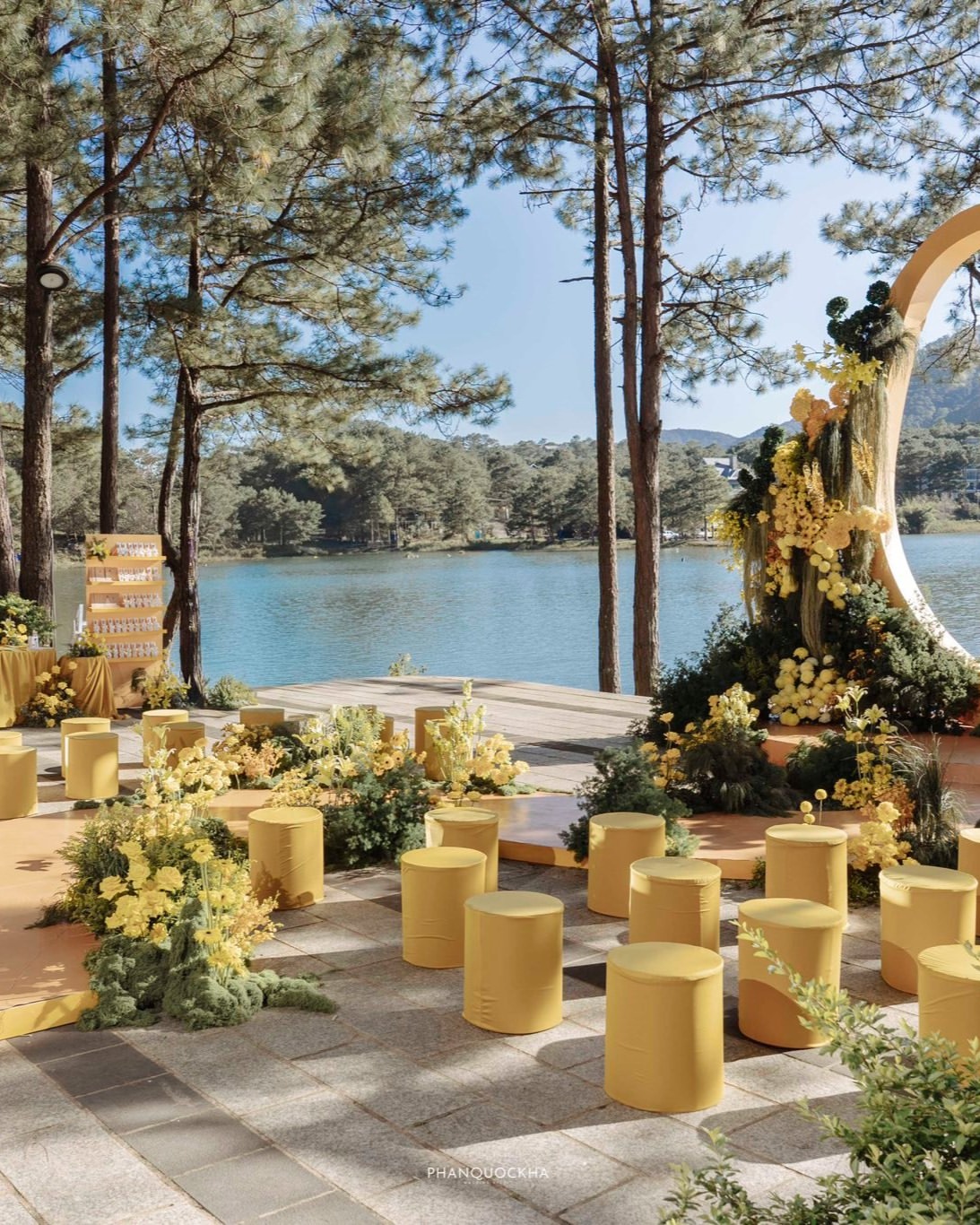
There is no single formula for outdoor wedding stage. The best concept is one that suits the venue, the couple's personalities, and their investment budget. Below are five design approaches that can be flexibly adapted rather than copied directly from a template.
Luxury Garden: A Stage Filled with Fresh Flowers for an Elegant Garden Wedding
Luxury Garden is ideal for spacious gardens, resorts, or villas with beautiful landscaping. Its defining features include large floral arrangements, layered compositions, and soft lighting. However, to avoid an overly extravagant look, flowers should be concentrated at visually prominent focal points such as the stage, entrance, and gallery table.
An effective approach is to keep the backdrop relatively understated, then incorporate an asymmetrical floral installation extending upward from the base. This creates depth while avoiding the impression of a stage that resembles a wall of flowers.
European Fine Art: Minimalist and Elegant with Warm Amber & Ivory or White & Sage Green
Fine Art is ideal for couples who appreciate subtle elegance over elaborate decoration. A Warm Amber & Ivory Cream palette creates a warm, classic atmosphere for evening receptions. White & Sage Green, on the other hand, is well suited to daytime ceremonies, especially in gardens and pine forests.
The biggest challenge with Fine Art is getting the proportions right. Flowers that are too dense, overly bright metallic colors, or a backdrop with too many decorative lines can easily take away from the space's light and delicate feel. For this reason, The Pine typically favors materials with natural textures, grouped floral arrangements, and lighting with a consistent color temperature.
Rustic & Forest Wedding: Blending with Dalat's Pine Forests and Natural Surroundings
A pine forest is already a striking natural backdrop, so the stage does not need to compete with its surroundings. Warm-toned wood, ivory fabrics, white flowers, baby's breath, green foliage, and Edison string lights can create an inviting yet refined atmosphere.
For this concept, an open layout is often more effective than a fully enclosed backdrop. Rather than obscuring the pine forest, the stage can feature a low frame or asymmetrical structure that incorporates the surrounding landscape into the design. This approach also reduces material requirements and helps optimize transportation and installation costs.
Beach Wedding: Free-Spirited Yet Luxurious Beach Wedding Decorations
Beach Wedding Decorations should prioritize a light, airy aesthetic and wind resistance. Flowing fabrics, tropical flowers, and ivory, beige, or soft blue tones can work beautifully, but every structure must be carefully planned from an installation and construction perspective.
Beach wedding stages should also be planned around the sun's position. If the ceremony takes place in the late afternoon, the stage location should be surveyed to ensure guests do not have to look directly into harsh sunlight. This affects the guest experience, photography, and temperature in the seating area.
Modern Minimalist: Simplified Geometric Forms, with a Focus on Lighting and Materials
Modern Minimalist is ideal for rooftops, modern architectural gardens, or resorts with beautiful backdrops. This concept minimizes dense floral arrangements, instead using geometric forms, materials, negative space, and lighting systems to create focal points.
One advantage of Minimalist design is that the budget can be managed effectively when the design is developed correctly from the outset. However, minimalism does not mean simplicity in execution. Incorrect proportions or poor-quality materials are more easily noticeable because there are fewer details to conceal imperfections.
The Budget Challenge: Estimating Outdoor Wedding Stage and Decoration Costs to Avoid Unexpected Expenses
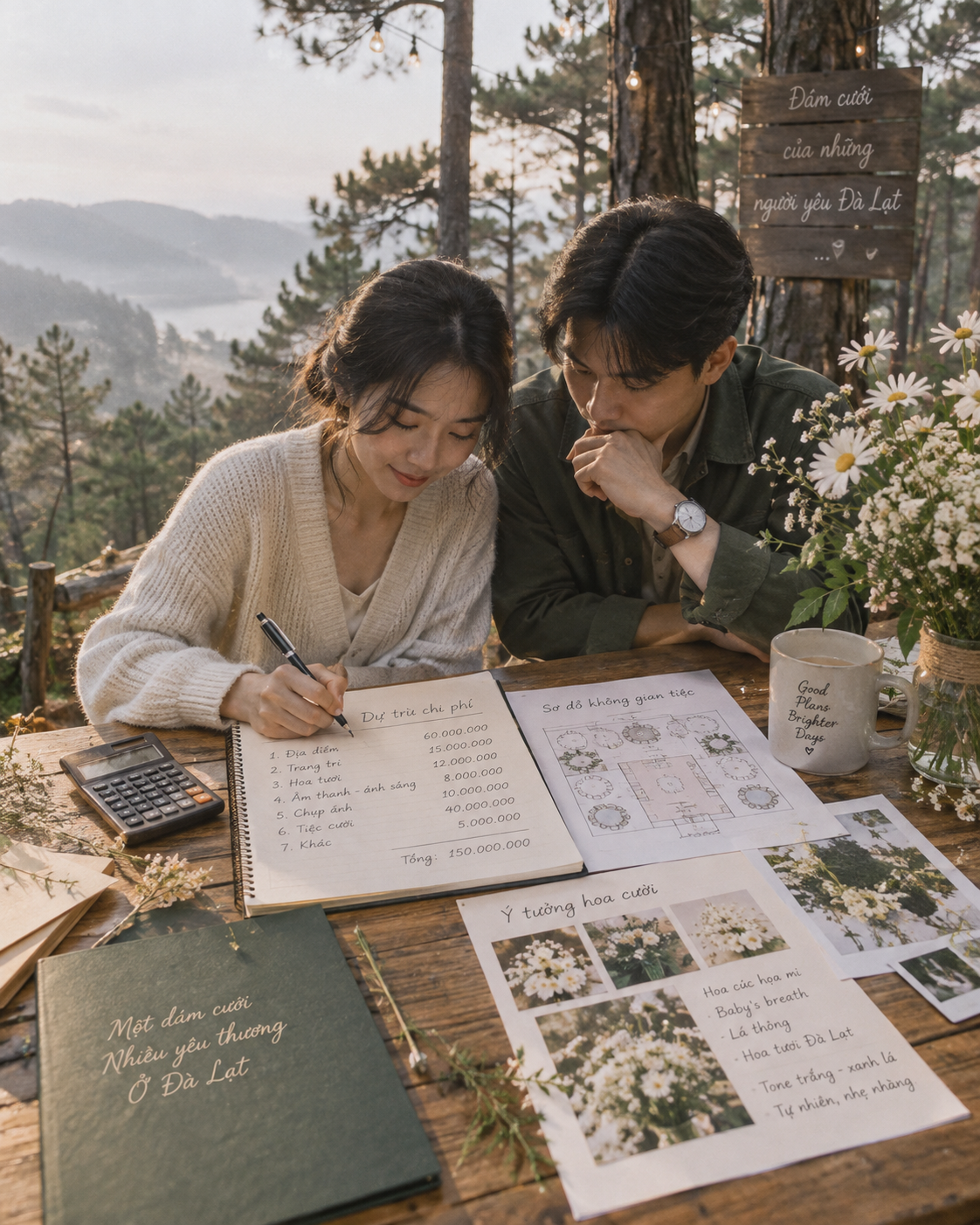
The decoration budget should be developed alongside the concept. If the design is approved first and individual items are priced only afterward, couples can easily find themselves having to cut multiple details, compromising the overall consistency of the space.
Cost Categories to Include in Your Budget Plan: Stage, Backdrop, Flowers, Sound, Lighting, and Installation
A comprehensive Budget Plan for an outdoor stage should be divided into at least the following categories:
- Stage structure, platforms, and flooring.
- Backdrop and supporting framework.
- Fresh flowers, foliage, vases, and floral installations.
- Sound system, microphones, and supporting equipment for the ceremony.
- Stage lighting, decorative lighting, and power supply.
- Gallery table, welcome area, and signage.
- Walkways, ceremony chairs, and accessories.
- Transportation, installation, and dismantling personnel.
- Additional costs arising from special setup schedules or long-distance transportation.
- Weather contingency arrangements if required by the venue.
Clearly breaking down each group helps couples understand which expenses directly contribute to the visual impact and which are essential operating costs. This is one of the key benefits of Full-Service Wedding Planner: looking at the budget as a whole rather than managing each vendor individually.
How to Allocate Your Budget by Priority and Optimize Costs by 15–20% While Maintaining Aesthetic Quality
The goal of optimizing the budget by 15–20% should not be interpreted as cutting 15–20% across every category. A better approach is to identify areas where the budget is being used inefficiently and reallocate those funds to elements that have a greater impact on the overall experience.
For example, if the venue already has beautiful landscaping, building an oversized backdrop may be unnecessary. That budget could instead be allocated to stage flowers, lighting, or the walkway. If an imported flower variety is expensive but has little impact on the overall look, the planner can suggest seasonal flowers with a similar color palette and shape.
Budget optimization does not mean doing less. It means allocating funds to the right elements that guests will actually see, experience, and remember.
Checklist of Common Unexpected Expenses When Organizing an Outdoor Wedding and How to Lock in Your Budget from the Start
Often-overlooked expenses are not usually related to flowers or backdrops, but rather to on-site operations.
- Long-distance transportation fees or truck access restrictions imposed by the venue.
- Higher labor costs due to overnight setup or dismantling immediately after the reception.
- Additional power supply or generator rental.
- Raised flooring when the terrain is uneven.
- A backup canopy or tent.
- Structural reinforcement to withstand wind.
- Replacing flowers or materials when weather conditions are unsuitable.
- Overtime charges for audio, lighting, or venue services.
To minimize unexpected costs, the scope of work should be finalized with a clearly defined checklist specifying what each item includes, its dimensions, materials, flower quantities, and setup and dismantling schedules. This approach cannot eliminate every variable, but it helps identify most financial risks before the wedding day.
The Pine Wedding Planner's Process for Executing an Outdoor Wedding Stage, from Concept to Wedding Day
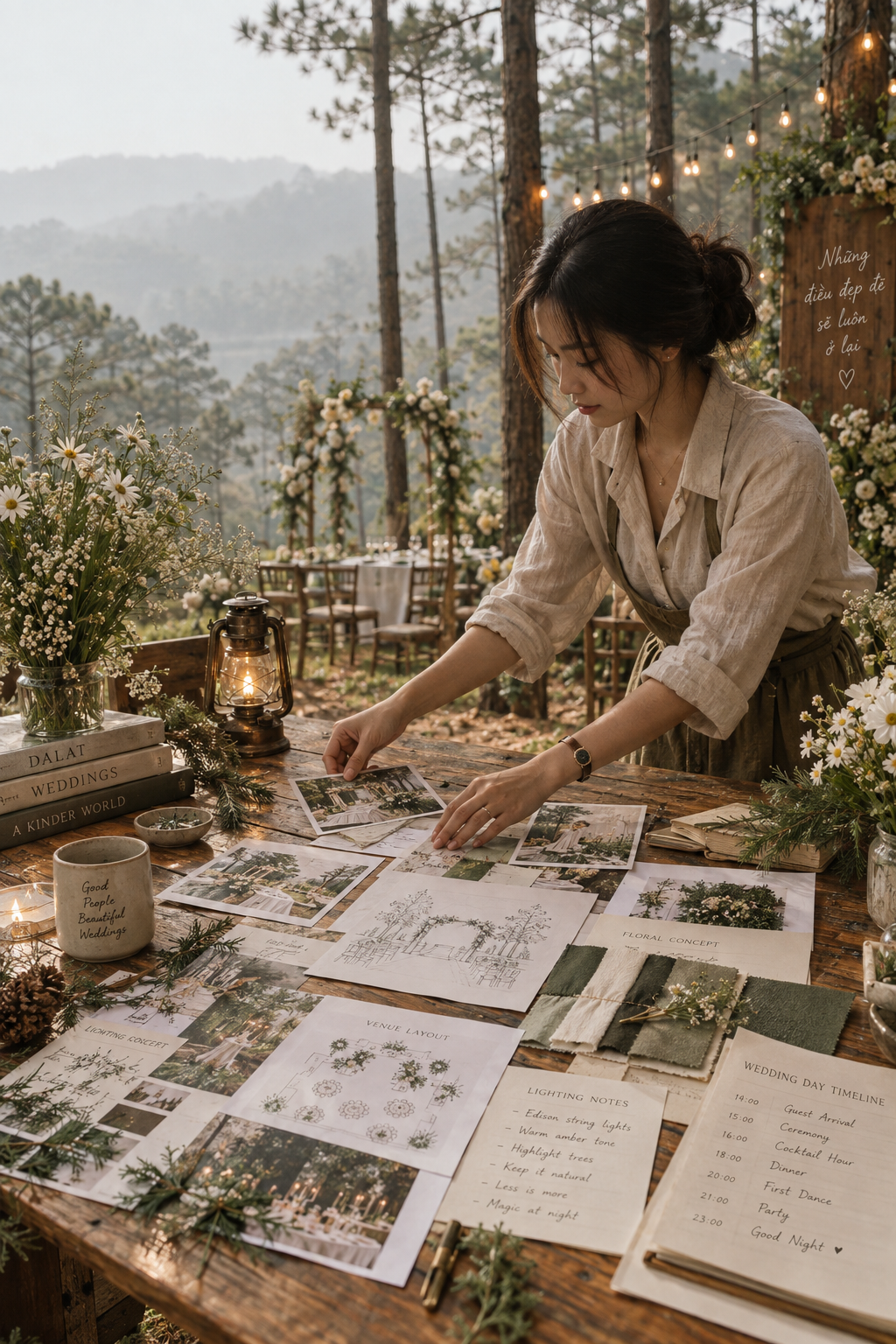
Venue and Terrain Assessment, Sun and Wind Direction Analysis, and Overall Layout Planning
A site inspection is an essential step that should never be replaced by venue photos or floor plans. The team needs to visit the location in person to check elevation levels, ground surfaces, power supply points, access routes for transporting equipment, the distance between backstage areas and the stage, sun exposure, and wind direction.
The layout is then developed around three separate flows: the bride and groom's movements, guest traffic, and vendor operations. If these three flows conflict, even the most beautiful design can result in congestion or disruptions on the wedding day.
Developing the Concept, Moodboard, Stage Design, and Visual Composition Based on the Couple's Unique Story
After the site inspection, The Pine develops the concept from the mood board to the layout and visual renderings. Every detail must have a clear reason for being there. How does the color palette relate to the chosen style? Are the materials suitable for the venue? Can the flowers withstand the weather conditions? Is the backdrop properly proportioned and visually balanced when viewed from the last row of seats?
At this stage, the concept is also continuously reviewed against the Budget Plan. If the budget changes, the team prioritizes adjusting materials or decorative density before making major changes to the overall concept.
Vendor Management, Construction, Sound and Lighting Checks, and Final Rehearsal Before Guest Arrival
A outdoor wedding stage Outdoor wedding stage setup usually involves multiple vendors: decor, sound, lighting, the venue, electrical services, florists, photo and video teams, and sometimes even a live band. Without a shared setup timeline, each vendor may complete their own tasks while the overall event still fails to run smoothly.
The Pine creates a timeline based on task priorities: structural elements are installed first, followed by electrical and technical systems, with decorative elements completed only after dust-generating or collision-prone work has finished. This is followed by soundchecks, lighting tests, and a full ceremony rehearsal.
End-to-End Wedding Day Coordination So the Bride, Groom, and Their Families Don't Have to Handle Behind-the-Scenes Tasks Themselves
On the wedding day, the planner needs to oversee the timeline, vendors, guests, and key transitions throughout the program. The Pine assigns coordinators to specific areas so that backstage issues do not fall on the bride and groom to handle.
For clients using Full-Service Wedding Planner, all the information gathered throughout the planning process is consolidated into a detailed rundown. This allows the coordination team to know who is responsible at every stage, from vendor handover and guest arrivals to the ceremony and the transition into the reception.
Hands-On Experience Designing Outdoor Wedding Stages in Da Lat and Ho Chi Minh City
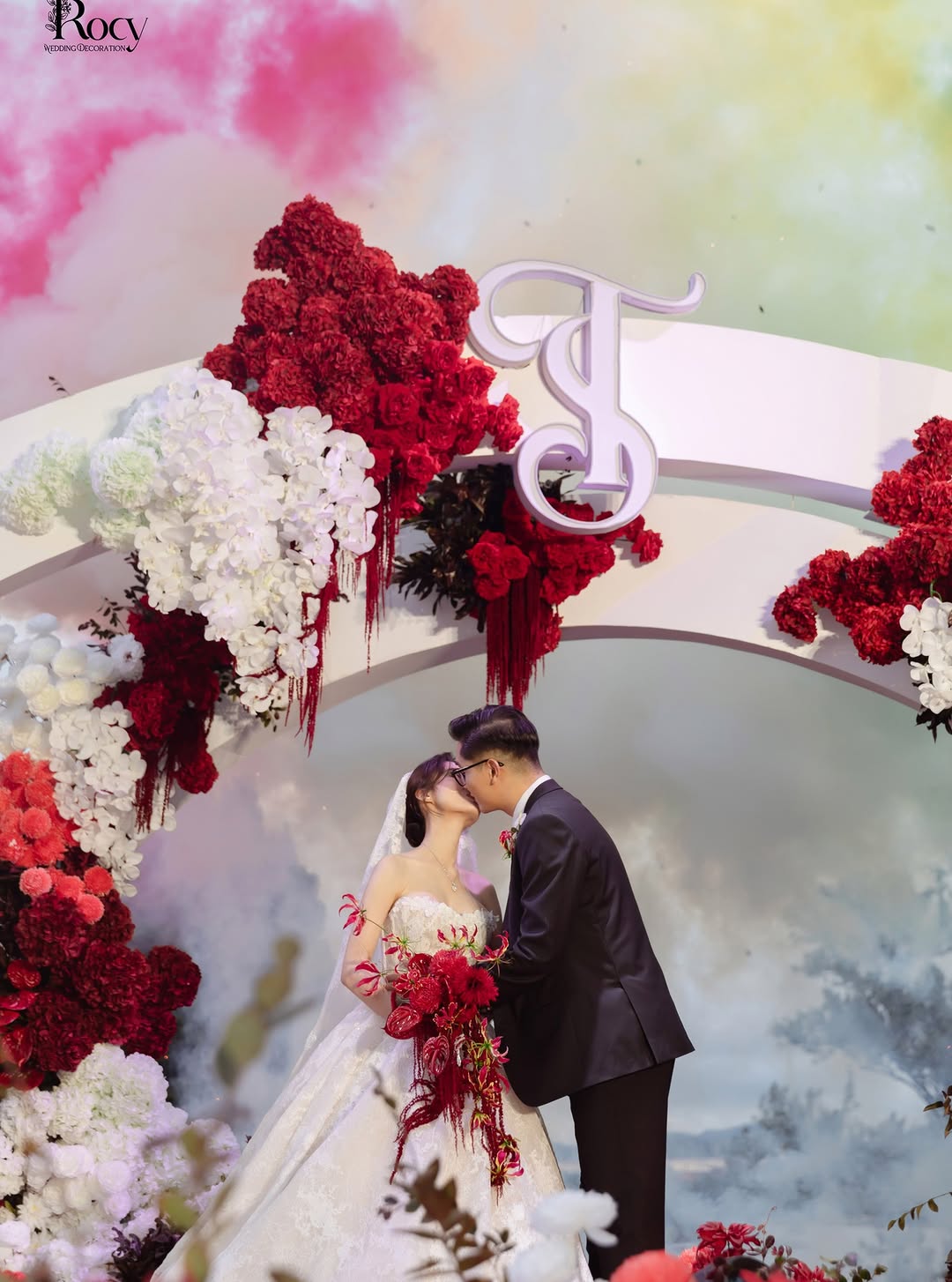
Da Lat: Managing Sloping Terrain, Humidity, Fog, Wind, and Rapidly Changing Weather
Da Lat's beautiful natural landscape is also a factor that requires careful planning. The ground may be soft or sloped, mist can increase moisture exposure for materials, temperatures can drop quickly in the evening, and rain may occur unexpectedly despite the initial forecast.
Therefore, the stage must be checked for foundation stability, balance, and slip resistance. Flowers, fabrics, and decorative paper should not be selected based solely on sample photos; their suitability for actual outdoor conditions must also be considered. For events held in pine forests, transport routes and the distance from the delivery truck to the setup area can also significantly affect installation time.
Ho Chi Minh City and Garden Venues: Optimizing Views, Temperature, Guest Traffic Flow, and Setup Time
In Ho Chi Minh City, heat and afternoon sunlight often have a direct impact on the ceremony experience. If the wedding begins before the sun becomes less intense, the planner needs to consider shade, fans, drinking water, seating arrangements, and the stage orientation.
In addition, many venues are located in residential neighborhoods or city centers, where restrictions may apply to truck access hours, noise levels, and setup times. An overly complex design with only a few hours available for actual installation can put considerable pressure on vendors and increase the risk of delays.
Sound, Lighting, Power Supply, and Stage Structures: Essential Safety Checklist
The technical aspects must be given equal priority to the artistic elements. In particular, stage electrical safety must be checked thoroughly, from the power source location and equipment loads to the wiring system, connections, waterproofing, and emergency power shutoff procedures.
- Confirm the total electrical load of the sound system, lighting, and decorative equipment.
- Have a backup plan in case the venue's power supply is insufficient.
- Secure and cover electrical cables in areas where guests walk.
- Do not place electrical connection points in areas prone to flooding or direct exposure to rain.
- Check the stability of the backdrop frame, trusses, and all suspended installations.
- Test all microphones, speakers, and music cues before guests arrive.
- Test the actual lighting conditions after dark rather than relying solely on daytime tests.
Decorating Garden Walkways and Arranging the Stage to Create a Beautiful Experience for Guests from Every Seat
Garden aisle decoration A balance must be struck between aesthetics and traffic flow. If flowers or candles take up too much space, the bride and the photography and videography team may have difficulty moving around.
The Pine usually inspects the stage from several different seating positions before finalizing the layout. A design that looks beautiful from the front row but is obstructed from the back is not yet a good solution. The stage height, backdrop dimensions, and seating distances must be coordinated to ensure that guests seated on both sides can still follow the ceremony.
Plan B for Outdoor Weddings: Weather and Incident Contingency Plans That Keep the Celebration's Emotions Intact
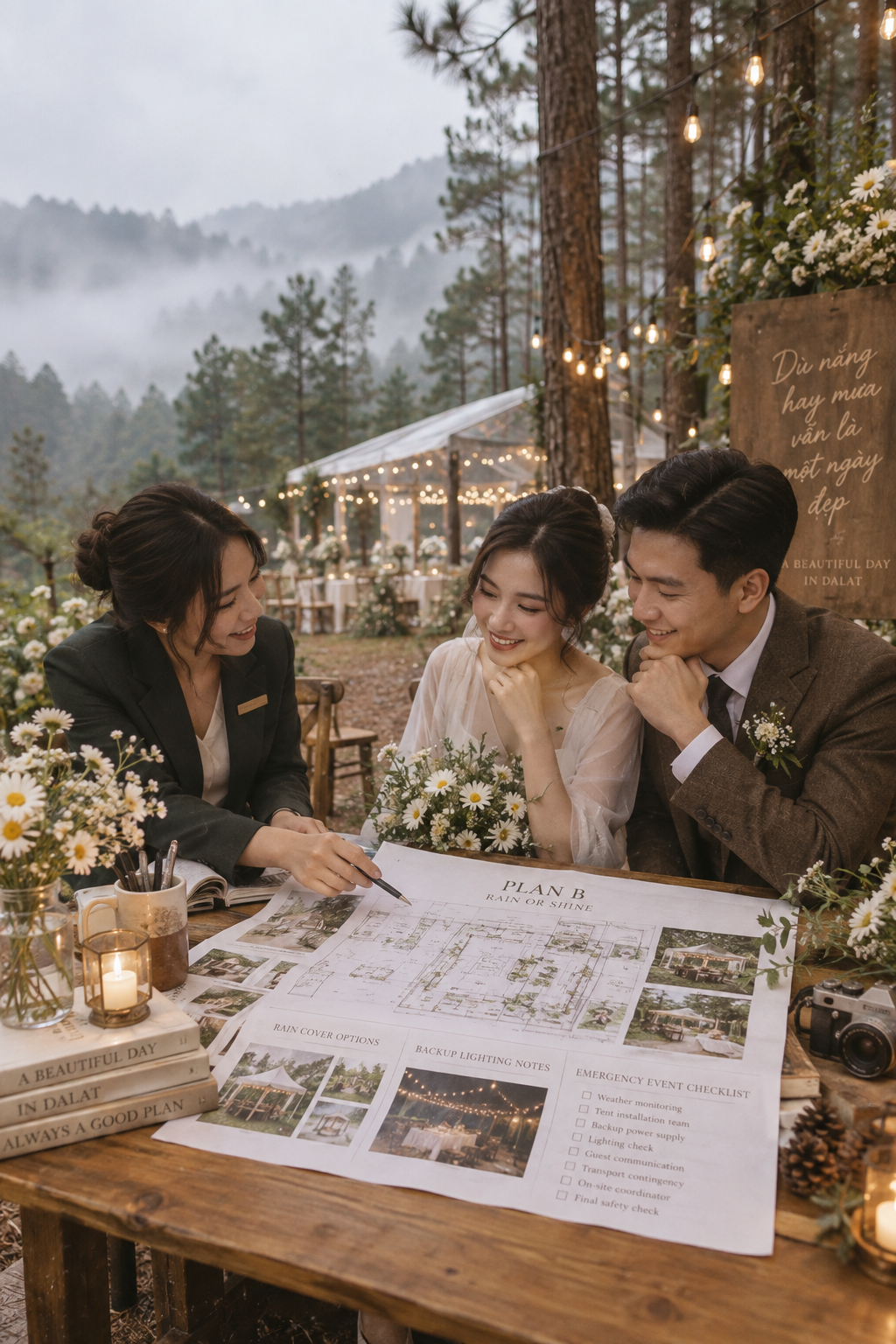
Plan B should not be developed on the wedding day itself. For outdoor receptions, backup arrangements must be developed alongside the main concept so that, if a change becomes necessary, the space can still retain its original aesthetic vision.
Rain, Strong Winds, and Changing Weather Scenarios: When Should the Backup Plan Be Activated?
A good Plan B must have clearly defined decision-making thresholds. You should not wait until guests have arrived or the rain has started before discussing whether to move the ceremony indoors.
The planner needs to agree in advance with the venue and the couple on when the decision will be made, based on the forecast, on-site conditions, and the time required to switch the layout. For example, if moving chairs, equipment, and flowers takes one to two hours, the decision must be made sufficiently in advance to give the team enough time to implement the changes.
Space Contingency Plan: Canopies, Indoor Backup, Layout Adjustments, and Protection for Flowers, Equipment, and Guests
Plan B may include a transparent canopy, an indoor backup area, or a simplified layout in a semi-outdoor space. The most suitable option depends on the venue and the number of guests.
The key is to ensure that decorative elements are adaptable. An oversized floral installation that cannot be quickly dismantled and reassembled will be very difficult to move indoors. Therefore, from the design stage, certain modules should be constructed so they can be relocated if the weather changes.
Fresh flowers, electrical equipment, musical instruments, and guests' belongings need designated protected areas. The goal is not only to keep the stage operational but also to minimize any sense of chaos when the backup plan is activated.
Assigning Incident-Handling Responsibilities Among the Wedding Planner, Venue, and Vendors So the Bride and Groom Are Not Drawn into Behind-the-Scenes Issues
A common mistake is having a Plan B without defining who has the authority to activate it and who is responsible for each task. When the weather changes, the venue waits for the planner, the planner waits for the couple, and vendors wait for a decision, wasting valuable time.
In the rundown, The Pine clearly assigns responsibilities: the planner oversees overall coordination; the venue is responsible for the space, facilities, and venue-related items; technical vendors handle electricity, sound, and lighting; and the decor team protects or relocates decorative modules. The bride and groom only need to be informed of the final decision rather than handling behind-the-scenes arrangements themselves.
Final Rehearsal Checklist: From the Stage and Lighting to Guest Reception Arrangements Under Adverse Conditions
- Check the stability of the stage and backdrop.
- Inspect the flowers, fabrics, and materials after installation is complete.
- Test the microphone, ceremony music, and volume levels from multiple locations.
- Test the lighting at a time close to the actual event time.
- Confirm the main and backup power supplies.
- Confirm the walking routes for the bride, groom, and their families.
- Confirm the guest arrival area in case of rain.
- Check the canopy, umbrellas, or shelter area, if available.
- Finalize the threshold for activating Plan B and identify who has decision-making authority.
- Brief all vendors again before guest arrival.
The Pine Wedding Planner: A Bespoke Outdoor Wedding Stage Tailored to Your Love Story
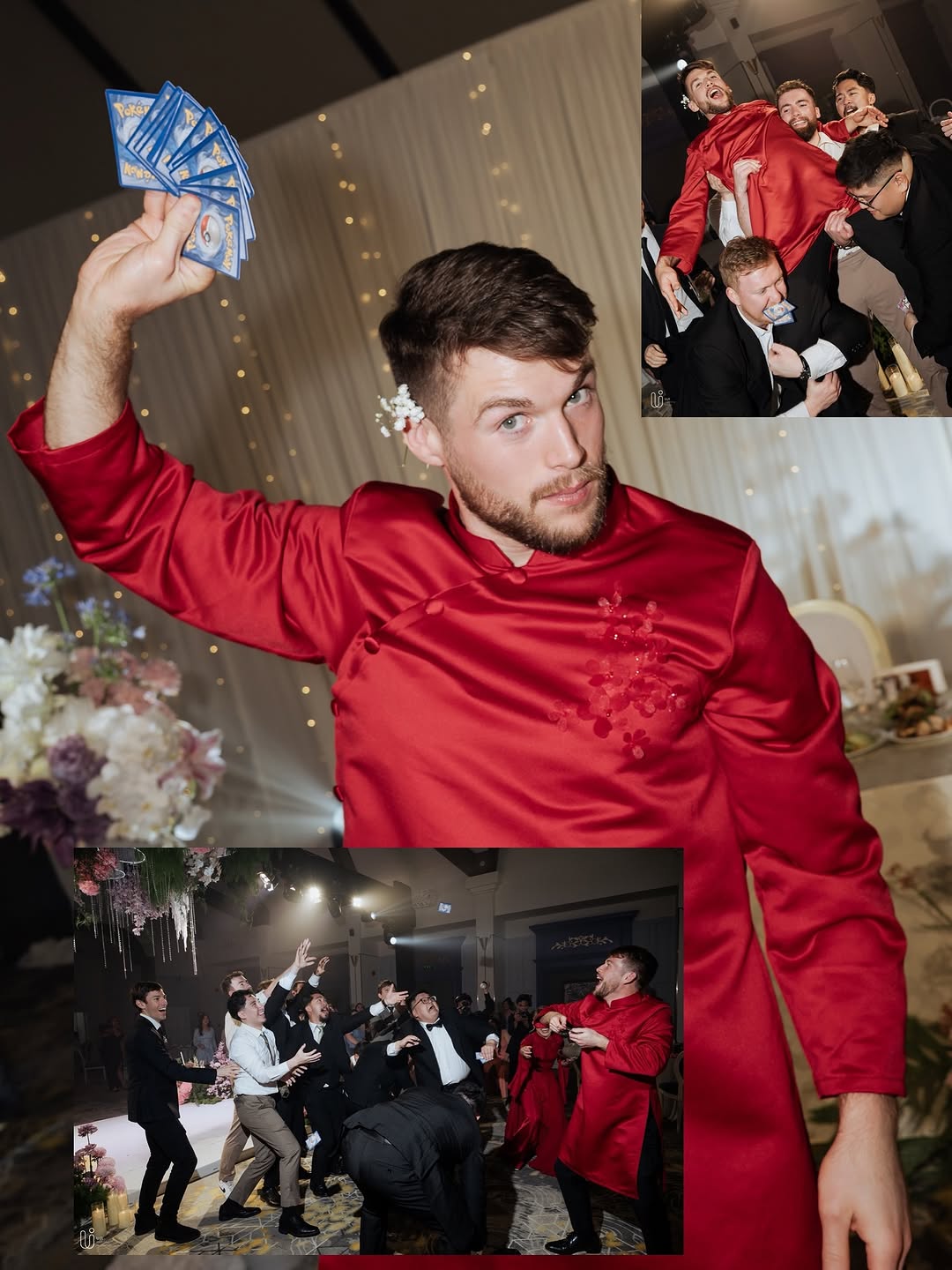
No Cookie-Cutter Concepts: Transforming Your Love Story into a Distinctive Work of Art
The Pine does not start by selecting a ready-made stage design and simply changing the flower colors. The design process begins with the couple's story, lifestyle, venue, and the experience they want to create for their guests. From there, wedding decoration concept everything is developed into a cohesive design system encompassing the stage, aisle, gallery table, and lighting.
The goal is not to create a stage with as many details as possible, but to design a space that, even years later, the couple can look back on and still recognize as their own unique wedding.
Full-Service Wedding Planning, Day-of Coordination, and Wedding Decoration Tailored to Your Needs
Not every couple needs the same scope of services. If you need a team to support you throughout the entire process, from concept development and budgeting to vendor management and the wedding day, Full-Service Wedding Planner is the right choice. If most of the preparations are already complete and your main need is on-site coordination, Day-of Coordination helps bring the timeline and vendors together on the wedding day. For couples whose primary focus is aesthetics, Wedding Decoration can be provided as a dedicated standalone service.
From a Transparent Budget to a Comprehensive Contingency Plan: Let Your Family Relax and Enjoy the Celebration
An outdoor wedding is truly well-organized only when its visual design and operational planning are developed together. A Budget Plan helps families understand where their money is being spent. A Timeline ensures vendors know exactly when each task must be completed. A Plan B allows the team to respond proactively to changes in weather or on-site conditions.
When these elements are prepared in advance, the bride and groom do not have to spend their wedding day backstage dealing with late flower deliveries, malfunctioning microphones, or unexpected rain. The couple's role on their wedding day should simply be to show up, enjoy every moment, and cherish the memories that matter.
Wedding Concept Consultation and Reception Design in Da Lat and Ho Chi Minh City with The Pine Wedding Planner
Every outdoor wedding stage is a unique challenge involving terrain, weather, budget, and the couple's personal story. Therefore, instead of starting by asking which stage design to choose, begin by asking what emotions the wedding space should convey and what truly matters to the two of you.
The Pine Wedding Planner works with couples in Da Lat and Ho Chi Minh City, providing support from concept consultation and Budget Plan development to wedding decoration design, vendor management, and wedding-day coordination. Whether you are planning a garden, pine forest, resort, or beach wedding, The Pine can help you create a plan that suits your venue, budget, and personal style, while preparing a detailed Plan B to ensure your wedding day remains seamless even when actual conditions change.
