

A beautiful wedding day is not created by flowers, lighting, or a thoughtfully prepared space alone. More importantly, dozens of tasks behind the scenes must happen at exactly the right time, while the bride and groom should barely need to worry about them. On the day coordinator is the person who takes over the prepared plan, connects vendors, controls the timeline, ceremonies, and unexpected changes so the couple and their families can truly be present on their special day. This article helps you understand the scope of work, pricing, budgeting, implementation process, and practical experience before deciding to hire a wedding day coordinator.
What Is an On The Day Coordinator? Why Does Wedding Day Coordination Help Couples Relax and Fully Enjoy Their Special Day?

An on the day coordinator, or wedding day coordination specialist, is responsible for executing the wedding plan during the period immediately before the event and at the venue. They do not replace the bride and groom in deciding the concept or creating the entire plan from scratch, but instead turn what has already been prepared into a process with clear responsibility, timelines, and contingency plans when circumstances change.
How Is an On The Day Coordinator Different From a Full-Service Wedding Planner and Family Members Helping With the Wedding?
A full-service Wedding Planner usually accompanies the couple from the early stages: developing the concept, setting the budget, selecting vendors, developing the timeline, and managing the entire wedding project. Meanwhile, an on the day coordinator is suitable for couples who have completed most of the preparation themselves but need a professional team to take over operations before and during the wedding day.
Family members can help welcome guests, hold belongings, or remind people of a few ceremonies, but it is very difficult for them to simultaneously monitor sound, lighting, catering, the photographer, MC, decorations, and changes to the rundown. More importantly, family members are also guests at the wedding. Giving the family full coordination responsibility often means they cannot fully enjoy the event.
5 Key Behind-the-Scenes Tasks of a Wedding Coordination Specialist
A wedding coordination team professional team typically controls five key workstreams:
- Timeline management: Monitoring preparation, guest arrival, ceremony, reception opening, speeches, photography, and closing milestones.
- Vendor supervision: Confirming arrival times, setup areas, technical requirements, and the responsible contact person for each vendor.
- Guest coordination: Managing guest flow, seating, special guest groups, and the timing for inviting guests to move between areas.
- Ceremony control: Reminding everyone of positions, sound cues, lighting, MC cues, the bride and groom, and ceremony participants.
- Incident management: Prioritizing issues that directly affect safety, ceremonies, and the guest experience before handling aesthetic details.
Signs That You Should Hire a Wedding Day Coordinator
The need for wedding day coordination increases significantly when an event has many independent vendors, multiple spaces, multiple ceremonies, or a schedule that runs from morning to evening. For outdoor weddings, this need is even more important because weather, power, lighting, internal transportation, and space-conversion plans can directly affect the rundown.
If the bride and groom are still the ones answering vendor calls, reminding the MC, checking the gallery table, or deciding what to do when the timeline falls behind on the wedding day itself, the plan still does not have an independent operations lead.
Wedding Day Coordination Pricing: Service Packages and Costs to Budget For

Do not evaluate wedding day coordination pricing based only on a total figure. Two weddings with the same number of guests but different venues, ceremony counts, vendor numbers, and operating durations may require completely different resources. A good quotation should help the couple see exactly what scope of work, staffing, and level of responsibility they are paying for.
Basic and Advanced Wedding Day Coordination Packages
The basic package is usually suitable for a single-venue wedding with a relatively simple timeline and vendors that have already been fully confirmed by the couple. The scope may include timeline review, vendor confirmation, pre-event briefing, and on-site coordination.
The advanced package is suitable when there is a family ceremony combined with a reception, multiple venues, an outdoor wedding, or many technical components. In that case, additional coordination staff by area, rehearsal, site inspection, setup time, and a Plan B should also be considered. This is why wedding day coordination services should be quoted based on the actual event rather than applying one fixed package to every event.
Key Factors That Determine Wedding Day Coordination Pricing
Important variables include guest count, number of venues, number of ceremonies, number of vendors, working hours, rehearsal requirements, travel distance, and rundown complexity. A 100-guest outdoor wedding with a separate ceremony, separate reception, and numerous technical cues may sometimes require greater coordination capacity than a 300-guest wedding following a standard process in a ballroom.
7-Item Checklist to Confirm in a Wedding Coordination Service Quote
- Number of coordinators and each person's role.
- Start and end times and the number of included working hours.
- Whether site inspection and rehearsal are included.
- Scope of work with vendors before the wedding day.
- Travel and accommodation costs, if any.
- Overtime fees and conditions for additional charges.
- Scope of handling, asset handover, and post-event responsibilities.
Wedding Coordination Budget Planning: How to Control Costs and Limit Unexpected Expenses

A good coordination budget should not only state the total service fee. Couples should break down each cost category to understand which expenses are fixed, which may change, and what conditions could increase the cost.
Budget Allocation by Category
The budget can be divided into five groups: lead and support coordination staff, site inspection or rehearsal, travel expenses, working time, and contingency funds. For outdoor events or events held away from the city center, transportation, accommodation, and additional staffing costs should be confirmed separately.
The Pine prioritizes transparent wedding budget management by identifying potential conditions that may create additional costs in advance rather than dealing with them only after the expenses arise. This approach is particularly important for an on the day coordinator because many changes during the final week can simultaneously affect staffing, timing, and vendors.
Distinguishing Coordination Costs, Decoration Costs, and Vendor Additional Charges
Coordination costs cover organization and operations: staffing, timeline, briefing, supervision, and on-site issue management. Decoration costs cover design elements, flowers, backdrops, tables and chairs, materials, and installation. Meanwhile, additional vendor charges may include photographer overtime, extended sound-system fees, additional meals, or extra equipment.
Separating these three categories helps couples avoid assuming that the on the day coordinator fee includes every additional cost of the event.
Budget Management Checklist Before Signing the Contract
- What scope of work is included in the fee?
- Which items are charged separately?
- From what time is overtime charged?
- Which party is responsible for travel and accommodation costs?
- What are the payment schedule and deposit requirements?
- Who has the authority to approve additional expenses on the wedding day?
- What is each party's responsibility when the timeline changes?
On The Day Coordinator Implementation Process: From Taking Over the Plan to Full-Day Wedding Coordination
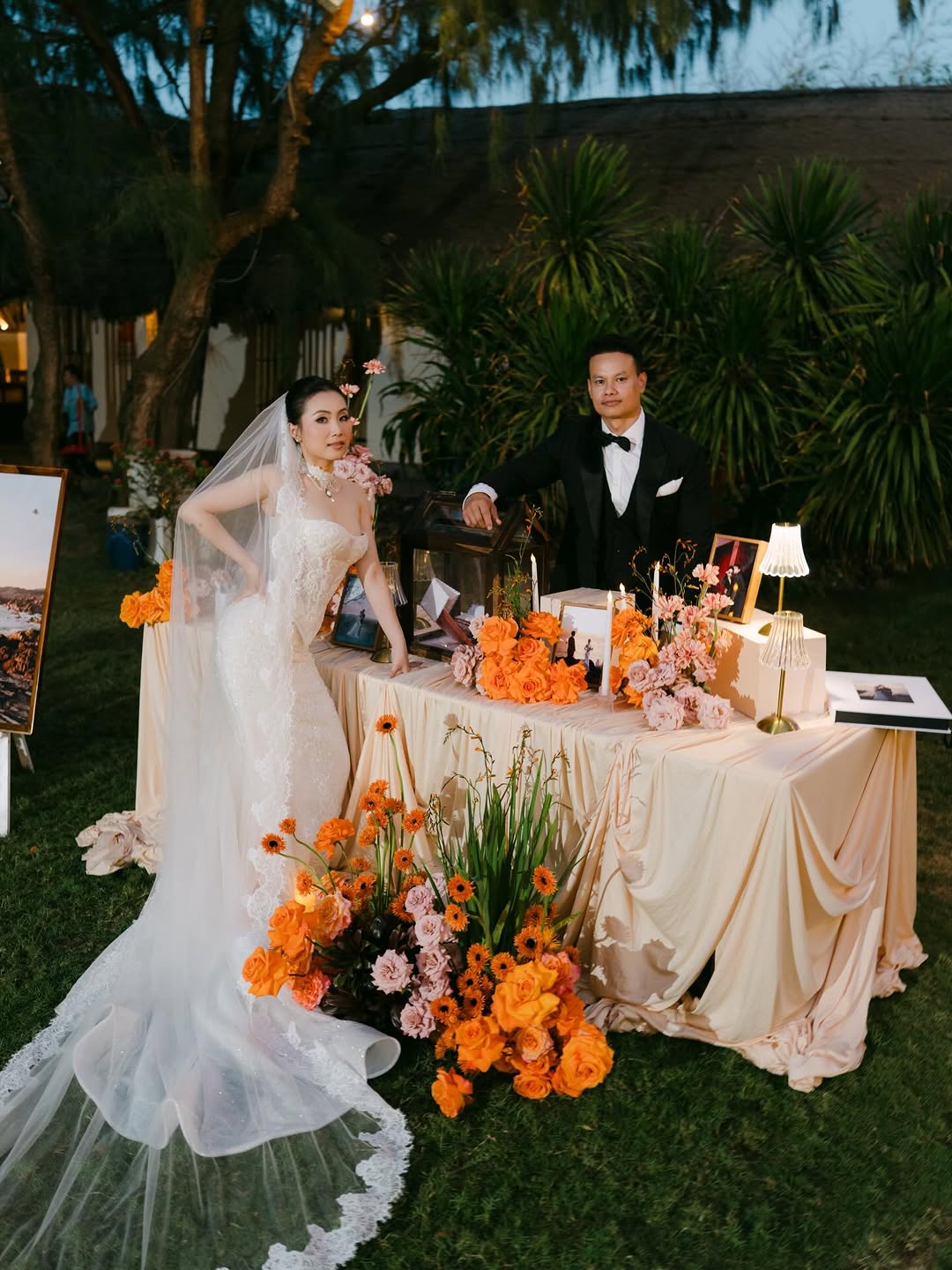
A professional on the day coordinator service does not begin on the morning of the wedding. The work needs to be taken over early enough for the coordination team to understand the event structure, identify gaps in the plan, and establish a communication system with vendors.
Pre-Wedding Phase
The team receives the timeline, vendor list, contracts or service scopes, floor plan, special guest list, and ceremonies requiring attention. Each contact is then confirmed and a responsibility map is established: who handles the ceremony, who controls the reception, who works with sound and lighting, and who has decision-making authority when unexpected issues arise.
During this phase, transparent wedding budget management also needs to be reviewed to identify new requirements that could create additional costs before the couple enters the wedding day.
Rehearsal Phase
Rehearsal is not simply practicing the ceremony. The coordination team needs to inspect the venue, sound positions, lighting, power sources, the bride and groom's walking routes, family waiting areas, guest flow, and vendor staging points.
For outdoor events in Da Lat, Lam Dong, the site inspection should take into account distances between areas, ground slopes, vehicle access for transportation, and weather conditions at the specific venue.
On the Wedding Day
The coordination team operates according to the rundown but does not follow it mechanically. If makeup is 15 minutes late, the goal is not to force every department to work faster in a chaotic manner, but to determine which parts can be shortened, which must remain unchanged, and which vendors need to be updated immediately.
The on the day coordinator serves as the event's information hub: receiving changes, assessing their impact, assigning solutions, and escalating only genuinely necessary decisions to the bride and groom or the family representative.
Event Handover and Closing Checklist
- Check personal belongings and assets that need to be handed over.
- Confirm gifts, envelopes, accessories, and ceremonial items with the designated person.
- Check rented items that need to be returned.
- Confirm that vendors have completed their scope of work.
- Record any damage or unresolved issues.
- Confirm the person responsible for post-event tasks.
Wedding Day Risk Management Scenarios: Practical Coordination Experience in Da Lat and Ho Chi Minh City

Professional coordination does not mean the event will never encounter problems. Its real value lies in identifying risks in advance, establishing decision thresholds, and having someone with sufficient authority to activate alternative plans without disrupting the guests' emotional experience.
Outdoor Wedding in Da Lat With Rain, Fog, or Strong Winds
For an outdoor wedding, Plan B must be a complete operational plan rather than a vague answer that “if it rains, we will move indoors”. The coordination team needs to determine the alternative space, capacity, transition time, sound plan, power, decorative flowers, and guest movement routes.
In particular, the characteristics Da Lat climate make the decision to switch plans dependent on on-site conditions and previously agreed thresholds. If the decision is delayed until guests begin arriving, there may no longer be enough time to move equipment and rearrange the space.
Late Vendor Arrival, Equipment Failure, or Timeline Delays
The principle is to prioritize according to impact. Safety and elements that determine the ceremony are handled first; guest experience comes next, and aesthetic details come last. When a vendor is late, the coordinator should immediately identify the tasks dependent on that vendor and find an alternative solution instead of repeatedly asking for the estimated arrival time.
Unexpected Increase in Guests, Ceremony Changes, or Requests From Either Family
Changes involving family members need to be handled sensitively. The coordinator must understand which requests can be accommodated immediately and which changes affect catering, the MC, technical elements, or the timeline. When a request needs to be declined or adjusted, an alternative solution should be offered at the same time rather than simply saying that the plan does not allow it.
Plan B Checklist Before Go Time
- Phone numbers of all vendor contacts.
- The designated decision-making representatives of both families.
- Alternative plans for critical elements.
- Threshold for activating the rain plan or changing venues.
- Critical backup equipment and alternative power sources if needed.
- Contingency fund and the person authorized to approve spending.
- Internal communication channel for the coordination team.
Wedding Day Coordination Hiring Guide: 8 Criteria for Choosing the Right Provider and Avoiding Common Mistakes

When hiring a wedding day coordinator, a beautiful portfolio is not enough. What couples need to evaluate is the operational capability behind the images: the ability to build a rundown, coordinate multiple vendors, make decisions, and control risks.
Assessing Practical Experience Through a Sample Rundown and Situation-Handling Plans
Ask the provider to explain how they would handle a specific situation: rain 60 minutes before the ceremony, makeup running 30 minutes late, or sound failure immediately before the ceremony. A good answer should demonstrate priorities, responsible contacts, and alternative solutions rather than simply claiming that the team has extensive experience.
Checking the Assigned Staff, Number of Coordinators, and Supervision Scope
Eight criteria should be checked: practical experience; rundown quality; staffing levels; lead coordinator; scope of vendor coordination; on-site coverage time; Plan B capability; and approval procedures for additional expenses. These factors are more valuable than comparing wedding coordination quotes based on the lowest price.
Questions to Ask Before Signing the Contract
- How long before the wedding does the coordinator begin taking over the work?
- Who will be directly responsible for the event?
- Is site inspection and rehearsal included?
- When do working hours begin and end?
- How is overtime calculated?
- Will the coordination team directly contact all vendors?
- Who has decision-making authority when an issue occurs?
- Which expenses may arise outside the quotation?
5 Mistakes When Self-Coordinating or Choosing a Low-Cost Service
- No single person has final responsibility: Each vendor only manages their own tasks, so no one oversees the event as a whole.
- A timeline that looks good on paper but lacks buffer time: A delay in just one task can affect the entire program.
- Insufficient staffing at operational points: One coordinator cannot be in the guest reception area, on stage, and backstage at the same time.
- No Plan B: Especially risky for outdoor weddings.
- Choosing based on price instead of scope: A low quote that excludes rehearsal, overtime, or support staff can result in a higher total final cost.
The Pine Wedding Planner – Tailor-Made On The Day Coordinator Service for an Emotionally Complete Wedding Day

At The Pine Wedding Planner, the on the day coordinator service is built on the principle of taking over what the couple has already prepared and filling only the missing links. The goal is not to change your wedding story, but to create a sufficiently robust operating system so that the story unfolds according to the spirit you have chosen.
Flexible Coordination Solutions Tailored to Your Love Story, Wedding Scale, and Existing Plan
Not every couple needs Full Planning A-Z. If the concept, venue, and vendors have already been selected, a wedding day coordination services designed to the right scope can be a more suitable solution. The Pine focuses on reviewing the existing plan, identifying risk points, and assigning staff according to the actual structure of the event.
From an Intimate Family Ceremony in Ho Chi Minh City to a Fine Art Wedding Among the Da Lat Pine Forest
A family ceremony in Ho Chi Minh City requires control of departure times, ceremonies, family formations, and travel between venues. Meanwhile, a Fine Art wedding among the pine forest requires additional weather planning, outdoor setup, power, transportation flows, and timing for activating Plan B. Therefore, staffing and timelines must be personalized for each event instead of using a single operational template.
Transparent Consultation and Pricing Process
The Pine begins by reviewing the couple's existing plan: timeline, venue, guest count, ceremonies, vendor list, and the parts the family wants to participate in directly. Based on this information, the team identifies the support needed and clearly agrees on the scope before providing a quotation.
This approach helps couples know exactly where they need support and avoid purchasing unnecessary services. At the same time, responsibilities among the coordinator, venue, decoration team, and other vendors are defined in advance to minimize operational gaps on the wedding day.
The Wedding Day Is for Love and Enjoyment
Good coordination is often the part of the work that guests notice the least. A microphone checked before a speech, a vendor reminded at exactly the right moment, or rain handled before guests realize the plan has changed—all happen behind the scenes so the emotional rhythm in front remains intact.
A well-prepared wedding is not a wedding without changes, but a wedding in which every change has someone calm and capable of receiving and handling it.
If you have prepared most of the plan yourself but do not want yourself, your parents, or your friends to become the “program runners” on your special day, an on the day coordinator is worth considering. The Pine Wedding Planner can help you review the timeline, vendors, staffing, and Plan B to determine the support scope you truly need. When the backstage is properly cared for, the bride and groom and both families can devote the wedding day to what matters most: being present, loving, and enjoying every moment.
