

Intimate weddings are becoming the choice of many couples who do not want their wedding day to be swept up in a crowded celebration filled with formalities and leaving little time for each other. However, hosting a small wedding does not necessarily mean everything will be simpler or less expensive. As the guest list becomes smaller, expectations for the overall experience, venue, decoration, and level of personalization often increase significantly. This article will help you understand what an intimate wedding really is, how to design a wedding for fewer than 100 guests, estimate your budget, control unexpected expenses, and develop practical contingency plans, especially for outdoor weddings in Da Lat.
What Is an Intimate Wedding? Understanding the Essence of a Wedding with Fewer Than 100 Guests
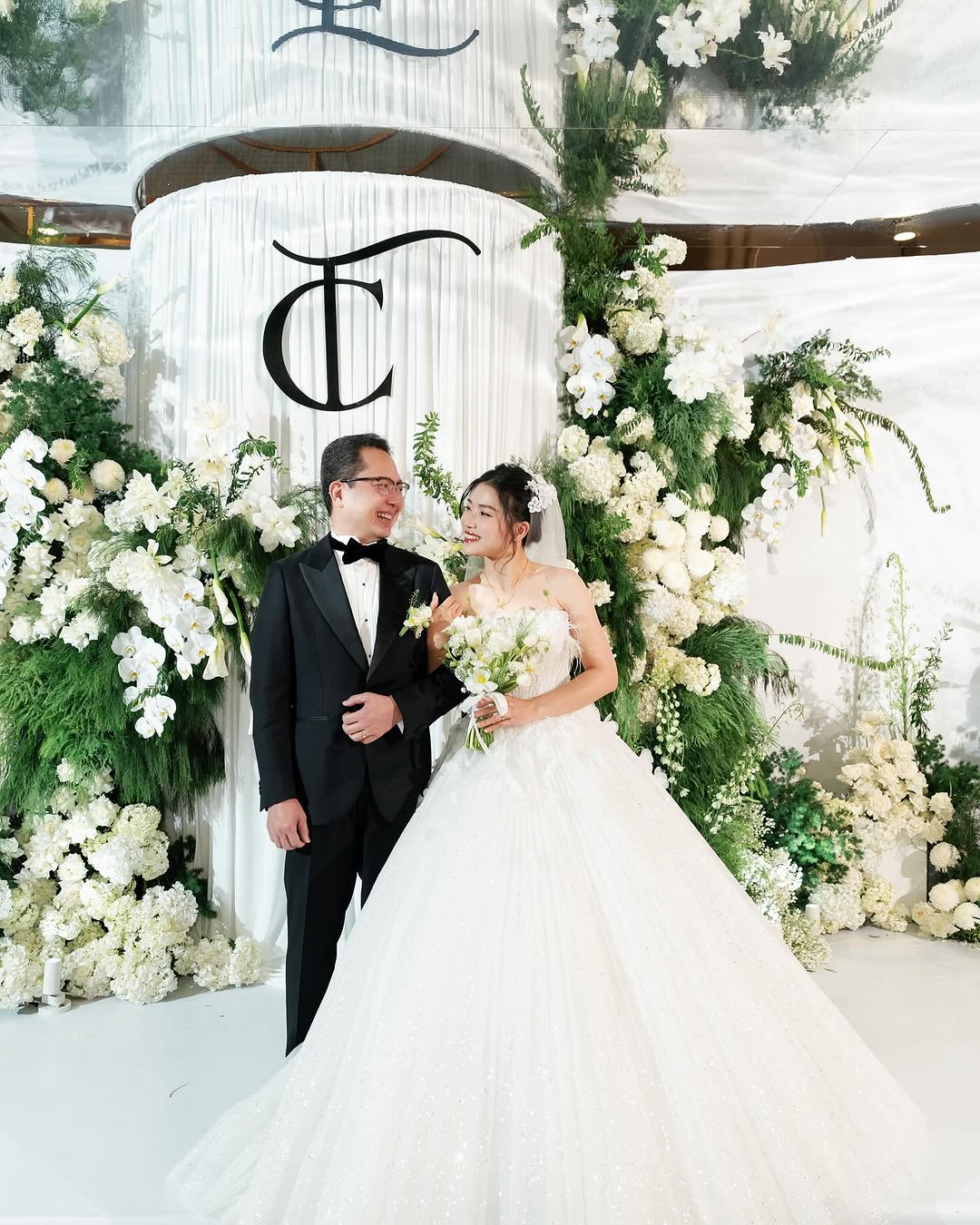
An intimate wedding can be understood as a celebration with a limited number of guests, usually fewer than 100, focusing on the people who are genuinely close to the bride and groom. The most important factor is not whether there are 50, 70, or 100 guests, but rather the quality of connections among attendees and the level of personalization throughout the entire experience.
An intimate wedding usually eliminates many formal elements to make more room for exchanging vows, sharing the couple's story, having meaningful conversations with guests, and enjoying family moments. Therefore, an intimate wedding is not simply a scaled-down version of a traditional wedding but a different event-planning model with its own structure.
How Does an Intimate Wedding Differ from a Traditional Wedding?
At weddings with several hundred guests, resources are generally prioritized for venue capacity, banquet seating, large-scale operations, and serving efficiency. With an intimate wedding, the budget can instead be allocated to experience-enhancing elements such as a beautiful venue, fresh flowers, lighting, a carefully curated menu, personalized gifts, an acoustic band, or details that reflect the couple's love story.
This explains why planning an intimate wedding should not begin with the question of how to minimize costs as much as possible. The better question is: given the available budget, what do you want to prioritize so that all 50 or 80 guests can genuinely feel the spirit of your wedding day?.
How Many Guests Is the Ideal Number?
There is no absolute number that defines every intimate wedding. Based on its practical planning experience, The Pine usually recommends that couples build their guest list around meaningful relationships rather than trying to reach an aesthetically pleasing number. A celebration with approximately 30–50 guests is suitable for a very private wedding; 50–80 guests creates an intimate yet lively atmosphere; while 80–100 guests requires greater attention to seating arrangements, guest flow, and coordination plans.
A simple principle is that if the bride and groom can spend time greeting and having meaningful conversations with most of their guests on their wedding day, that guest count is generally suitable for the spirit of an intimate wedding.
An Intimate Wedding Does Not Mean Fewer Ceremonies or Rituals
Couples can still retain traditional Vietnamese wedding ceremonies, such as the Vu Quy and Tan Hon ceremonies, ancestor ceremony or religious rituals that are appropriate for their families. The difference is that each ceremony is arranged with a clear purpose, avoiding unnecessary repetition or excessive duration. When creating the timeline, The Pine always balances the couple's wishes with the traditional values that both families want to preserve.
Secrets to Designing a Luxurious Intimate Wedding: Venue, Decorations, and Personalized Experiences
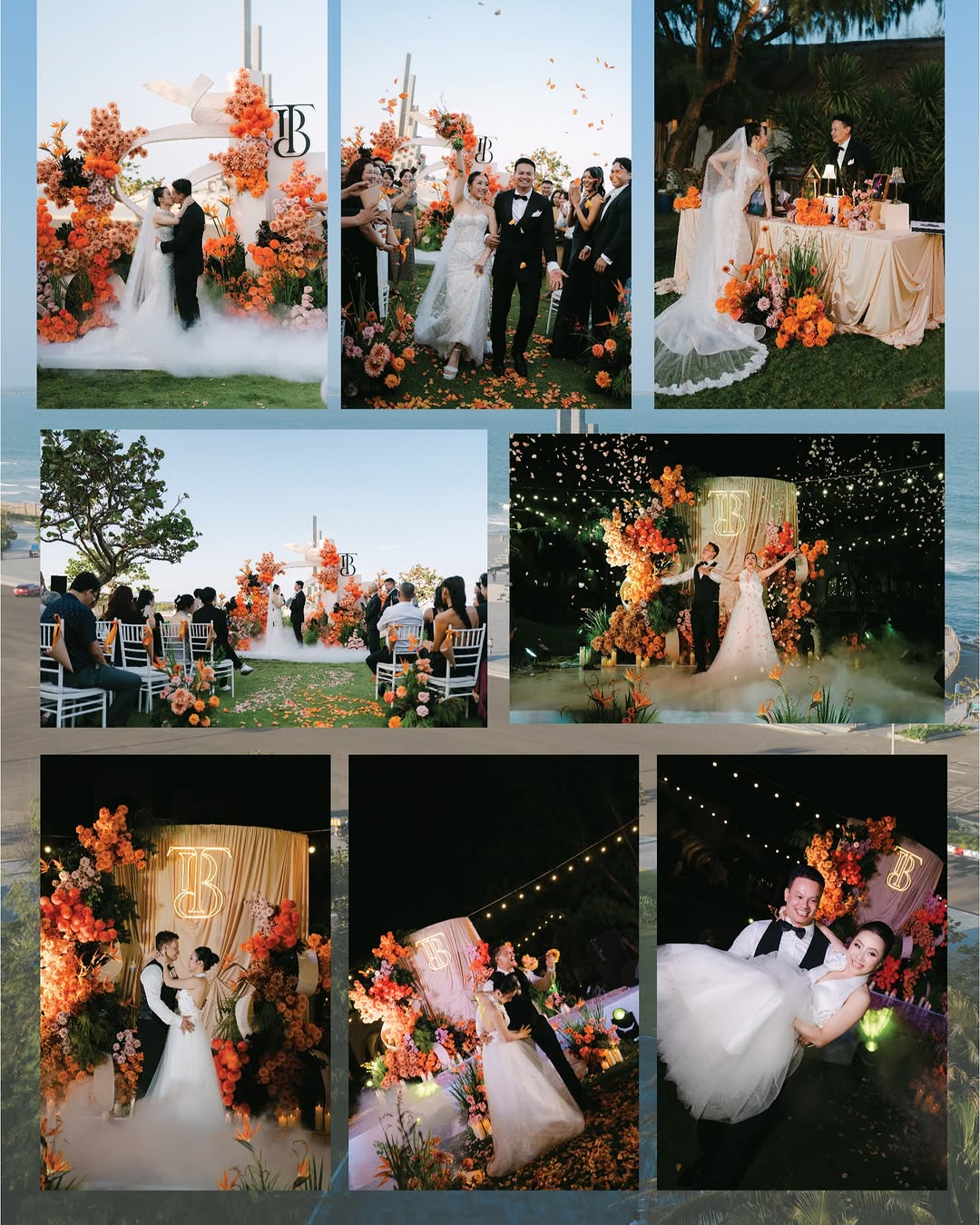
A beautiful intimate wedding does not require an excessive number of decorative details. What creates a truly sophisticated atmosphere is usually the harmony between the venue, colors, flowers, lighting, banquet tables, music, and the way guests are guided through each moment.
Choose a Venue Based on the Experience, Not Just Its Capacity
With 60 guests, a ballroom designed for 300 people can feel empty, even with extensive decorations. In contrast, a garden, villa, boutique resort, greenhouse, or pine forest with appropriately proportioned space can make everyone feel closer from the moment they arrive.
When inspecting a venue, The Pine evaluates more than just its capacity. The team also checks the entrance, welcome area, ceremony location, dining area, power supply, restrooms, parking, equipment access routes, noise levels, sound regulations, and rain contingency arrangements. These factors rarely appear in promotional photos but directly affect the quality of wedding-day operations.
Develop a Wedding Concept Inspired by the Couple's Story
A good concept does not begin with choosing a trendy decoration template. The Pine usually explores questions such as where the couple first met, which places hold special meaning, what their lifestyles are like, which memories they want to incorporate into their wedding day, and what emotions they want guests to take home after the celebration.
From there, the moodboard is developed into a cohesive palette of colors, materials, flowers, stationery, lighting, and spatial arrangements. A couple who loves nature might choose White & Sage Green, featuring white flowers, green foliage, and natural wood. A couple who prefers a warm atmosphere might develop a Warm Amber & Ivory palette, combining Edison lighting with cream-toned flowers.
Personalize the Touchpoints That Guests Actually Experience
Instead of spreading the budget across dozens of small decorative elements, an intimate wedding should focus on high-value experiential touchpoints: the welcome area, ceremony backdrop, banquet tables, menus, name cards, thank-you gifts, and music.
For example, with 60 close friends and family members, placing a small handwritten note from the bride and groom at each guest's seat can create more emotion than an elaborate decorative installation that has no connection to the couple's story.
Maintain a Sense of Openness and Breathing Room in the Space
A common mistake when planning an intimate wedding is trying to fill every area with flowers, decorative objects, or backdrops. Fine Art Wedding design needs breathing room so that each detail has visual significance. Premium fresh flowers, beautiful lighting, and well-proportioned layouts are often more effective than using too many small, disconnected decorative elements.
Cost of Hosting an Intimate Wedding with Fewer Than 100 Guests: Transparent Budget Planning and Preventing Unexpected Expenses
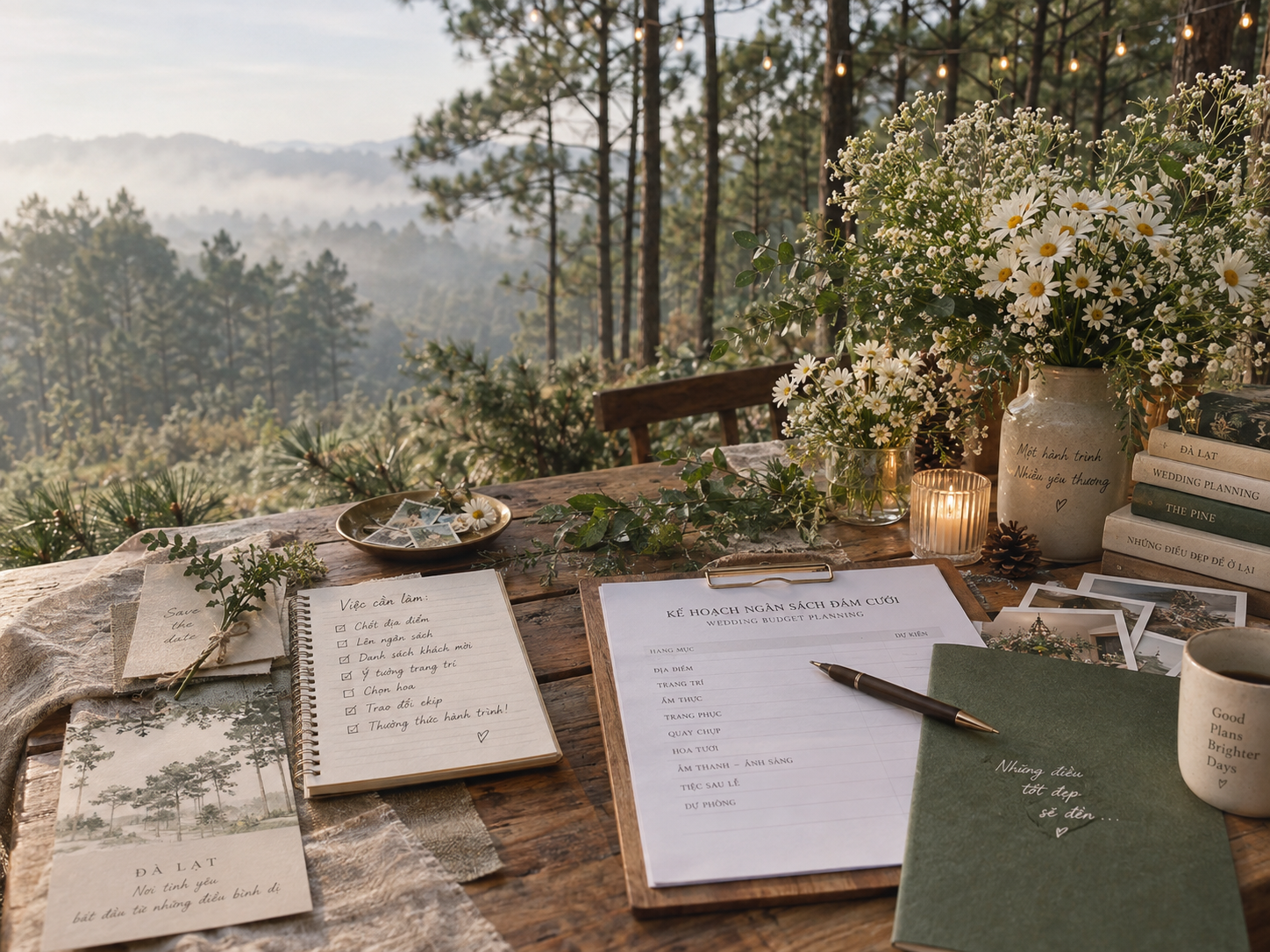
The cost of an intimate wedding cannot be calculated simply by multiplying the number of guests by the price per banquet table. A significant portion of the budget consists of fixed expenses such as the venue, design, decoration, sound and lighting, photography, videography, coordination staff, and transportation.
Organize the Budget Structure into Categories
To keep the budget under control, The Pine usually divides the Budget Plan into clearly defined categories instead of combining everything into one total figure. This approach helps couples understand exactly which expenses can be adjusted and which should not be reduced.
- Venue and F&B: venue rental, menu, beverages, service charges, and related surcharges.
- Design and decoration: concept design, fresh flowers, backdrops, gallery tables, banquet tables, signage, decorative lighting, and installation materials.
- Photography: photographer, videographer, pre-wedding photography, or wedding film, if applicable.
- Program: MC, live band, DJ, sound system, stage lighting, and technical equipment.
- Attire and beauty: wedding dress, suit, makeup, and accessories.
- Wedding Planning and Operations: planning, vendor management, timeline development, rehearsal, and on-site coordination.
- Contingency: additional transportation, weather-related expenses, changes in guest numbers, or reasonable unexpected requests.
Do Not Allocate the Budget Equally Across All Categories
If the overall budget is limited, couples should identify their three most important priorities. For example, couples who value photography may prioritize the venue, decoration, and photography. Those who want guests to have an excellent experience may prioritize F&B, music, and hospitality.
The Pine approaches budget management by reviewing the entire cost structure, eliminating items that add little value, and minimizing overlapping services purchased from different vendors. For suitable plans, this approach can create potential savings of approximately 15–20% compared with arrangements that lack centralized management. However, actual savings always depend on the venue, timing, design requirements, and service standards of each wedding.
Always Set Aside a Contingency Fund
It is not advisable to allocate 100% of the available budget from the outset. For outdoor weddings or destination weddings, setting aside a contingency fund of approximately 5–10% helps cover situations such as additional rain protection equipment, extra heaters, changes to transportation arrangements, extended installation hours, or adjustments to the guest count.
Budget transparency does not mean promising that changes will never occur. What matters is that every change has a clear reason, is communicated in advance, comes with alternative options, and is only implemented after the couple understands its impact on the overall budget.
The Practical A–Z Guide to Planning an Intimate Wedding with The Pine Wedding Planner
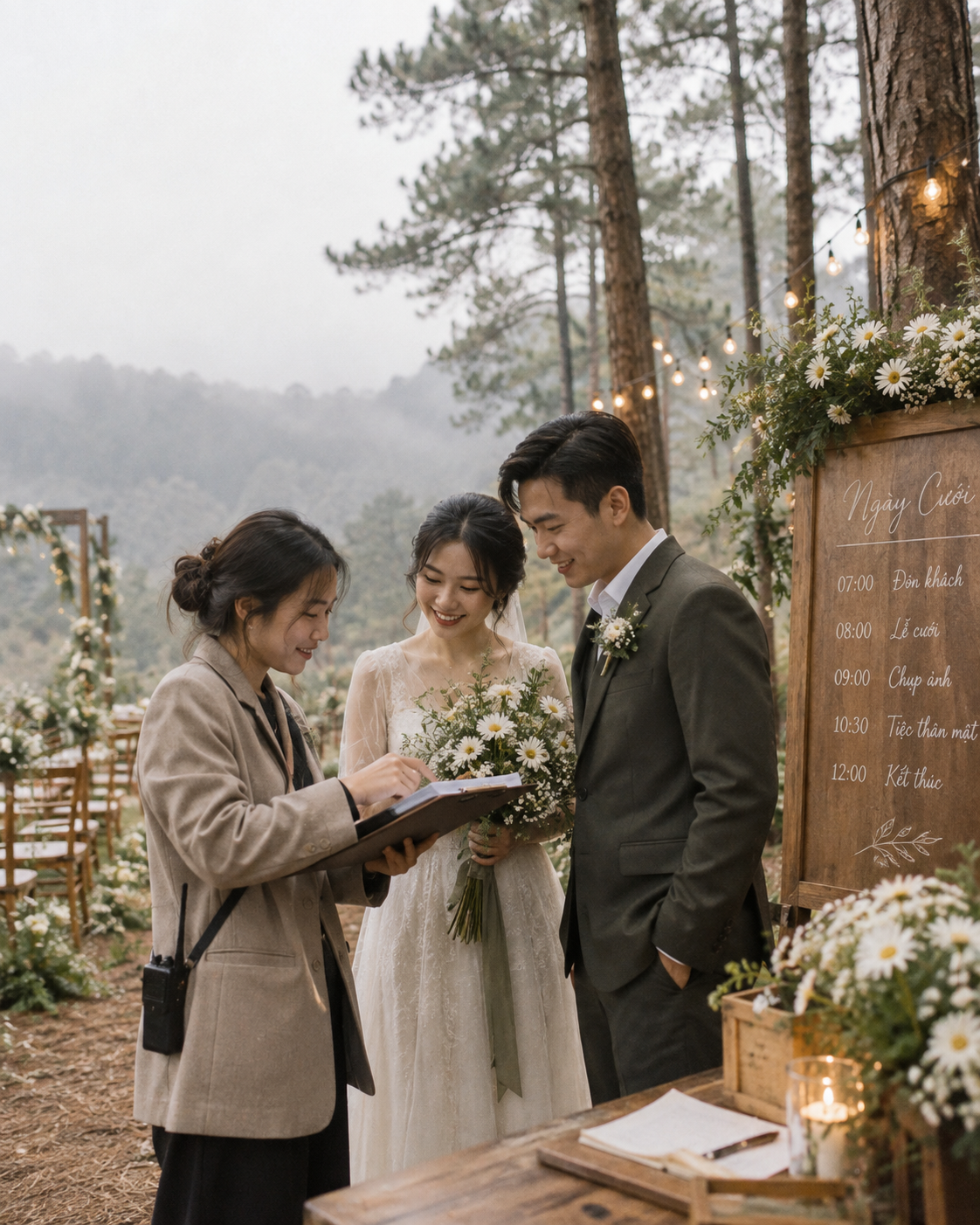
For an intimate wedding to unfold seamlessly over just a few hours, the preparation behind the scenes often takes weeks or even months. A well-structured process ensures that decisions are made in the right order, avoiding situations such as booking a venue before confirming whether the concept is suitable, finalizing decorations without considering transportation routes, or signing contracts with too many vendors before establishing the budget.
Step 1: Discovery and Brief Definition
The Pine begins with a consultation to understand the couple's guest count, estimated budget, preferred venue, style, family traditions, and non-negotiable priorities. This provides the foundation for determining the most suitable wedding plan.
Step 2: Building the Budget Plan
The budget is allocated according to expense categories and priorities. Items that are likely to fluctuate must be identified from the beginning, particularly outdoor venue costs, logistics expenses, and technical equipment.
Step 3: Venue Scouting and Site Inspection
The venue is evaluated for both aesthetics and operational feasibility. For destination weddings, an on-site inspection helps identify issues that photos and videos cannot reveal, such as slopes, distances from equipment staging areas, sun direction, noise levels, and the location of contingency spaces.
Step 4: Concept Development and Moodboard Creation
Once the venue has been confirmed, the design team develops a concept that complements the actual architecture and surrounding landscape. This helps reduce unnecessary installation work while making the most of the venue's natural beauty.
Step 5: Vendor Selection and Management
Vendors are selected according to their style, service standards, budget, and ability to collaborate. A photographer who excels at studio photography may not necessarily be suitable for a dimly lit pine forest wedding. Similarly, a sound team accustomed to ballroom events may not have the right equipment configuration for an outdoor garden celebration.
Step 6: Creating the Timeline and Rundown
The timeline needs to cover every detail, from vendor arrival and setup, makeup, first look, guest reception, ceremony, family photography, dining, speeches, and first dance to dismantling. This is also when responsibilities are assigned to individuals at every transition point.
For couples who have already arranged most of their wedding services independently, The Pine can take over the existing plan and provide Day-of Coordination coordination to connect the timelines of the venue, photographer, decoration team, sound team, MC, family members, and other vendors. Wedding-day coordination is particularly important for intimate weddings because the program often includes highly personalized moments that depend closely on the emotional flow of the celebration.
Step 7: Rehearsal and Final Checks
Before the wedding day, the team reviews the guest list, seating plan, timeline, equipment, transportation arrangements, vendor list, family contacts, and Plan B. For ceremonies involving multiple participants, a rehearsal helps everyone understand their positions, when to appear, and how to respond if the program changes.
Step 8: On-Site Coordination
On the wedding day, the couple should not have to answer calls asking where the wedding car is, how the MC should adjust the timeline, or how many extra minutes the photographer needs. The coordination team takes responsibility for handling these issues so that the bride, groom, and their families can focus on enjoying their own experience.
Tips for Planning an Outdoor Intimate Wedding in Da Lat: Plan B and Risk Management
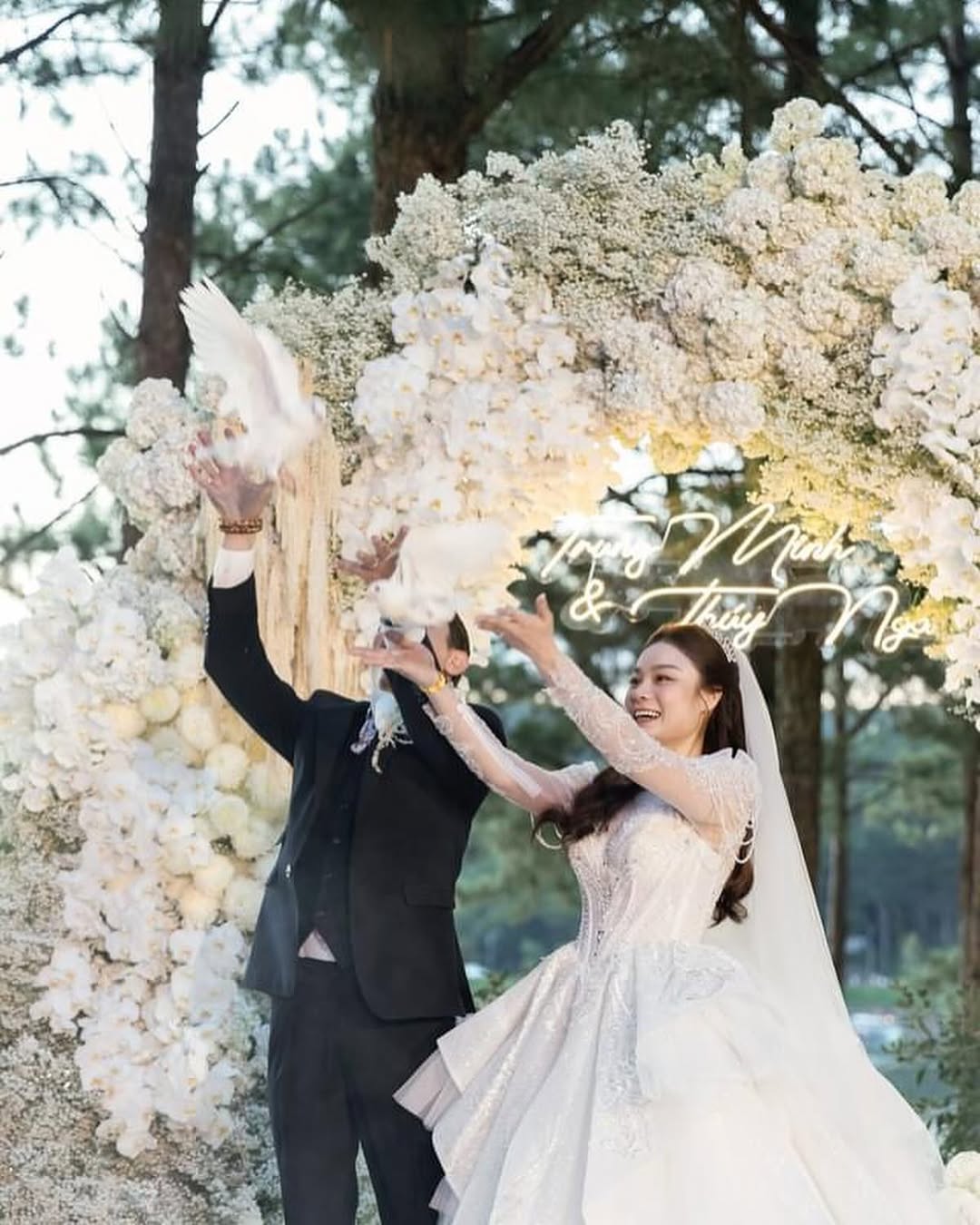
Da Lat offers landscapes that are particularly suitable for intimate weddings: pine forests, gardens, villas, and resorts create private spaces without requiring excessive construction or decoration. However, these beautiful surroundings also come with specific operational requirements.
Never Treat Plan B as a Secondary Option
For an outdoor wedding, Plan B must be developed alongside Plan A from the venue-selection stage. A contingency plan that is only considered when it starts raining often leads to three problems: insufficient covered space, insufficient staff to manage the transition, and an indoor layout that cannot accommodate the number of guests.
Practical experience with outdoor weddings Da Lat climate shows that couples need to prepare for rain, mist, wind, falling temperatures in the evening, and sudden weather changes. Checking the weather forecast is essential, but it cannot replace a specific operational contingency plan.
Plan B Must Answer at Least 6 Questions
- If it rains, where will the ceremony be relocated?
- How long will it take to move all the chairs, flowers, and equipment?
- Are the sound system and power supply adequately protected from water?
- Do guests have dry walking routes between different areas?
- Can the flowers, banquet tables, and decorative materials withstand humidity?
- Who has the authority to activate Plan B, and how far in advance must the decision be made?
The Pine usually establishes a clear decision-making deadline before the ceremony rather than waiting until the last minute. When weather conditions fall outside safe operating limits, the contingency plan is activated according to the agreed checklist. This gives vendors sufficient time to make the transition without allowing guests to notice the chaos behind the scenes.
Never Compromise Safety for the Sake of Aesthetics
Light rain can create beautiful photographs, but strong winds, slippery floors, outdoor electrical cables, or unstable decorative structures are risks that should never be taken. A Wedding Planner must have the authority to prioritize safety, even when this means changing part of the original concept.
Managing the Guest Experience
For a destination intimate wedding, the guest experience begins before the ceremony. Guests need clear information about the dress code, expected temperatures, location, travel time, parking, or shuttle arrangements. If elderly guests or young children are attending, accessibility, walking distances, resting areas, and program duration should also be considered.
A good plan does more than ensure the event runs on schedule; it also creates the feeling that everything happens naturally. This is the goal of wedding-day coordination: handling the complexity behind the scenes so that the couple and their guests experience nothing but a seamless celebration.
The Pine Wedding Planner – Creating Bespoke Intimate Weddings Where Love Stories Become Works of Art
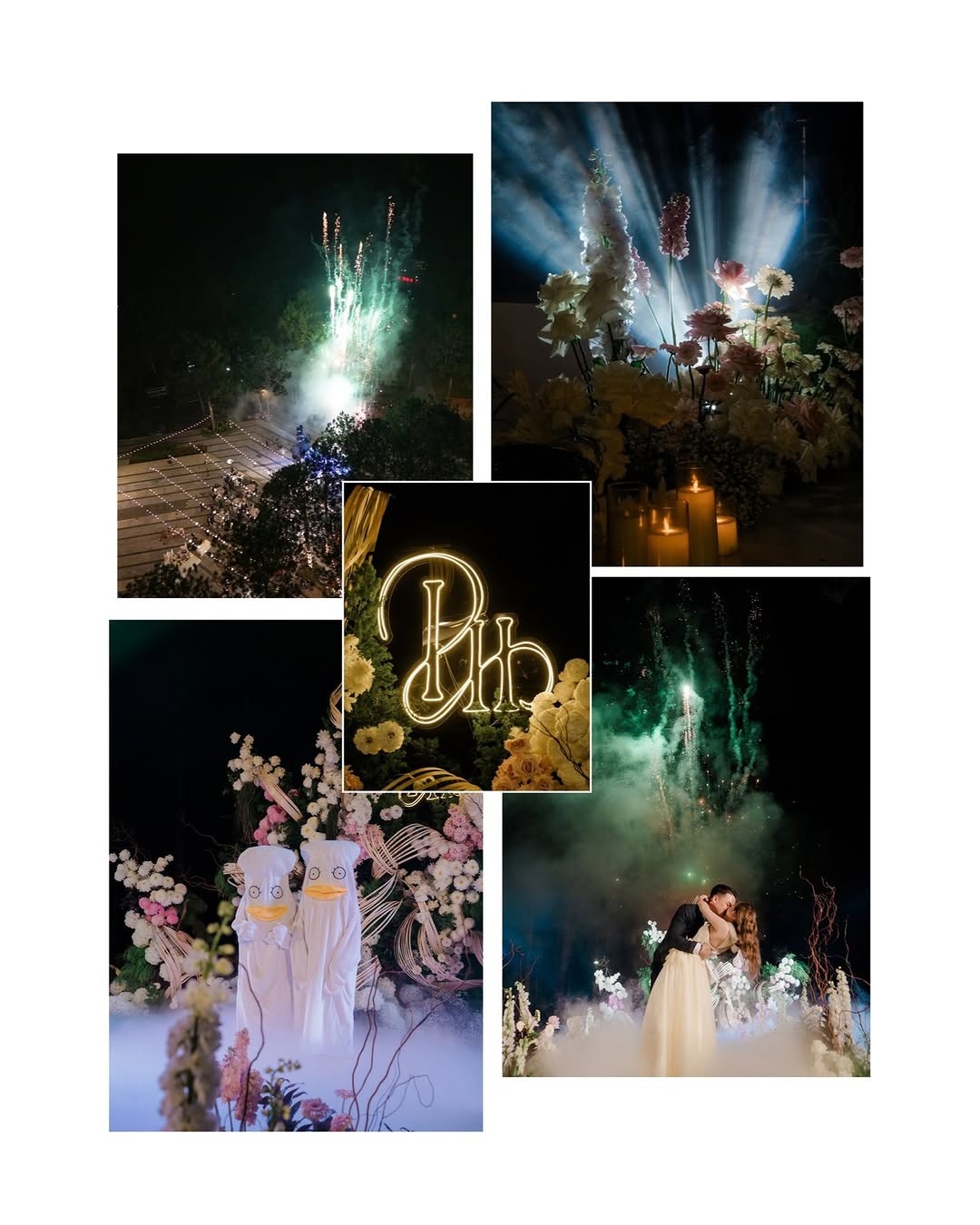
For The Pine Wedding Planner, an intimate wedding never begins with a backdrop template or a fixed decoration package. Every project starts with people: your story as a couple, the important people who will be there, your actual budget, the venue, and the emotions you want to remember after your wedding day.
Full-Service Planning (A–Z)
Full Planning is suitable for couples who want a single point of contact throughout the entire process, from concept development, Budget Plan, venue selection, vendor management, timeline creation, and experience design to wedding-day operations. The Wedding Planner also oversees progress and helps couples understand the financial impact of each decision before making it.
Day-Of Coordination
If couples have already selected their venue, photographer, makeup artist, or other vendors, The Pine can take over all existing information, review the timeline, identify potential risks, organize rehearsals, and coordinate on-site operations. This solution ensures that a wedding plan prepared by multiple parties can still run smoothly under one unified coordination team.
Wedding Decoration Tailored to the Venue
The Pine specializes in outdoor venues, pine forests, gardens, and resorts, where the natural landscape becomes an integral part of the design. Fine Art, Warm Amber & Ivory, White & Sage Green, and Forest Green are simply aesthetic languages; the final concept must still reflect each couple's personality.
A Small Wedding Can Hold a Very Big Story
The value of an intimate wedding does not lie in inviting fewer people, but in being able to give greater attention to everyone who attends. When the guest list, venue, budget, design, and timeline are developed according to the same vision, an intimate wedding can be sophisticated, private, and emotionally fulfilling without being extravagant.
A wedding day does not need countless details to become memorable. What matters is that every detail has a purpose and belongs to your story as a couple.
If you are considering an intimate wedding for fewer than 100 guests in Da Lat or Ho Chi Minh City, The Pine Wedding Planner can help you begin with the most important steps: defining the guest count, budget, venue, and desired experience. From there, the team will develop a suitable Full Planning, Decoration, or Day-of Coordination solution to preserve the personal character of your wedding, keep expenses under control, and allow the bride and groom to truly relax and enjoy every moment.
