

A beautiful destination wedding does not begin with finding a famous resort or choosing an abundance of flowers for the ceremony. It begins with a question: what do you and your loved ones most want to remember after your wedding day? Drawing on hands-on destination wedding experience, The Pine Wedding Planner has found that what puts the most pressure on many couples is not coming up with ideas, but managing the venue, guests, budget, transportation, accommodation, vendors, and unpredictable weather conditions all at once. This article will help you approach a destination wedding as a complete experience project, from choosing a destination and creating a budget plan to developing a Plan B that preserves the emotion of your wedding day, whatever changes may arise.
What Is a Destination Wedding? When Is a Travel Wedding the Right Choice for You?
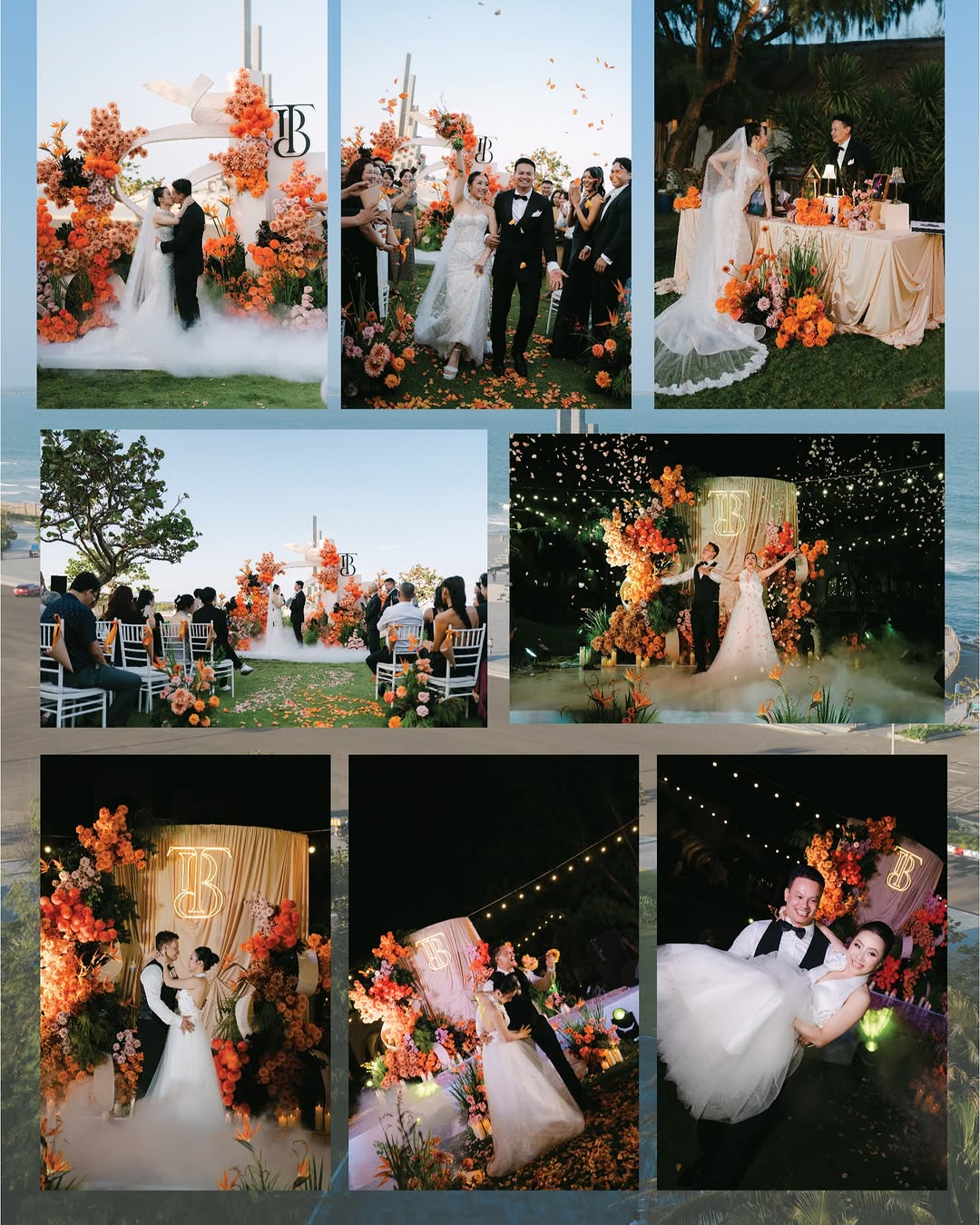
How Is a Destination Wedding Different from a Traditional Wedding, and Why Is It Becoming Increasingly Popular?
When planning a destination wedding, the term refers to a wedding held somewhere other than the place where the bride, groom, or most of their guests live. The key difference is not simply the geographical distance. A destination wedding often becomes a multi-day journey involving travel, accommodation, gatherings, a welcome party, the wedding ceremony, the main reception, and sometimes post-wedding activities.
Rather than simply hosting a reception that lasts a few hours, you are creating a shared experience for the people who matter most to you. This is also why destination weddings are so popular with couples: guest lists can be more carefully curated, there is more time to connect, and the wedding setting can reflect the couple's personalities more distinctly.
However, a Destination Wedding is not necessarily the right choice for everyone. If the family includes many elderly guests, guests who must travel long distances, or if both families want to host a very large wedding, the logistics become considerably more complicated. One important piece of destination wedding advice is not to choose this format simply because it looks beautiful on social media. Start with the actual needs of both families.
What Experiences Does a Destination Wedding Offer the Bride, Groom, and Guests?
A well-designed Destination Wedding typically creates three layers of experience. The first is the emotional experience of the bride and groom: stepping into a space thoughtfully designed around their own love story. The second is the bond between family and friends, as everyone has more time to spend together rather than meeting for just a few hours at a reception venue. The third is the destination experience, encompassing everything from the climate, scenery, and cuisine to activities before and after the wedding day.
However, the experience is only truly complete when guests are taken care of before they even begin their journey. Guests who do not know which flight to book, what to wear, how to get from the hotel to the venue, or what the wedding-day schedule looks like may find a Destination Wedding more inconvenient than memorable.
A Destination Wedding should not leave guests to figure out a whole series of logistical questions on their own. The more information is prepared in advance, the more time everyone can devote to what matters most: being present with the bride and groom.
Choosing Da Lat or the Beach: Start with Your Love Story, Guest Count, and Desired Experience
Do not start by asking whether Da Lat or Phu Quoc is more beautiful. Instead, begin with three factors: your story as a couple, the expected number of guests, and the atmosphere you want to create on your wedding day.
Da Lat is ideal for couples who love romantic settings, pine forests, villas, gardens, intimate celebrations, and a warm, close-knit atmosphere. When researching venues, understanding Da Lat climate is also essential because temperature, humidity, rain, fog, and changing weather conditions can directly affect flowers, sound systems, lighting, setup schedules, and the guest experience.
A seaside destination, on the other hand, offers a sense of openness and relaxation, and can be a great choice if you want to create a wedding weekend with activities around the pool, beach, or resort. However, wind, humidity, intense sunlight, and equipment transportation times must also be factored into the plan from the outset.
Destination Wedding Tips: 6 Key Decisions to Make Before Booking a Venue

Choosing the Season and Location: Balancing Scenery, Weather, Transportation, and Guest Experience
One of the most common mistakes when planning a destination wedding is choosing a venue based solely on photographs. A beautiful garden may not necessarily be suitable for an evening reception. A spacious lawn may not be ideal for setting up a stage. A romantic villa may not have sufficient back-of-house facilities or parking spaces.
When conducting a site inspection, evaluate four aspects together: scenery, weather conditions, accessibility, and operational capacity. The experience at the same venue can vary significantly in the morning, at sunset, and in the evening. Vendors' travel times should also be calculated separately from those of the guests.
Experienced destination wedding planners always assess both the primary plan and an alternative option. If the wedding ceremony is scheduled to take place outdoors, an indoor area or covered space must be evaluated when selecting the venue, rather than waiting until rain appears in the forecast to start looking for a backup plan.
Determine the Guest Count and Plan Your Wedding Travel Itinerary
The number of guests affects almost every aspect of a destination wedding plan: the venue, accommodation, transportation, number of tables, coordination staff, sound systems, catering, and decoration budget. Therefore, organize your guest list into three groups: guests who have confirmed their attendance, guests who are likely to attend, and guests whose attendance still needs to be confirmed.
Next, consider the entire journey from the guests' perspective. When will they arrive? Who will welcome them? Where will they check in? Will they have time to rest before the reception? Will shuttle transportation be needed? How will they get back to the hotel after the celebration? Are more convenient options available for elderly guests or families with young children?
A successful wedding combined with a travel experience does not need to be packed with activities. A small welcome dinner, the main wedding ceremony, and a light brunch the following day can sometimes create more meaningful connections than an overloaded schedule that leaves everyone rushing from one activity to the next.
Planning a Destination Wedding on a Budget: Categorizing Essential Costs, Experiences, and Decorations
Rather than starting with the question of how much money is needed for a Destination Wedding, first establish your maximum budget and priorities. Then allocate the funds according to the experiences that truly matter to you as a couple.
A reference budget framework can be divided into three tiers. The essential tier includes the venue, F&B, staffing, basic equipment, and logistics. The experience tier includes accommodation, guest transportation, entertainment, welcome gifts, and accompanying activities. The aesthetic tier includes the concept, flowers, backdrops, table settings, artistic lighting, and personalized details.
In terms of budget allocation, every wedding is different, but an initial Budget Plan could allocate approximately 35-50% to the venue and F&B, 15-25% to design and decoration, 8-12% to photography and videography, 5-10% to entertainment, 8-15% to logistics, and around 8-12% to a contingency fund. This is not a fixed price list but rather a framework for checking whether your budget is becoming unbalanced.
Pre-Wedding Checklist: Venue, Accommodation, Transportation, Menu, Vendors, Timeline, and Contingency Plans
Before signing major contracts, establish a unified checklist instead of handling each item separately.
- Venue: capacity, set-up time, end time, ceremony area, reception area, and Plan B.
- Accommodation: number of rooms, check-in time, room reservation policies, and arrangements for guests arriving early or late.
- Transportation: shuttle services, parking areas, routes for equipment trucks, and contingency time.
- Menu: number of guests, vegetarian requirements, food allergies, serving times, and arrangements for adjusting the number of tables.
- Vendor: main contact person, arrival time, scope of work, and handover conditions.
- Timeline: set-up, rehearsal, makeup, first look, ceremony, reception, and teardown times.
- Plan B: activation conditions, decision-maker, final confirmation deadline, and communication plan for informing guests.
What Does a Destination Wedding Cost Include? How to Create a Budget and Minimize Unexpected Expenses
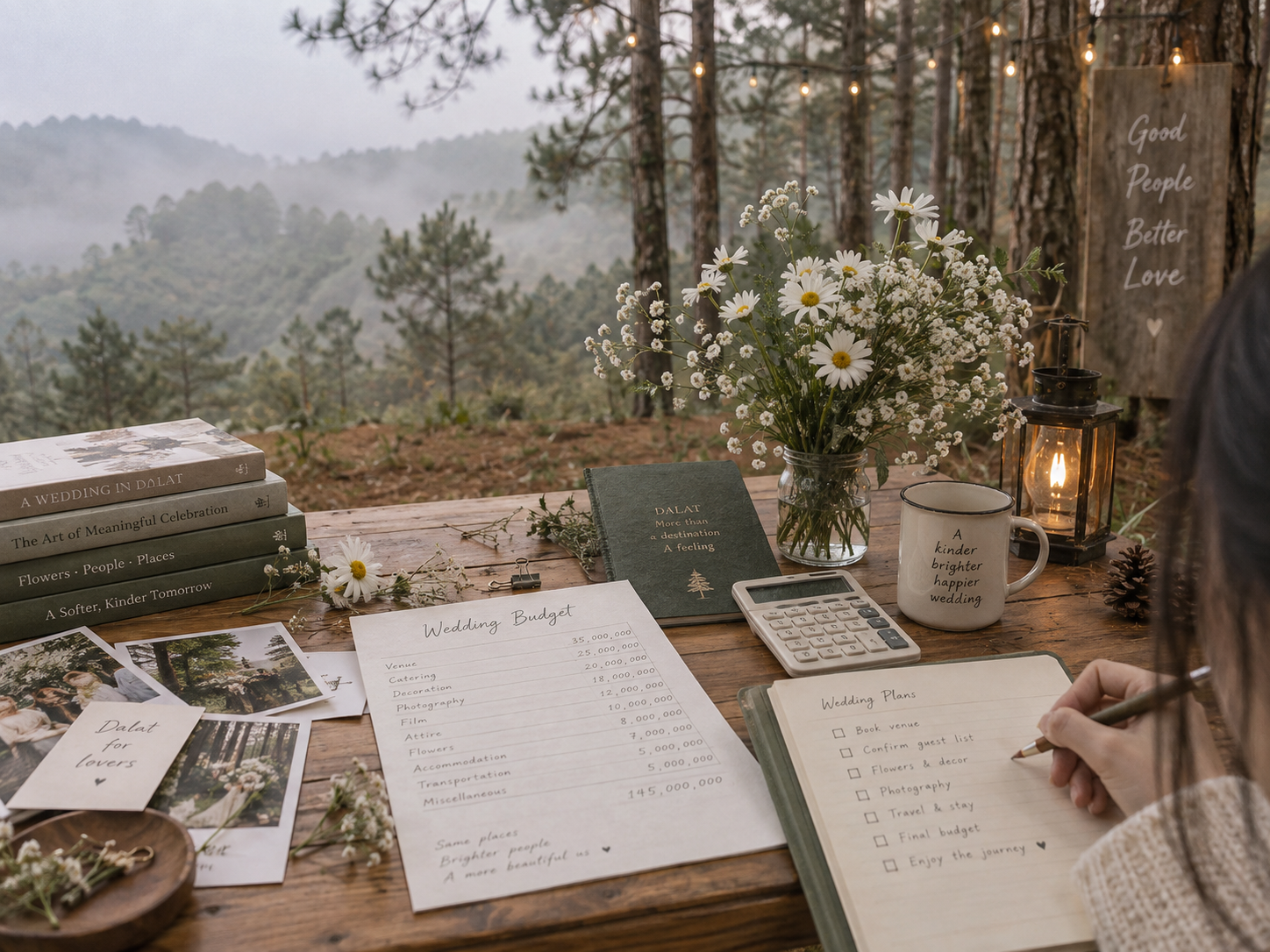
Destination Wedding Budget Breakdown: From Venue and Accommodation to Decorations and Transportation
When preparing your budget, do not focus only on the elements that appear in wedding photos. A Destination Wedding also involves many behind-the-scenes logistical expenses. A comprehensive plan should include the venue, F&B, accommodation, transportation, design and decoration, flowers, sound and lighting, screens, generators if needed, photography, videography, makeup, MC, entertainment, coordination staff, guest gifts, printing, equipment transportation costs, and a contingency fund.
An important aspect of Destination Wedding budgeting is clearly distinguishing between fixed and variable costs. Venue rental fees are generally relatively fixed, while F&B, hotel rooms, and transportation costs may vary depending on the number of guests. Decoration costs also include a fixed component for design and a variable component based on the area, number of tables, or quantity of flowers.
When receiving a quotation, make sure to request a clearly defined scope of work. A lower price that excludes transportation, overtime labor, dismantling, or additional venue fees is not necessarily the more cost-effective option.
Key Costs to Consider for a Da Lat Wedding: Venue, Weather, Terrain, and Logistics
When researching wedding costs in Da Lat, couples often pay close attention to the venue and decorations but may overlook logistics. For venues located far from the city center or in areas with challenging terrain, the costs of transporting materials, staff, trucks, setup time, and accommodation for the team can make a significant difference.
Outdoor weddings also require consideration of canopies, flooring, sound equipment protection, solutions for keeping floral arrangements stable, additional lighting, and backup plans for transitioning to an alternative space if the weather changes. These expenses should not come as unexpected extras when the event is known to be outdoors from the outset.
This is also why local experience is so valuable. A beautiful mood board design only becomes a successful design when it can be executed safely, on schedule, and in a way that preserves the guest experience under the venue's actual conditions.
How to Build a Budget Plan and Control Unexpected Expenses in a Destination Wedding
The Pine usually recommends that the Budget Plan include at least four key columns: target budget, estimated quotations, committed costs, and actual expenses. Any changes to the concept, guest count, or vendors must be reflected in the overall budget rather than treated as minor additional expenses.
The expenses most likely to increase unexpectedly usually come from last-minute guest count increases, design changes after production has begun, extended venue rental periods, vendor overtime, additional transportation fees, and late changes to Plan B.
In the planning process Full-Service Wedding Planner, budget management takes place alongside concept development and vendor selection. The Pine aims to optimize costs by approximately 15–20% through prioritizing budget allocation, avoiding unnecessary purchases, and controlling the scope of work from the outset, rather than compromising quality at the final stage.
Tips for Choosing a Destination Wedding Location in Vietnam: Da Lat and Coastal Destinations
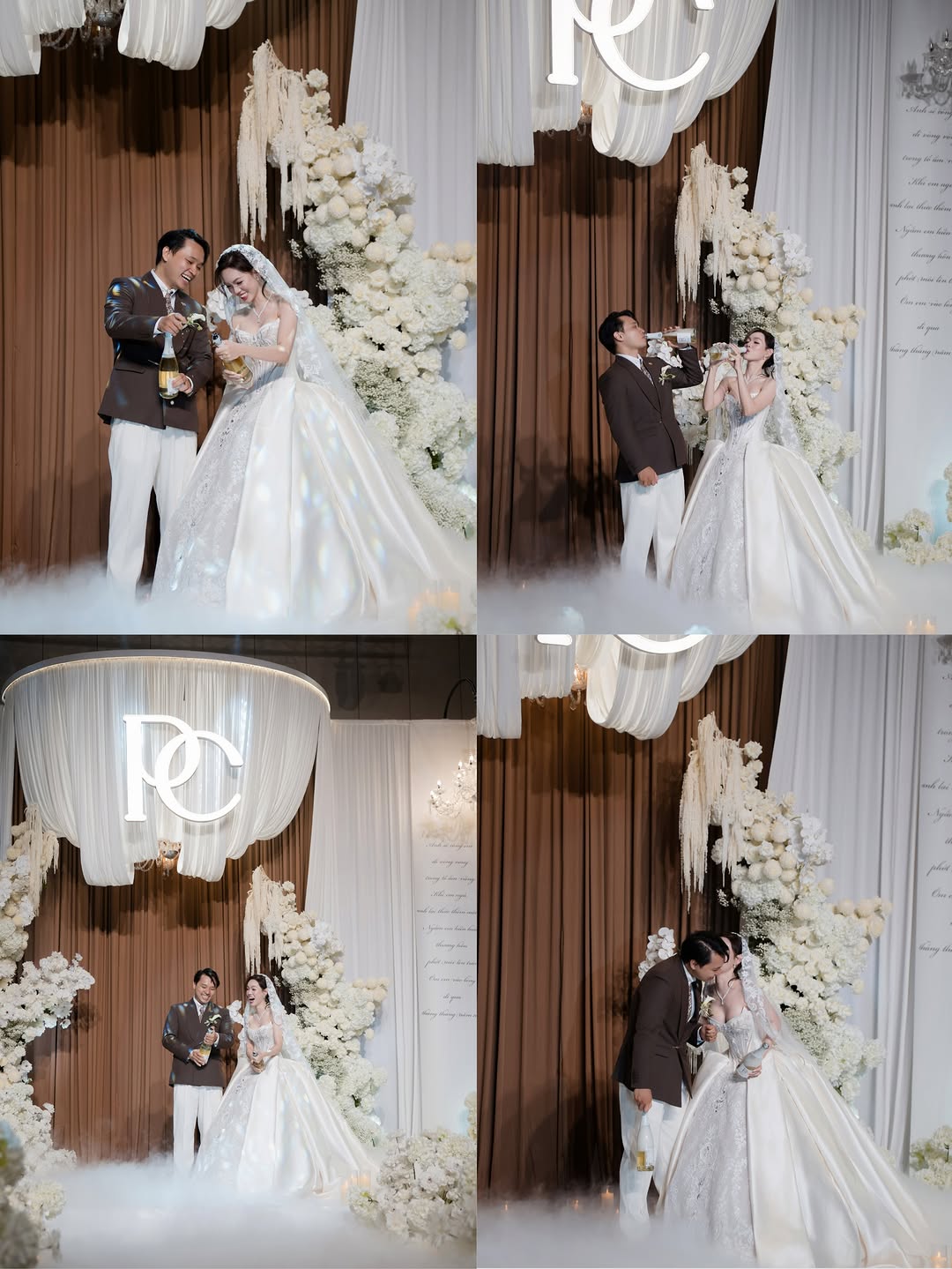
Da Lat: Pine Forests, Villas, Resorts, and Gardens for an Emotionally Rich Destination Wedding
Da Lat offers a truly distinctive setting for destination weddings: pine forests, mist, gardens, villa architecture, and intimate spaces that make a wedding ceremony feel like a private gathering among the people who matter most.
For a Fine Art style, color palettes such as Warm Amber & Ivory or White & Sage Green can blend naturally with the surrounding landscape rather than compete with nature. However, the design should be developed around the venue itself. The same color palette will require entirely different approaches to flowers, materials, lighting, and stage proportions in a forest setting compared with a villa garden.
Destination wedding experience in Da Lat also shows that lighting is a factor that should be assessed early. A venue that looks stunning during the day may lack depth after sunset if it relies solely on its existing lighting system.
Beachfront Destination Weddings: When Should You Choose Da Nang, Nha Trang, or Phu Quoc?
Beach destinations are suitable when you want your wedding to be part of a holiday and expect guests from different cities. Destinations such as Da Nang, Nha Trang, and Phu Quoc can offer a distinctive resort experience, but the final choice should still be based on guest transportation, the number of accommodation nights, the itinerary, and the actual layout of the venue.
Do not automatically assume that a beachfront venue is always the best choice. Wind can affect flowers, table linens, microphones, and decorative structures; sunlight can affect guest comfort; tides and resort regulations may influence the wedding schedule. Therefore, operational inspections must come before aesthetic decisions.
Venue Inspection Checklist: Capacity, Rain Contingency Plan, Electricity, Sound System, Parking, and Setup Time
During a site inspection, evaluate the venue from an event operations perspective rather than simply as a visitor.
- Actual capacity after arranging the stage, walkways, and dining tables.
- Backup areas in case of rain and the time required to transition between spaces.
- Power sources, electrical capacity, connection points, and backup power arrangements.
- Sound restrictions, end times, and noise regulations at the venue.
- Truck access, material staging areas, and logistics locations.
- Parking areas or guest pick-up and drop-off points.
- Permitted set-up and teardown times.
- Makeup areas, changing rooms, and resting spaces for family members and vendors.
A good venue is not simply a beautiful place when it is empty. It must be capable of operating smoothly when dozens of different activities take place simultaneously within the same time frame.
The Practical Destination Wedding Planning Process: From Concept Development to Wedding Day Coordination
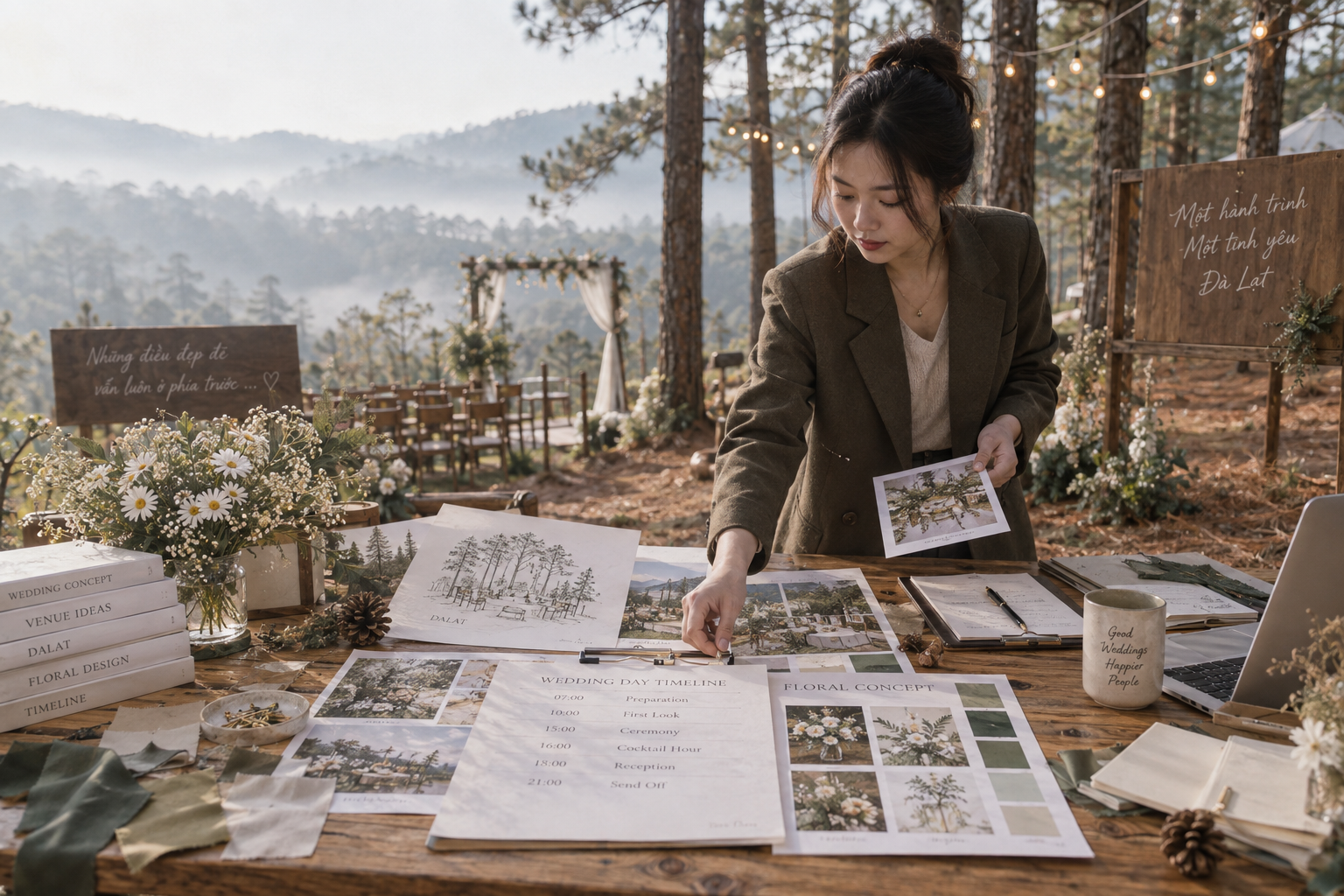
Step 1: Explore the Couple's Love Story and Develop a Unique Concept and Moodboard
The Pine does not begin developing a concept by asking which colors you like. A good concept needs to go deeper: how you met, what brought you together, each person's personality, the emotions you want to convey, and the experiences you want to create for your guests.
Based on this information, the moodboard is developed into a cohesive system consisting of color palettes, materials, flowers, typography, lighting, layouts, and personal details. This ensures that the decorations are not only beautiful but also have a meaningful purpose.
A one-of-a-kind wedding does not necessarily need countless details. What matters is that every detail contributes to telling the same story.
Step 2: Set the Budget, Select Vendors, and Build a Destination Wedding Plan with Clear Milestones
After defining the concept, the Budget Plan needs to be updated to ensure that the ideas align with available resources. This is the stage where you distinguish between what is essential, what can be upgraded, and what should be removed if it does not significantly contribute to the overall experience.
Vendors should not be selected based on price alone. Their quality, style, destination experience, coordination capabilities, response time, and scope of responsibility must all be evaluated. Even a highly skilled vendor may create operational gaps on the wedding day if they are unfamiliar with how Destination Weddings are managed.
A destination wedding plan should be divided into clear milestones: venue confirmation, concept finalization, vendor shortlisting, contract signing, guest confirmation, design completion, F&B finalization, logistics confirmation, rundown finalization, and rehearsal.
Step 3: Create the Rundown, Conduct a Full Rehearsal, and Manage All Local Vendors
A rundown is not merely a schedule for the MC. An operational rundown must specify who does what, where and when, what needs to be handed over, and which subsequent tasks will be affected if delays occur.
For example, the time guests are welcomed into the venue depends on the completion of decorations, soundcheck, lighting, welcome desk arrangements, reception staff, photographer readiness, and whether the bride and groom are ready. If just one element is delayed by 20 minutes, the entire timeline may be affected.
Rehearsals are particularly important for Destination Weddings because many family members and vendors only meet at the destination. This is the time to check the ceremony route, music cues, standing positions, rituals, microphones, guest flow, and contingency arrangements for potential situations.
Step 4: Coordinate the Wedding Day So the Bride, Groom, and Their Families Don't Have to Handle Behind-the-Scenes Logistics
The wedding day should not be a time when the bride has to call vendors to ask whether they have arrived or the groom has to check guest transportation vehicles. The coordination team's role is to handle the complexities behind the scenes so that the family can simply be present and enjoy their special moments.
With Full-Service Wedding Planner, The team has been involved in the project from the early stages, allowing them to manage the concept, budget, vendors, and operations throughout the entire process. For couples who have already prepared most of the arrangements themselves, Day-of Coordination is more suitable when they need a team to take over the timeline, review tasks, conduct rehearsals, and coordinate the entire wedding day.
Destination Wedding Risk Management: Plan B for Weather, Terrain, and Unexpected Situations
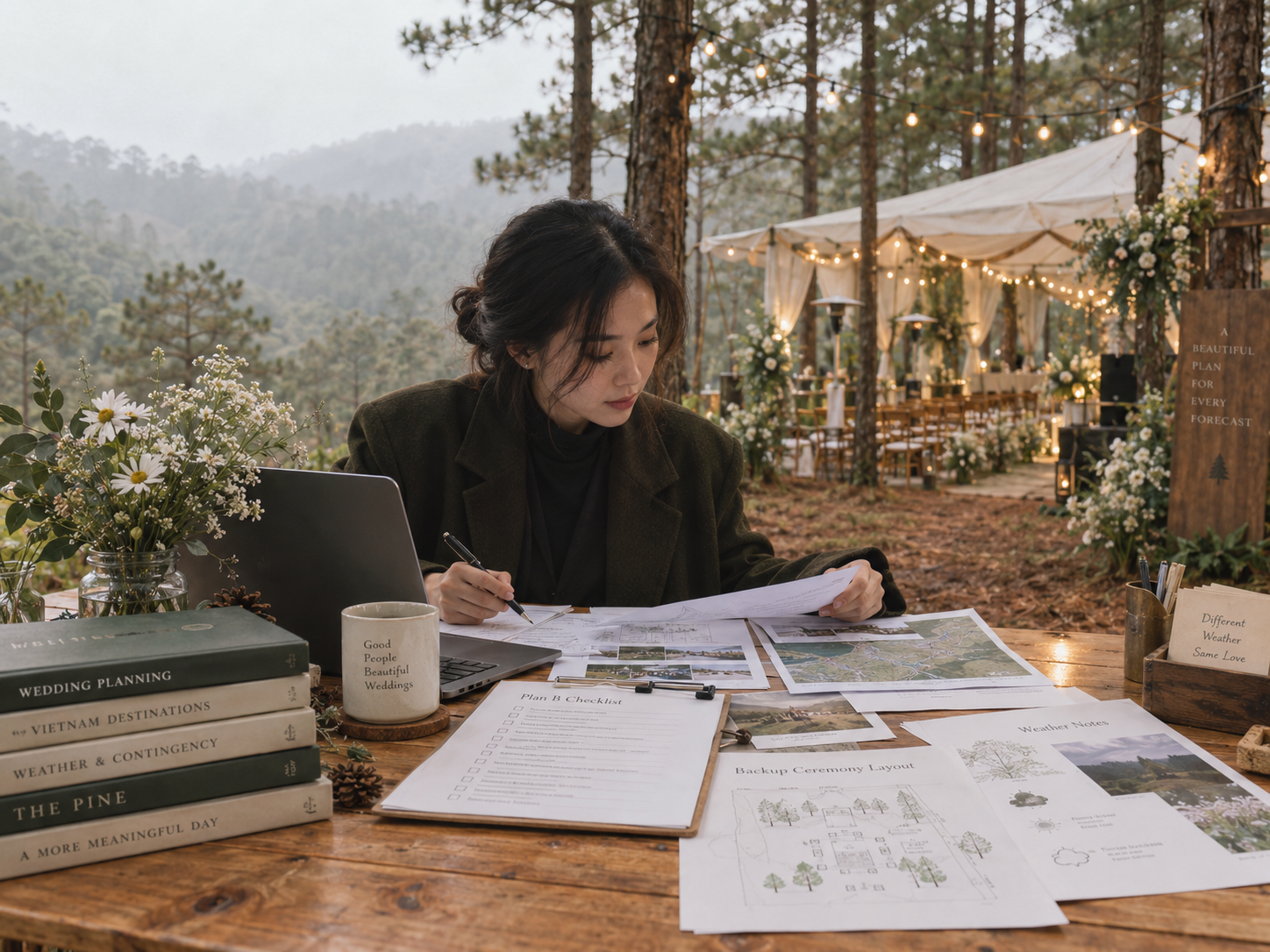
Rain, Wind, and Changing Weather: How to Move an Outdoor Wedding Indoors Without Losing the Original Concept
A good Plan B is not simply a canopy arranged at the last minute. Plan B must be designed alongside Plan A from the very beginning.
If an outdoor ceremony needs to move indoors, you must know where the backdrop will be positioned, how many flowers can be reused, how the seating layout will change, how the sound system will be relocated, and the minimum time required for the team to complete the transition. More importantly, you must determine in advance who has the authority to activate Plan B.
A practical principle is to establish a decision deadline sufficiently ahead of guest arrival so that the team has enough time to make a safe transition. If you wait until the rain starts before taking action, not only may the concept be affected, but guest experience, equipment, and operational safety may also be compromised.
Handling Vendor, Transportation, Accommodation, and Late Guest Arrivals on Your Wedding Day
A good plan must address potential problems before they happen: if the flowers arrive late, which items should be installed first? If guest transportation is delayed by 30 minutes, should the ceremony be postponed? If hotel rooms are not ready, where should guests wait? If a vendor experiences equipment failure, is there backup equipment or a local support provider available?
Destination wedding experience is not about claiming that unexpected problems will never occur. What matters is anticipating potential weak points, assigning responsible contacts, and preparing alternative solutions quickly enough that guests barely notice the changes happening behind the scenes.
Practical Lessons from Da Lat: Terrain, Climate, and Details to Consider Before Setup
For outdoor weddings in Da Lat, The Pine pays particular attention to set-up surfaces, transportation routes, humidity, rain, evening temperatures, and the distance between material staging areas and installation locations. A seemingly minor detail, such as a truck being unable to access the ceremony area directly, can completely change the time and manpower required for set-up.
Fresh flowers must also be selected and arranged according to actual conditions. A beautiful design in a studio may not retain the same appearance after spending several hours outdoors. Lighting, sound, and decorative structures must be tested under the venue's actual conditions rather than relying solely on drawings.
That is the difference between designing for beautiful photographs and designing for successful operations. At The Pine, both elements must exist together.
Turn Your Destination Wedding into a One-of-a-Kind Love Story: The Pine Wedding Planner Creates a Tailor-Made Experience from A to Z
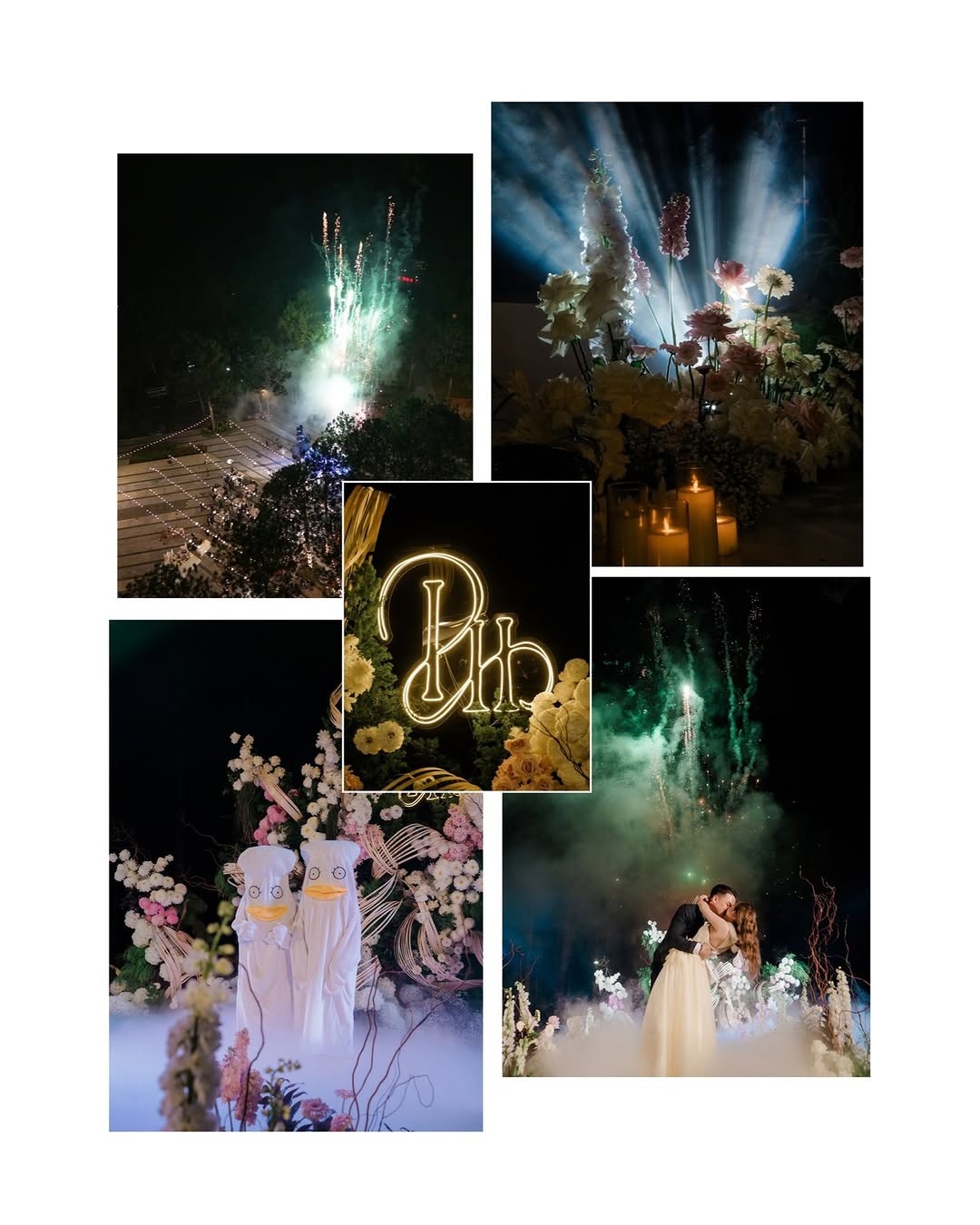
More Than Just a Wedding Reception: Telling Your Love Story Through Space, Flowers, Lighting, and Experiences
After all the checklists, budgets, and timelines, what guests remember about a Destination Wedding is rarely the number of flowers on the stage. They remember entering the space and feeling that this truly is the couple's wedding. They remember how the lighting changes when the ceremony begins, a song played at just the right moment, heartfelt words from family members, and the feeling that everything unfolds naturally.
That is why The Pine views decoration as part of storytelling. The space, flowers, lighting, materials, music, and guest journey need to connect with one another to create a consistent story rather than a collection of beautiful but disconnected elements.
Full-Service Wedding Planning, Day-of Coordination, and Wedding Decoration: Choosing the Right Level of Support
If you have limited time or want a single point of contact to manage everything from the concept and budget to vendors and the wedding day, Full Planning is the more suitable package. If most of the arrangements have already been prepared but your family needs a professional team to take over the timeline and behind-the-scenes operations, Day-of Coordination is a practical choice. If you have already taken charge of the operational arrangements and want to focus on the aesthetics of the space, Wedding Decoration will concentrate on the concept, flowers, materials, and visual experience.
Choosing the right scope of services from the beginning is also part of destination wedding experience. Hiring too little support may leave your family handling more tasks than expected, while purchasing a larger service package than you actually need is not an efficient way to use your budget either.
The Pine Wedding Planner in Da Lat & Ho Chi Minh City: Managing the Budget, Plan B, and the Emotional Flow of Your Wedding Day
From Da Lat to Ho Chi Minh City, The Pine Wedding Planner follows one consistent principle: every wedding should be designed around the people before designing the space. Behind an emotionally meaningful wedding ceremony must be a sufficiently organized operational system so that the bride and groom do not have to worry about the behind-the-scenes details.
Destination wedding experience shows that three elements need to be managed simultaneously: a transparent budget, a sufficiently detailed contingency plan, and a timeline with an assigned person responsible for every touchpoint. When these three foundations are solid, the concept has room to become beautiful and emotions can unfold naturally.
If you are planning a destination wedding in Da Lat or another location and are unsure whether to start with the venue, budget, or concept, The Pine Wedding Planner can accompany you from the very first step. Share your story, guest count, estimated budget, and the experience you envision; The Pine team will work with you to develop a suitable plan, control potential additional expenses, prepare Plan B, and preserve the emotional flow so that your wedding day is truly a day for you to enjoy.
