

The Vu Quy ceremony is more than just a ritual before the bride leaves for her wedding. It is also the moment when the bride's family officially bids farewell as she embarks on a new journey. Therefore, everything from the ancestral altar and traditional wedding gift trays to the space layout and event timeline must be carefully prepared, without turning the joyful occasion into a source of stress. This article helps couples understand the proper rituals, identify the essential priorities, and choose ancestral altar decorations that suit their space, budget, and family's unique story.
What Is the Vu Quy Ceremony? The Significance of the Ancestral Altar Space on a Momentous Day
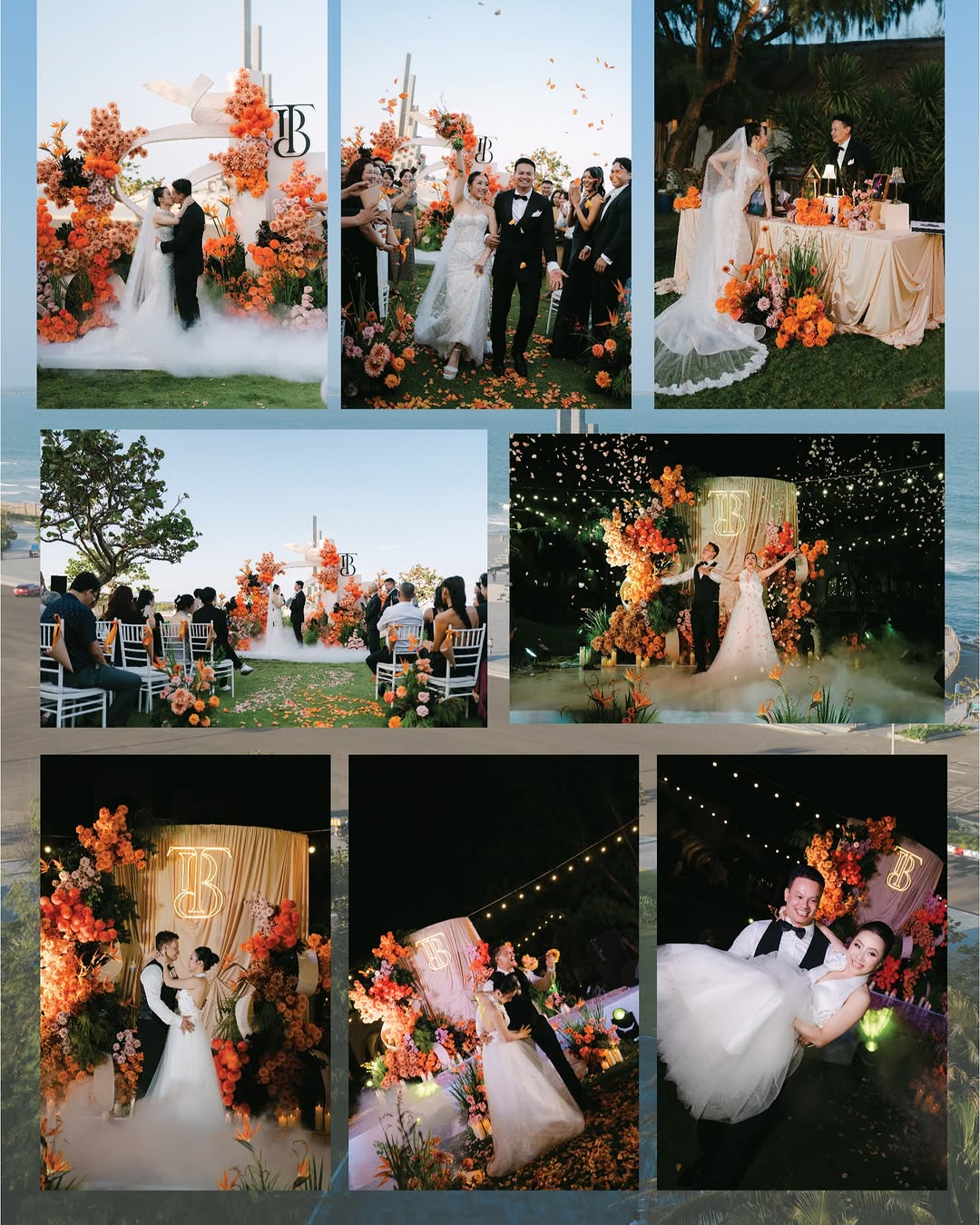
The Vu Quy Ceremony in Vietnamese Wedding Traditions: The Heartfelt Moment a Family Sends Their Daughter to Her Husband’s Home
In common Vietnamese usage, Vu Quy Ceremony is a ceremony held at the bride's family home before she leaves to join her husband's family. The term Vu Quy refers to a daughter leaving her family home to get married. Therefore, a Vu Quy sign is typically displayed in the ceremonial space at the bride's family home.
It is important not to regard the Vu Quy ceremony as merely a formality to be completed. It is often one of the most emotional moments of the wedding day: the groom's family arrives to receive the bride, the two families come together, the bride and groom perform rituals before the ancestral altar, and the parents offer their blessings and heartfelt wishes before their child begins married life.
The ceremony's sequence may vary depending on regional customs, religious beliefs, and family traditions. Therefore, when planning the program, The Pine always prioritizes consulting with representatives of both families in advance rather than applying a rigid procedure to every wedding.
The Significance of the Ancestral Altar, Wedding Gift Trays, and Ceremonies Honoring Both Families
The ancestral altar is the focal point of the ceremonial space. This is where the bride and groom pay tribute to their ancestors, announce their marriage, and express respect for their family heritage. Therefore, aesthetic considerations must always come second to solemnity and respect for family traditions.
Traditional Wedding Gift Trays carry ceremonial significance and are prepared by the groom's family when visiting the bride's family home. The number, contents, and arrangement of the gift trays may vary according to regional customs and agreements between the two families. For families in Southern Vietnam, traditional offerings such as betel leaves and areca nuts, tea, wine, cakes, fruit, and other items appropriate to the family's customs are commonly considered.
When designing the ceremonial space, it is important to plan the placement of the gift trays, the movement paths for both families, the positions where the bride and groom will stand during the ceremony, and sufficient space for older family members. A beautiful backdrop that obstructs pathways or makes the ancestral altar area feel cramped will diminish the experience of the ceremony itself.
The Differences Between the Vu Quy, Tan Hon, and Thanh Hon Ceremonies in Modern Weddings
These three terms are often used in similar contexts, but each has a distinct meaning. The Vu Quy ceremony generally refers to the ritual held at the bride's family home when she is sent off to join her husband's family. Tan Hon Ceremony is generally used to describe the ceremony welcoming the bride at the groom's family home. Meanwhile, the Thanh Hon ceremony is a broader term referring to the formal marriage of the couple and is commonly used in connection with the wedding reception or a shared ceremonial venue.
In modern weddings, these terms may be adapted to suit each family's circumstances. Rather than following popular decoration templates found online, the priority should be to agree on the terminology, ceremony sequence, and content with both families before designing the signs, backdrop, and other related decorative elements.
Luxury Ancestral Altar Decoration with Artistic Fresh Flowers: Transforming a Space into a Love Story
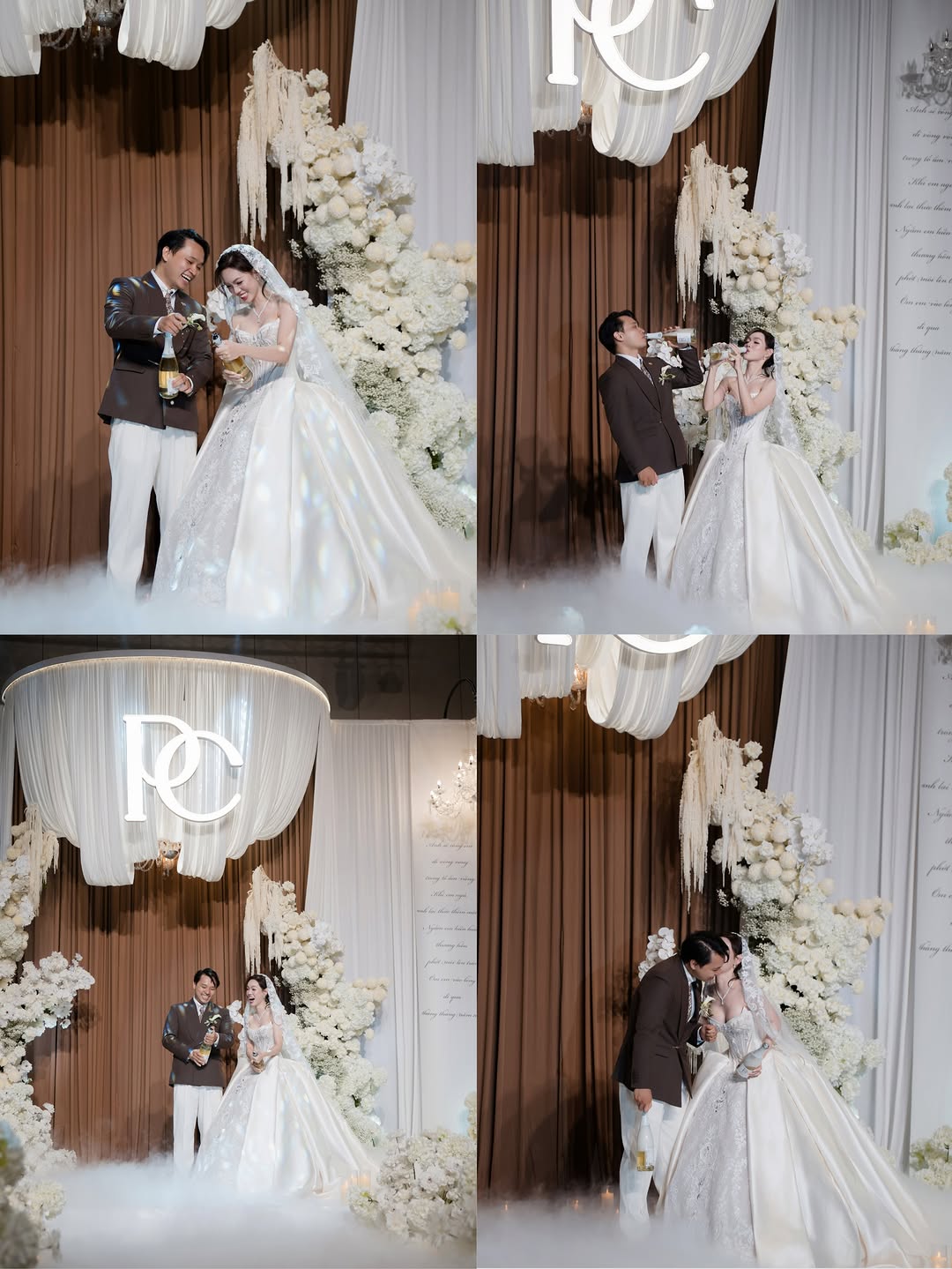
Principles of Ancestral Altar Decoration: Balancing Traditional Elegance, Modern Aesthetics, and the Couple’s Personality
A ancestral altar wedding decorations does not require filling the entire house with flowers. Its value lies in identifying the right focal points, creating harmonious proportions, and preserving the solemn atmosphere of the ceremony. Traditional elements such as the ancestral altar, incense burner, candle holders, double happiness symbols, and existing family heirlooms should be assessed before developing the concept.
With its Fine Art approach, The Pine often favors elegant compositions, naturally flowing floral arrangements, and carefully restrained color palettes. Warm Amber & Ivory creates a welcoming atmosphere; White & Sage Green suits bright, sophisticated spaces; while red and pink tones can be styled in contemporary shades for families wishing to preserve a traditional spirit.
The important value of Ancestral altar decoration is a concept that must serve the actual space. A design that looks beautiful in a spacious villa may not be suitable for a townhouse with a 4-meter-wide frontage. The design needs to be adapted to ceiling height, lighting, wall colors, existing furnishings, and the expected number of guests.
Designing the Ancestral Altar, Vu Quy Ceremony Backdrop, and Guest Reception Area Around a Unique Concept
The ancestral altar should be the first priority. Flowers, candles, candle holders, and decorative details should frame the worship area rather than obscure important elements. Vase heights must also be carefully calculated to avoid blocking the couple's view when performing the ceremony.
The Vu Quy ceremony backdrop is a strong visual focal point, commonly used to welcome guests and provide a setting for family photographs. For townhouses, the backdrop should be appropriately sized without occupying the entire entrance. If space is limited, the backdrop can be integrated with the reception area rather than forcing two separate zones into the layout.
In practice, Ancestral altar decoration a cohesive design should extend from the floral entrance gate and entryway to the backdrop, reception table, and ancestral altar area. Consistency in colors and materials creates a more luxurious impression than investing in too many details while giving each area a completely different style.
Choosing Premium Fresh Flowers, Color Palettes, and Decorative Materials to Suit Each Home’s Space
Fresh flowers should be selected based on the concept, flower season, indoor temperature, and installation schedule. Not every expensive imported flower is necessarily the best choice. In many designs, combining premium focal flowers with seasonal blooms and suitable foliage can maintain the desired aesthetic while keeping the budget reasonable.
For homes featuring extensive wooden finishes, ivory, cream, sage green, and amber palettes often create a harmonious look. Homes with white backgrounds and modern architecture may suit restrained white-green or pastel schemes. If the existing space already features many colors, the concept should be simplified to avoid a heavy or cluttered appearance.
Vu Quy Ceremony Preparation Checklist: Essential Tasks Families Should Complete Before the Wedding Day
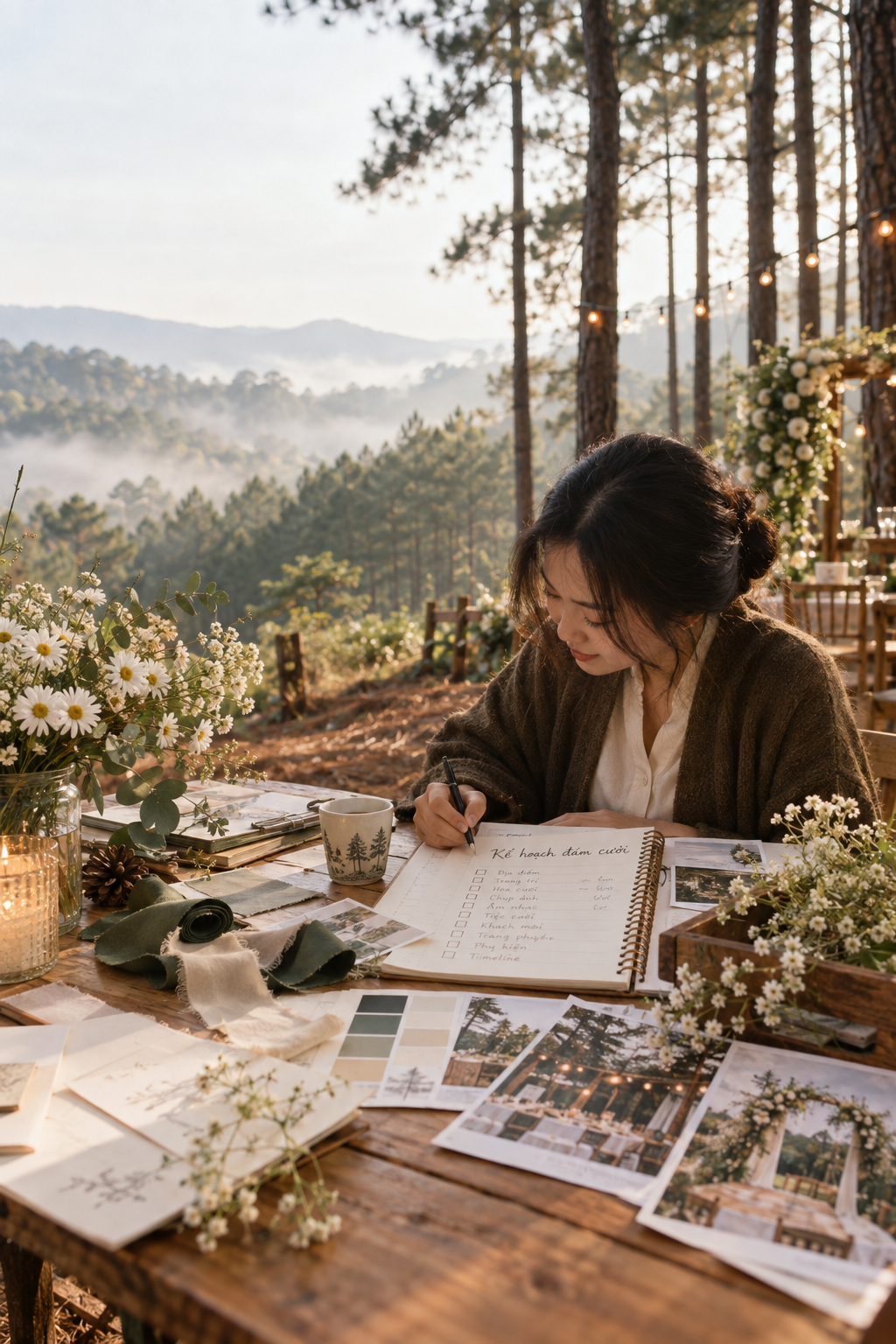
List of Wedding Offerings and Gift Trays to Prepare According to Southern Vietnamese Traditions
For Southern Vietnamese wedding customs, there is no single formula for selecting specific ceremonial offerings that applies to every family. The number of trays, their contents, and the presentation and exchange process should be agreed upon by both families well in advance, especially when either family has specific regional or religious requirements.
A reference checklist may include betel leaves and areca nuts, tea and wine, wedding cakes, fruit, offerings requested by the families, trays or containers, tray covers, the gift-tray procession team, and representatives responsible for conducting the rituals. Families should reconfirm quantities, presentation, and delivery arrangements at least several days before the ceremony.
Do not choose wedding gift trays based on appearance alone. Confirm the essential offerings with senior family members on both sides before finalizing the supplier. This small step helps avoid last-minute adjustments before the wedding.
Preparing the Bride’s Family Home: Cleaning, Arranging the Ancestral Altar, and Setting Up the Ceremony Area
Before the Vu Quy ceremony, families should review the space according to actual movement routes: where the groom's family will arrive, where the gift trays will be placed, where representatives of both families will sit, which direction the bride will enter from, and how the wedding procession will move.
- Clean and finalize the ancestral altar area before the decoration team begins installation.
- Identify which pieces of furniture may be moved and which household items must remain in place.
- Check the electrical supply, lighting, fans, and air conditioning in areas where large groups will gather.
- Plan the locations for gift trays, the tea table, seating for both families, and photography areas.
- Keep walkways sufficiently wide for elderly guests and the photography and videography teams.
- Prepare a rain-cover solution if the entrance or guest reception area is outdoors.
Creating a Detailed Vu Quy Ceremony Timeline: Welcoming the Groom’s Family, Ancestral Rites, and the Bride’s Departure
A good timeline should be calculated backward from the bride-pickup time or the main ceremonial time. It should not simply list starting times; each task needs an estimated duration and an assigned person responsible for it.
- Complete decoration, cleaning, and site inspections before guests arrive.
- The family, bride, and gift-tray procession team get ready before the groom's family arrives.
- The groom's family arrives, arranges the procession formation, and proceeds with the greetings.
- The wedding gift trays are formally exchanged according to the agreement between both families.
- Representatives of both families deliver speeches and introduce their family members.
- The bride and groom perform the rituals before the ancestral altar.
- Parents and relatives present gifts or offer blessings if arranged by the family.
- Take family photographs according to the prepared group list.
- Prepare the bride's belongings and proceed with the bride-pickup ceremony.
In practice, it is advisable to allow buffer time between activities because the groom's procession may arrive early or late due to traffic. Flexible coordination prevents the ceremony from feeling rushed and helps preserve its natural emotional rhythm.
The Pine Wedding Planner’s Decoration Process for Ancestral Altar and Vu Quy Ceremonies
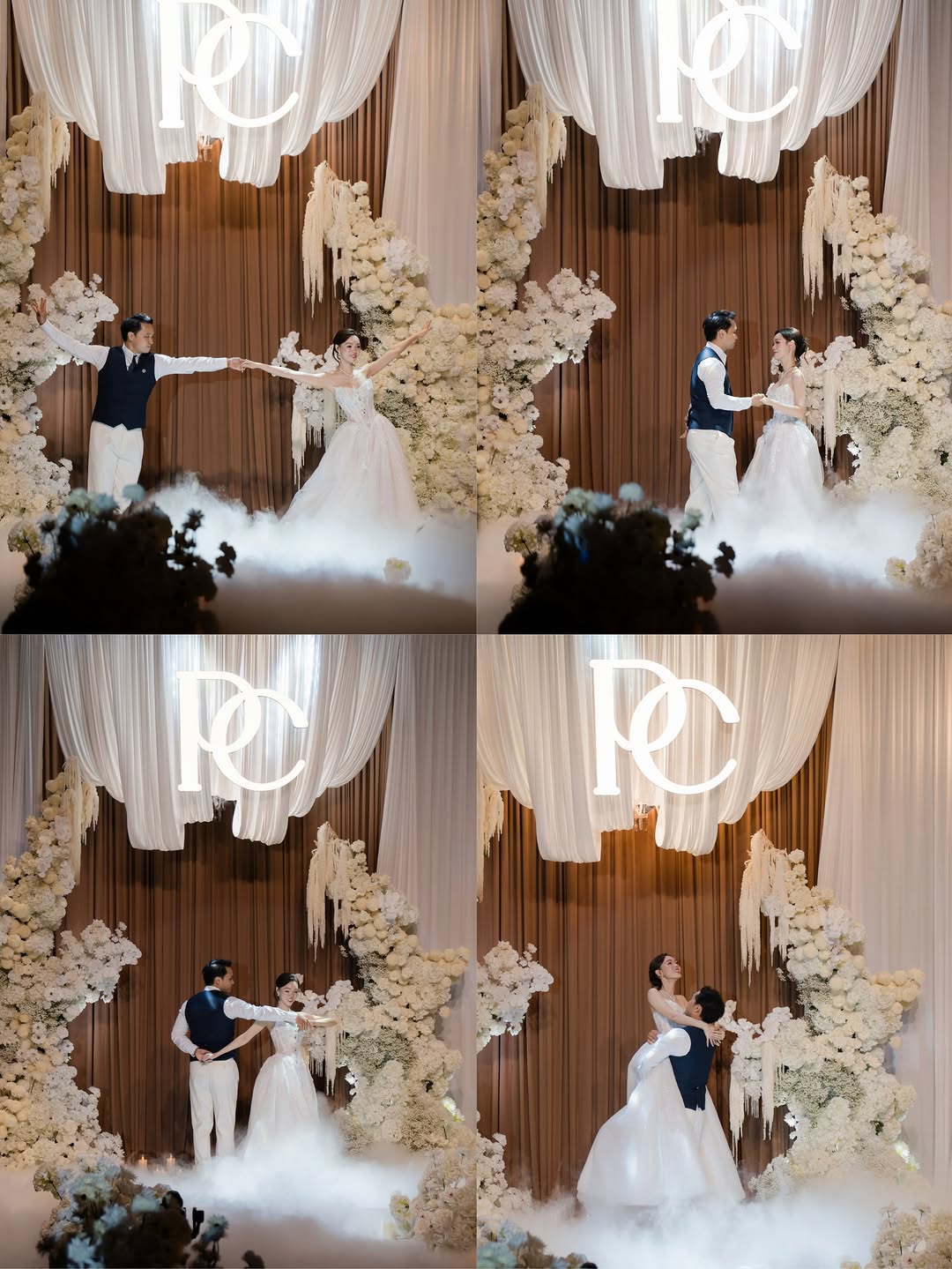
Step 1: Concept Consultation, Venue Assessment, and Development of a Unique Decoration Mood Board
The Pine begins by learning about the couple's style, family requirements, ceremony size, and estimated budget. The team then conducts an on-site survey to measure dimensions, assess lighting, movement routes, interior colors, and the technical limitations of the house.
Based on the actual site conditions, a mood board is developed to define the color palette, floral style, materials, backdrop, and focal accents. This approach ensures that the concept is feasible rather than simply attractive in reference images.
Step 2: Creating Detailed Designs, Selecting Fresh Flowers, and Maintaining Transparent Budget Control
Once the direction has been approved, each item is specified in terms of dimensions, materials, and investment level. For fresh flowers, the team balances focal blooms, seasonal flowers, foliage, and arrangement density to achieve the desired visual effect without unnecessary expenses.
This is also the stage when the service scope needs to be clearly finalized: which items are included, which changes may incur additional costs, and the final deadline for design adjustments. wedding budget management Defining the scope from the design stage helps couples control their overall investment more effectively and reduces the need to continually add items close to the wedding date.
Step 3: On-site setup, arrangement, and coordination of all ceremonies on the wedding day
The installation team needs a clearly defined schedule for entering the house, completing the setup, and handing over the space. After installation, important details such as the ancestral altar, flowers, backdrop, walkways, and gift-tray area are inspected again before guests arrive.
If the couple uses wedding planning or coordination services, The Pine also connects tasks between the families, decoration team, videographers, photographers, makeup artists, and other relevant vendors. This wedding budget management integration with a coordinated timeline and a designated point of contact significantly reduces last-minute decisions at the venue.
Premium Ancestral Altar and Vu Quy Ceremony Decoration Costs: How to Plan Your Budget Effectively
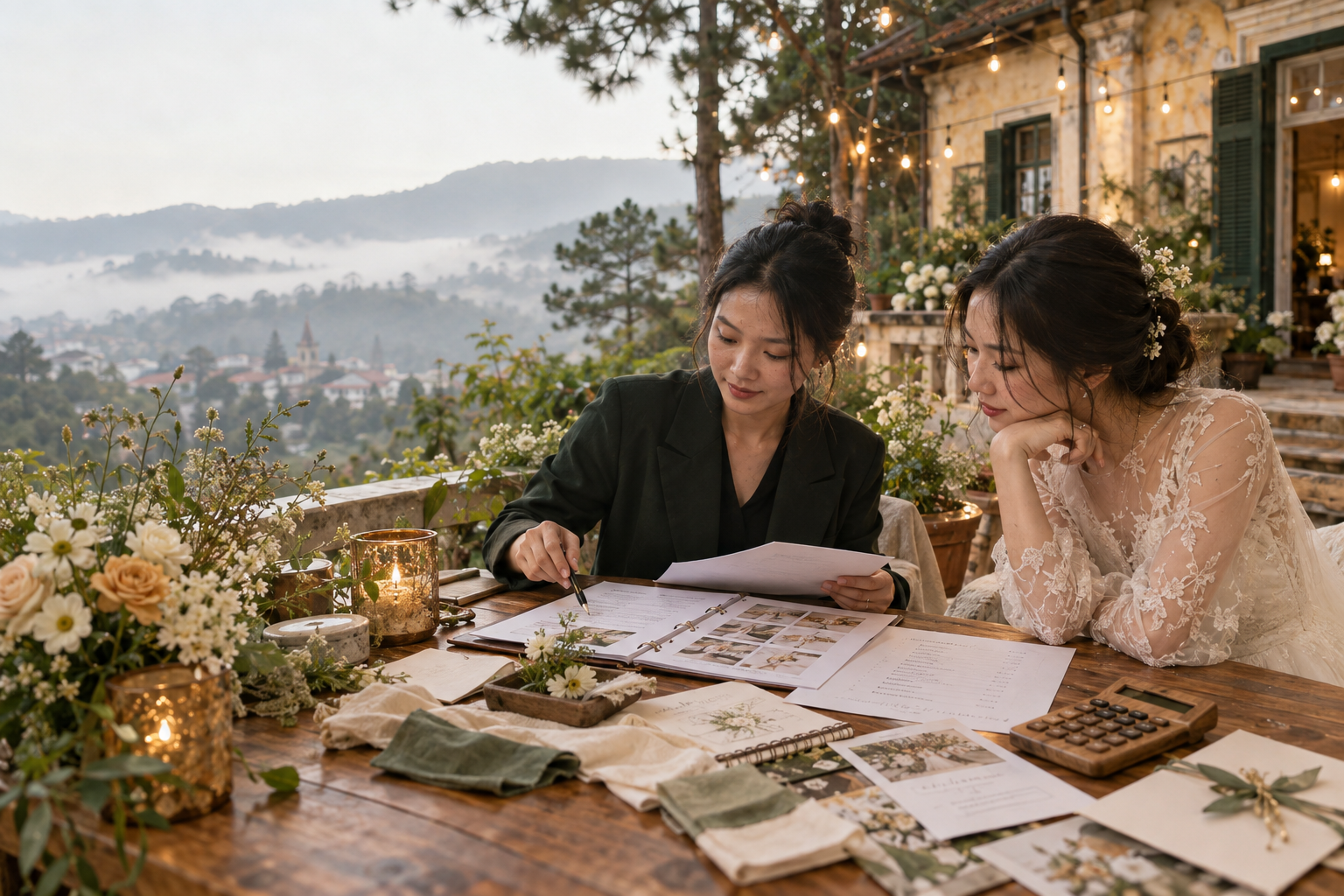
Factors Affecting the Cost of Artistic Fresh Flower Decorations for the Ancestral Altar
Ancestral altar decoration costs should not be evaluated solely by the number of flowers used. The overall budget depends on the venue size, design complexity, flower varieties and seasons, backdrop structures, floral entrance gate, tables and chairs, materials, labor, transportation, installation time, and dismantling requirements.
For example, a minimalist design using expensive imported flowers that are out of season and custom-built structures may cost more than a flower-rich concept featuring seasonal local blooms. Conversely, a large space does not necessarily need to be covered entirely with flowers. Identifying the main focal points can create a luxurious effect while making better use of the budget.
Smart Wedding Budget Allocation: Prioritizing Experiences, Aesthetics, and Emotional Value
When the budget is limited, items should be divided into three groups: essential ceremonial requirements, elements important to the guest experience, and details that enhance the visual appeal. The ancestral altar, ceremony area, seating for both families, and movement routes should always take priority over purely decorative details.
For floral arrangements, density can be concentrated around the ancestral altar and backdrop, as these areas appear frequently in photographs. Secondary areas can incorporate foliage, seasonal flowers, fabric, candles, or coordinated materials to create depth without significantly increasing the number of flowers.
Cost Management Solutions to Minimize Unexpected Expenses Through a Clear Budget Plan
An effective Budget Plan should define the total budget, target allocations for each category, and a reasonable contingency reserve. Any changes after the concept has been approved should be evaluated from two perspectives: the value they provide and their impact on the overall cost.
The Pine prioritizes transparency about the service scope from the beginning rather than presenting couples with only a single total price. When clients understand how their investment is allocated across flowers, structures, staffing, transportation, and special items, they are better equipped to decide what to retain and what can be simplified.
A premium wedding space does not mean using as many expensive details as possible. What matters is allocating the budget wisely, designing with clear intent, and ensuring that every element contributes to the overall experience.
Tips for Organizing a Perfect Vu Quy Ceremony: Managing Risks and Preserving Every Wedding Day Emotion
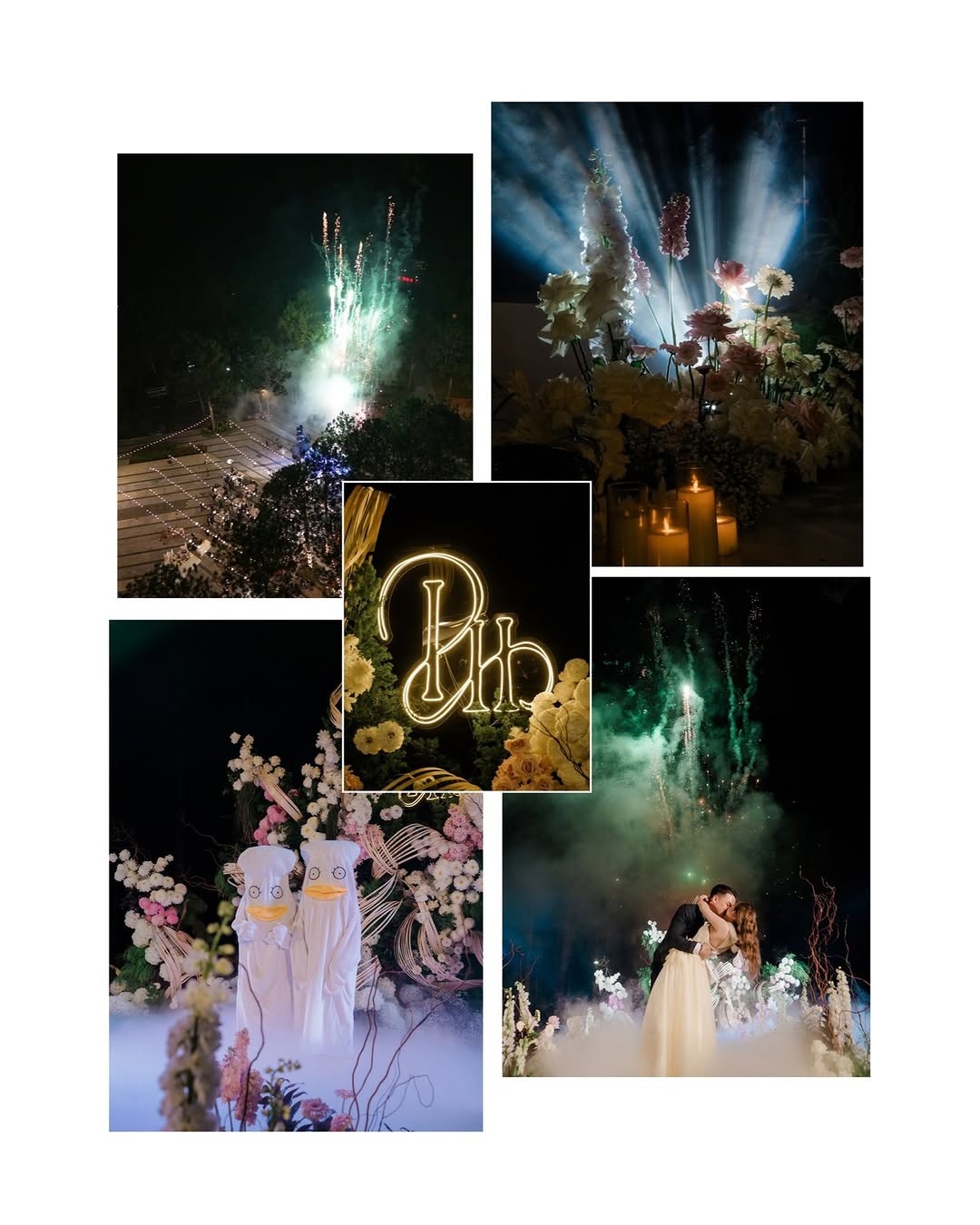
Common Challenges When Decorating the Ancestral Altar Yourself and How to Prepare Backup Plans
One common challenge when families organize everything themselves is underestimating installation time. Backdrops, fresh flowers, tables and chairs, wedding gift trays, and reception areas may involve several different suppliers. Even one delayed delivery can disrupt the entire morning preparation schedule.
Another risk is the lack of a designated decision-maker. When each family member requests changes to different details on-site, the installation team finds it difficult to maintain the approved design and schedule. One representative with the authority to confirm final decisions should be appointed.
A Plan B should also be prepared for outdoor elements: rain protection, safeguarding flowers and equipment, alternative locations if the area in front of the house becomes unusable, and timeline adjustments in case of weather or traffic changes.
Tips for Managing Small Spaces, Unpredictable Weather, and Limited Setup Time
For townhouses with narrow frontages, the key principle is not to force every element of a large-scale wedding into a small space. The backdrop can be made more compact, flowers can be arranged in focused clusters, seating can be positioned flexibly, and the photography area can be integrated with the guest reception area.
In Da Lat, weather conditions and humidity must also be considered if part of the Vu Quy ceremony or the subsequent reception takes place outdoors. Experience in Da Lat climate these conditions allows the team to be more proactive when selecting flowers, scheduling installation, protecting materials, and developing contingency plans.
Installation time constraints should be addressed during the design stage. Structures suitable for prefabrication should be prepared in advance, flowers should be processed in modules, and transportation schedules must account for unloading, installation, cleaning, and final inspection.
The Role of a Wedding Planner in Helping the Bride, Groom, and Their Families Enjoy the Celebration
A Wedding Planner does not replace the family's role in the ceremony. The planner's value lies in turning the family's wishes into an actionable plan: who does what, when each task takes place, which vendor is responsible, and how to handle situations when reality differs from the plan.
On the day of the Vu Quy ceremony, the bride and groom should not have to keep checking whether the flowers have arrived, where the videography team is, or how many minutes late the groom's family will be. A professional coordinator handles operational issues behind the scenes so the family can focus on the rituals and the loved ones gathered around them.
The Pine Wedding Planner – Creating Personalized Vu Quy Ceremonies for Every Love Story
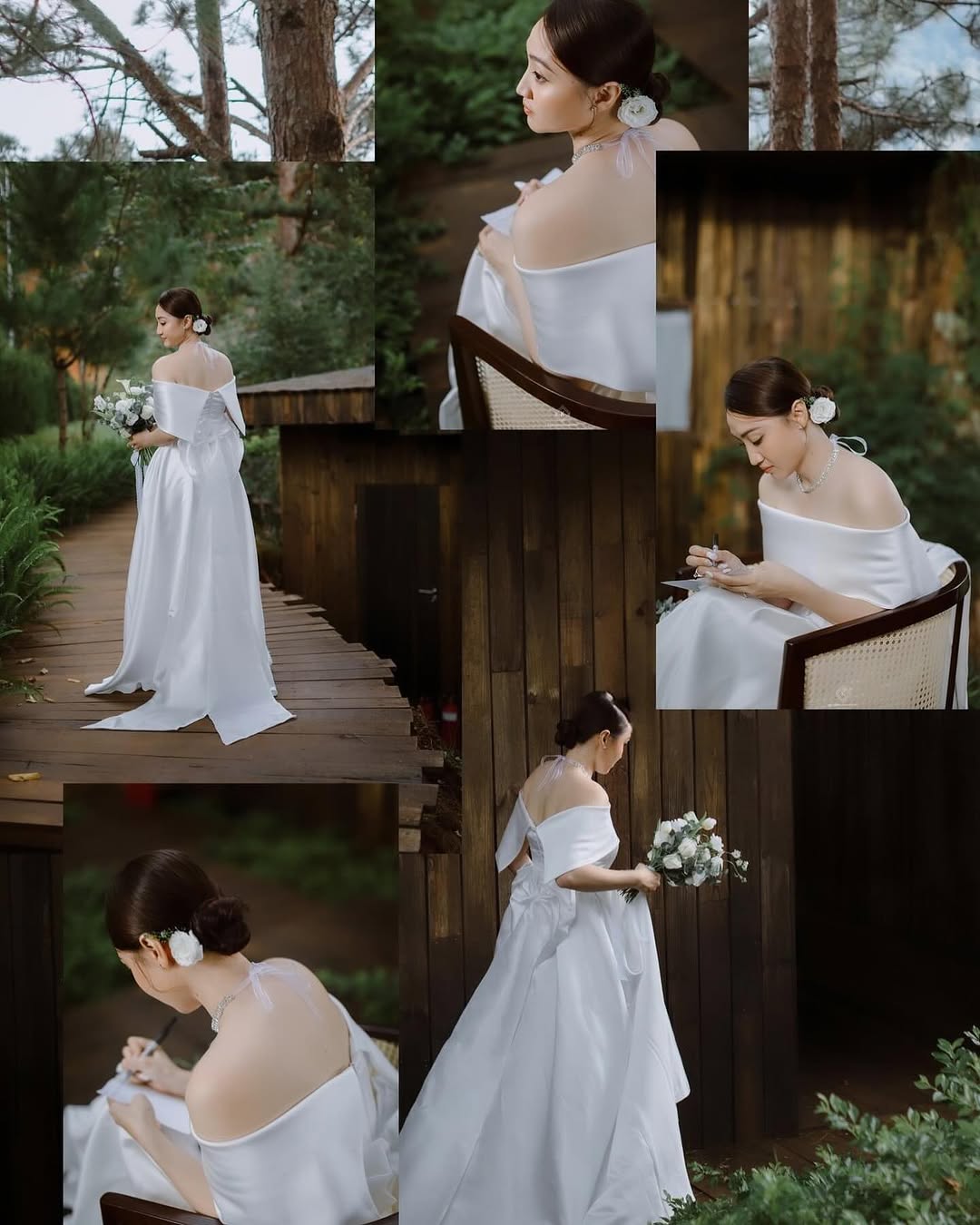
Custom Ancestral Altar, Tan Hon, and Buddhist Wedding Ceremony Decoration Services Tailored to Each Couple's Style
The Pine Wedding Planner approaches every wedding through the couple's individual story and circumstances. Whether it is a Vu Quy ceremony, Tan Hon ceremony, Buddhist wedding blessing ceremony, or Catholic wedding ceremony, each design is developed around the rituals, architectural setting, family traditions, and emotions that the bride and groom wish to preserve.
From a warm ancestral altar ceremony at home to a Fine Art space featuring artistic fresh-flower arrangements, the goal is not to create an extravagant stage but to build a harmonious, distinctive overall setting that reflects the meaning of the special day.
Hands-On Experience in Da Lat and Ho Chi Minh City, Combining Tradition with Modern Wedding Artistry
Every venue presents a different challenge. Townhouses in Ho Chi Minh City often require careful space optimization, installation scheduling, and movement planning. Venues in Da Lat demand experience in managing weather conditions, transportation, fresh flowers, and terrain-specific requirements.
For this reason, The Pine never separates design from execution. A concept is truly suitable only when it can be installed on schedule, allows the ceremony to proceed smoothly, and stays within the agreed budget.
Every Vu Quy Ceremony Is an Emotional Masterpiece: Meticulously Crafted Details and Precious Moments
A memorable Vu Quy ceremony is not determined by the number of flowers or the size of the backdrop. Its true value lies in the moment parents look at their daughter before she leaves with the groom, in the blessings of loved ones, and in the feeling that everything unfolds naturally without the bride and groom having to worry about behind-the-scenes issues.
That is also why preparation should begin with the rituals, venue, budget, and timeline before moving on to decoration. When these four elements are closely connected, ancestral altar decoration does more than look beautiful in photographs; it also serves the family's actual experience.
If you are preparing for Vu Quy Ceremony in Da Lat or Ho Chi Minh City, if you are looking for an approach that respects tradition while reflecting your own aesthetic identity, The Pine Wedding Planner can accompany you from site surveys and concept development to budget planning, installation, and coordination. Start by sharing your venue, wedding date, family size, and preferred style so the team can develop the most suitable solution for your special day.
